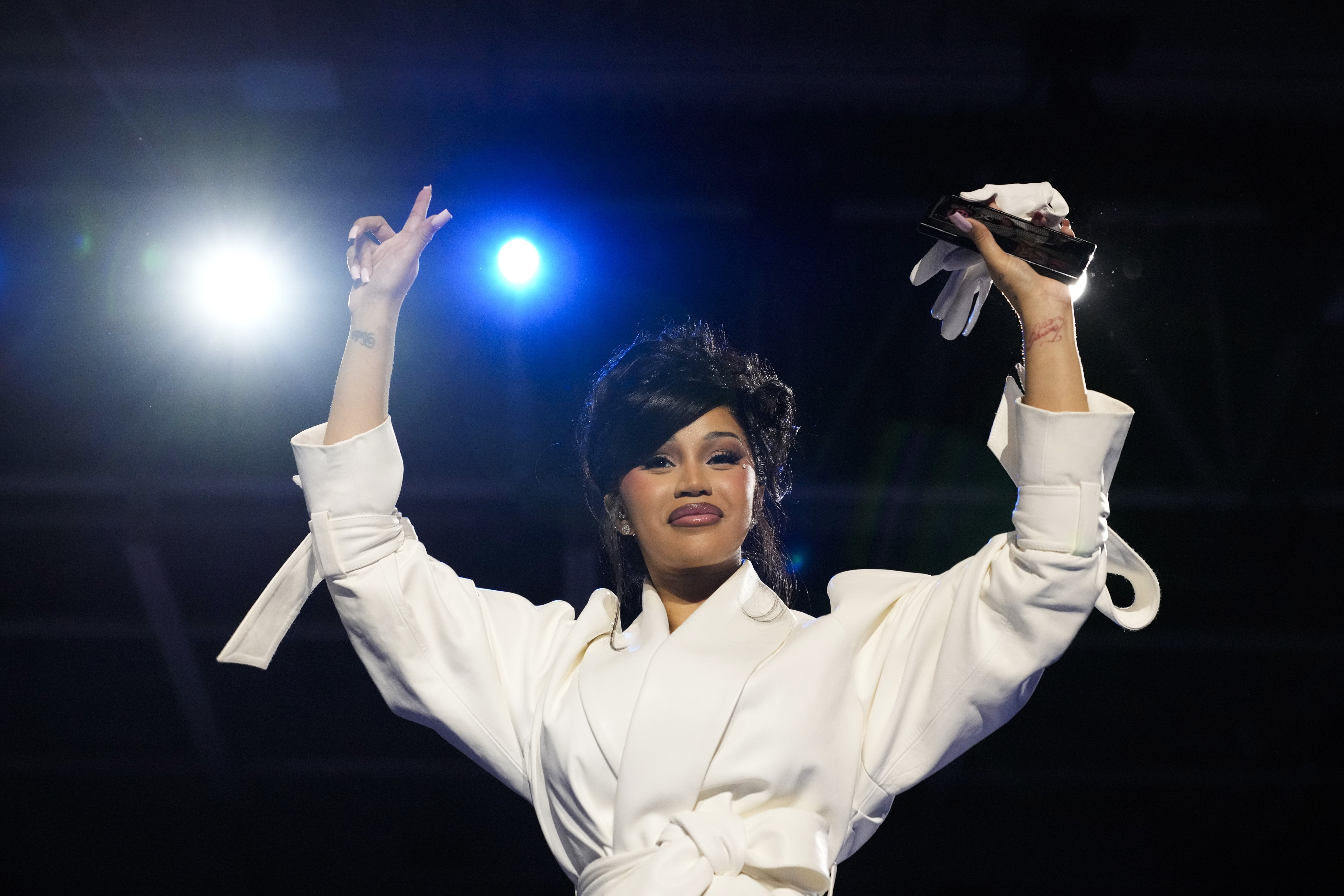
Howard University, a storied institution in the heart of Washington, D.C., is set to launch a course in the 2026-27 academic year titled “The Cardi B: Am I The Drama? The Art, Production, Marketing, and Cultural Impact of Hip-Hop.” The move has ignited a fierce debate about academic standards and the mission of historically Black colleges and universities (HBCUs).
Founded in 1867 to educate newly emancipated slaves, Howard has long been a beacon of excellence, producing Supreme Court Justice Thurgood Marshall, Nobel laureate Toni Morrison, and civil rights leaders like Andrew Young. Its law school crafted the legal strategy that dismantled segregation in public schools. But critics argue that offering a class on the rapper and entrepreneur Cardi B represents a departure from that legacy.
“Howard should be an incubator that sparks the intellect and illuminates the imagination,” writes Donavan Wilson, a Washington-based writer. “Instead, it’s dimming the light of wisdom and truth, focusing on what is trendy and fleeting.”
The course, which examines Cardi B’s business skills and cultural impact, has drawn sharp criticism for what some see as a lowering of academic rigor. Wilson notes that students today struggle with reading and attention spans, and argues that universities must challenge them to think critically. He contrasts the course with the education of Martin Luther King Jr., who cited Socrates and Saint Augustine in his “Letter from Birmingham Jail.”
“Will some Howard graduate from the class of 2027 cite Cardi B with equal reverence as he cited Augustine?” Wilson asks.
Howard administrators have defended the course as a reflection of hip-hop’s significance in modern culture and business. The controversy comes amid broader debates about free speech and academic standards on campuses, as seen in recent discussions on defusing campus free speech battles. Some argue that incorporating popular culture can engage students, but Wilson contends it risks attracting those more interested in celebrity than serious study.
The debate also touches on the role of HBCUs in a polarized political climate. Howard’s decision has drawn comparisons to other controversies, such as the Met Gala boycott over Jeff Bezos’s chairmanship, where celebrity culture clashed with institutional values. Wilson, who once aspired to attend Howard, says the university should uphold the resilience and intellectual dexterity that defined its founding generation.
“A class focusing on her abilities as an entrepreneur does not constitute serious academic study,” Wilson writes. “Howard, by including Cardi B in its curriculum, is dimming the light of wisdom and truth.”
The course has sparked a wider conversation about whether universities are adapting to student interests or abandoning core educational principles. As the 2026-27 academic year approaches, Howard’s experiment will be closely watched by educators and alumni alike.