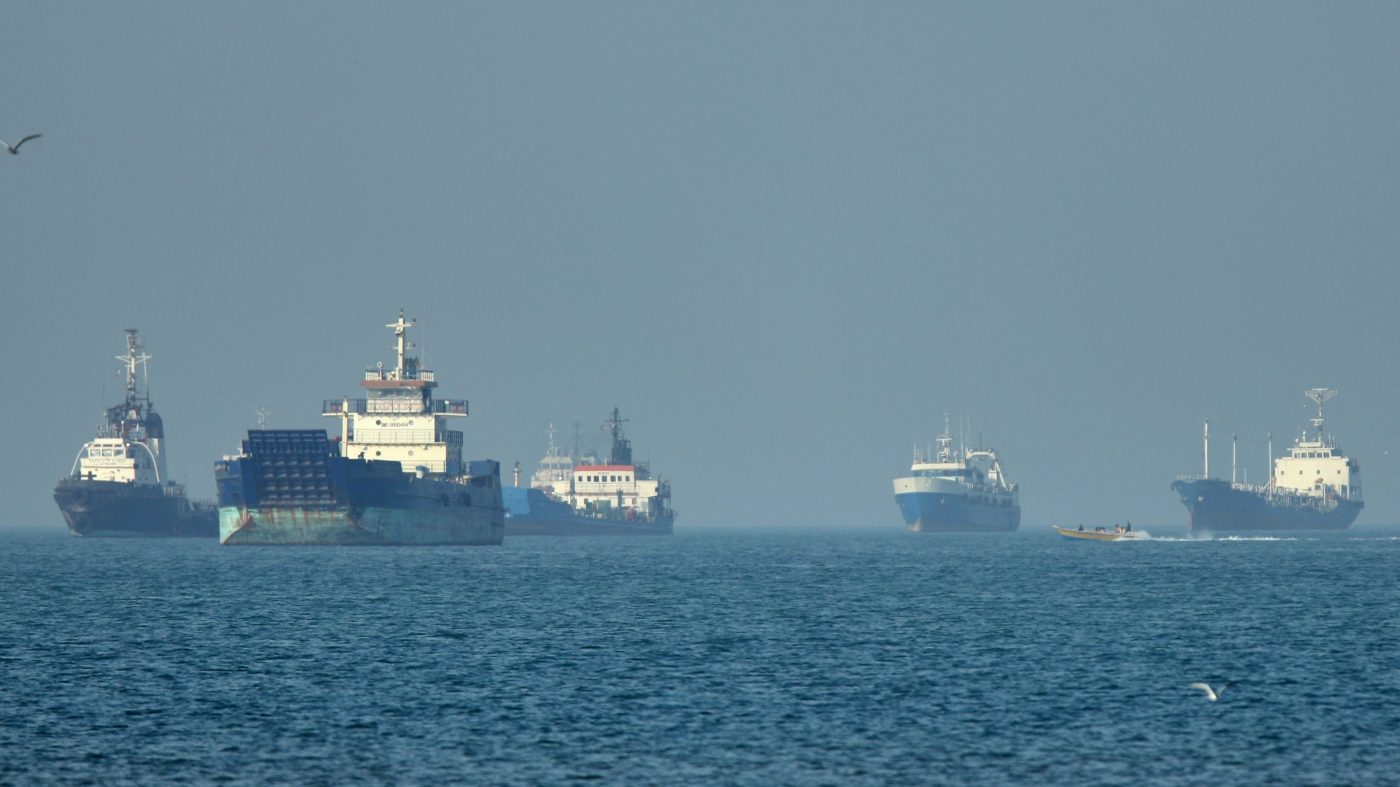
Iranian officials are charging that the United States has broken the terms of a delicate ceasefire after President Donald Trump directed the Navy to guarantee safe passage for merchant vessels through the Strait of Hormuz. The accusation marks a significant escalation in rhetoric between the two nations, which have been locked in a tense standoff over the strategic waterway.
Mohammad Bagher Ghalibaf, Iran’s Parliament Speaker and a key negotiator in the Pakistan-mediated peace talks, took to social media early Tuesday to voice Tehran’s grievances. “The new equation of the Strait of Hormuz is in the process of being solidified,” Ghalibaf wrote on platform X. He added that “the security of shipping and energy transit has been jeopardized by the United States and its allies through the violation of the ceasefire and the imposition of a blockade.”
Ghalibaf warned that Washington’s actions would backfire, stating, “We know full well that the continuation of the status quo is intolerable for America; while we have not even begun yet.” The comment suggests Iran may be preparing to escalate its own military posture in the region.
The ceasefire, brokered by Pakistan, has largely stalled in recent weeks. The Trump administration is pursuing not only a revised nuclear agreement but also negotiations over control of the Strait of Hormuz, a vital chokepoint for global oil shipments. Since late February, the strait has been effectively closed due to Iranian counterstrikes that endangered vessels transiting the route.
Trump imposed a naval blockade on the waterway to pressure Iran during talks. On Sunday, he announced “Project Freedom,” a U.S. Navy initiative to assist foreign ships trapped in the strait. The military began providing guidance on safe maritime lanes Monday, with over 100 aircraft and 15,000 service members involved, according to U.S. Central Command (Centcom).
Centcom chief Adm. Brad Cooper told reporters Monday that U.S. forces had sunk six small Iranian boats after Iran launched “multiple cruise missiles, drones and small boats” at Navy and commercial vessels in the strait. The incident underscores the fragility of the ceasefire and the potential for wider conflict. For more on the military operation, see our report on Project Freedom.
The United Arab Emirates’ defense ministry reported Monday that it had intercepted four drones, three cruise missiles, and 12 ballistic missiles fired by Iran at the country. The ministry affirmed its readiness to “firmly confront anything that aims to undermine the security of the country.” This marks the first such strikes on the UAE since the ceasefire took effect, as detailed in our coverage of the attacks.
While Tehran has not confirmed its involvement in the attacks, Iranian Foreign Minister Abbas Araghchi issued a pointed warning Monday afternoon. “As talks are making progress with Pakistan’s gracious effort, the U.S. should be wary of being dragged back into quagmire by ill-wishers,” he wrote on social media. “So should the UAE.” The statement hints at internal divisions or external actors seeking to sabotage the negotiations.
The standoff has broader implications for U.S. military engagement. Defense Secretary Pete Hegseth has argued that the ceasefire halts the War Powers Act clock, a claim that has drawn criticism from lawmakers. For context on this legal debate, read our analysis of Hegseth’s position. Meanwhile, President Trump has accused media outlets of seditious coverage of the Iran conflict, as reported in this article.