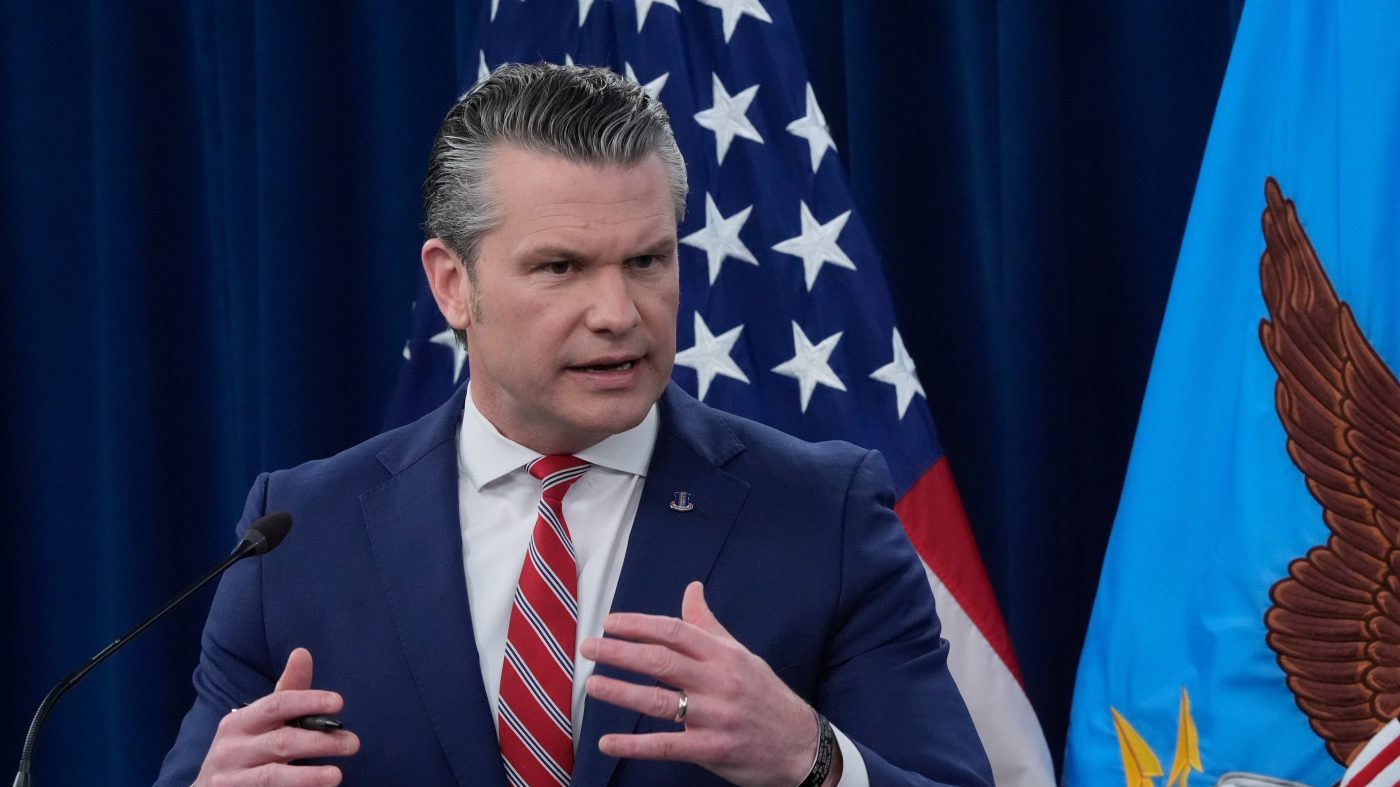
Defense Secretary Pete Hegseth pushed back Tuesday against assertions that the U.S.-Iran ceasefire has collapsed, following a Monday exchange of fire in the Strait of Hormuz that coincided with the launch of Project Freedom.
"No, the ceasefire is not over," Hegseth told reporters at the Pentagon. "Ultimately, this is a separate and distinct project, and we expected there would be some, some churn at the beginning, which happened, and we said we would defend and defend aggressively, and we absolutely have."
The skirmish erupted after President Donald Trump announced Sunday that U.S. forces would escort commercial vessels through the strategic waterway. Iran responded by opening fire on American warships, prompting a U.S. retaliation that destroyed six Iranian small boats, according to Adm. Brad Cooper, commander of U.S. Central Command.
Gen. Dan Caine, chair of the Joint Chiefs of Staff, characterized Iran's actions as "low harassing fire" and suggested Tehran's military is struggling operationally. "It feels like Iran is grasping at straws to try to do something across the southern flank," Caine said. "Their command and control structure remains very fractured, and I think they're struggling to maintain control down Echelon at the edge, but ... it's still pretty low-level kinetics at this point."
Caine stressed that restarting major combat operations against Iran is "a political decision above my pay grade," underscoring the administration's careful framing of the incident. The Pentagon's narrative aims to preserve the fragile truce while projecting strength, as Tehran has accused Washington of violating the ceasefire.
Hegseth reported that hundreds of ships are "lining up" to transit the Strait, with six vessels attempting to breach the U.S. naval blockade and being turned back. "Centcom, along with partner nations, is in active communication with hundreds of ships, shipping companies and insurers. All of these ships from all around the world want to get out of the Iranian trap that they have been stuck inside," he said.
So far, two U.S. commercial vessels and Navy destroyers have successfully passed through the Strait. "We know the Iranians are embarrassed by this fact. They said they control the strait. They do not," Hegseth added.
Caine revealed that approximately 22,500 mariners remain on more than 1,550 commercial vessels "trapped" in the Arabian Gulf, unable to transit. CENTCOM has established an enhanced security zone on the southern side of the Strait, protected by U.S. land, naval, and air assets to deter further Iranian aggression.
The administration's handling of the clash is part of a broader strategy to sidestep the War Powers Act by arguing the ceasefire remains in effect. Critics, however, see Monday's violence as evidence that the truce is fraying, especially after Iranian missile and drone strikes hit the UAE for the first time since the ceasefire took effect.
As Project Freedom continues, the Pentagon is bracing for further low-level confrontations while insisting the broader diplomatic framework holds. Whether that position is sustainable depends on Tehran's next move in the Strait.