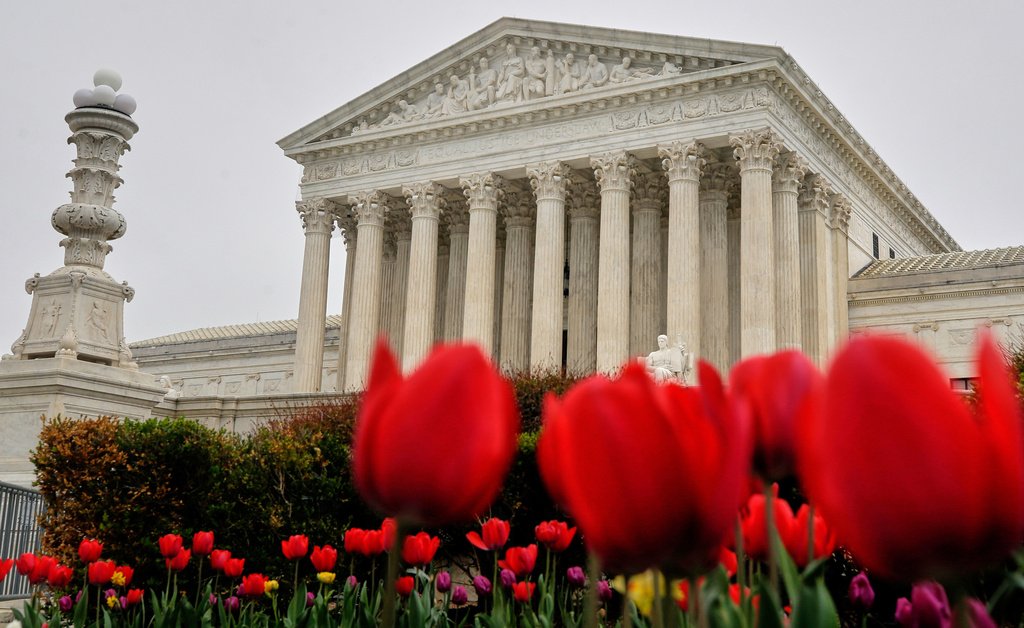
The U.S. Supreme Court’s 6-3 decision in Louisiana v. Callais, which curbs states’ ability to draw race-based districts, has triggered predictable outrage from the left. A Salon headline decried it as a “Jim Crow 2.0 ruling” that guts the Voting Rights Act. But the ruling reflects a deeper, less partisan reality: America’s changing demographics are making racial gerrymandering increasingly impractical—and that’s a positive development.
Under Section 2 of the Civil Rights Act, states with significant minority populations have been required to create majority-minority districts to prevent vote dilution. The 1986 Thornburg v. Gingles decision set a three-part test, the first prong of which demands that a minority group be “sufficiently large and geographically compact” to form a majority in a single district. That criterion is becoming harder to meet.

Three demographic shifts are driving this change. First, the number of Americans identifying as multiracial surged 276 percent between 2010 and 2020, from 9 million to 33.8 million, according to the Census Bureau. As more people claim mixed heritage, drawing districts to benefit a single racial group becomes more complex. Some biracial individuals identify as Black, others as white or Hispanic, complicating the neat categories that gerrymandering requires.
Second, interracial households are on the rise. Among married opposite-sex couples, 18.6 percent were interracial in 2022, up from 5.9 percent in 2008. For unmarried partners, the figure jumped from 12.9 percent to 28.6 percent. These households blur traditional racial lines, making it harder to craft districts that reliably deliver a minority-preferred candidate.
Third, Americans are highly mobile. Roughly 40 million people move each year, and many minority voters are relocating to suburbs and exurbs, dispersing from historically concentrated urban areas. This geographic fluidity undermines the “geographically compact” requirement of the Gingles test. As the Supreme Court ruling on Louisiana maps has already sparked new redistricting chaos, these demographic trends suggest the old model of racial gerrymandering is fading.
None of this is a defense of hyper-partisan redistricting or calls for mid-decade map redraws. Most Americans want fewer, not more, partisan battles over district lines. But it does signal racial progress since the Civil Rights Act of 1964. The left has long warned that the Supreme Court and red states are undermining minority representation, yet data from Pew Research Center tells a different story: Black members of Congress grew from 41 to 66 over the past two decades, Hispanic members more than doubled from 25 to 53, and Asian American and Pacific Islander representation tripled from 7 to 21.
Similarly, claims that election-integrity laws suppress turnout have been undercut by record voter participation in states that enacted them. Ending mandated racial gerrymandering may actually boost minority representation by forcing parties to compete for a broader, more diverse electorate. As the Alito and Jackson clash over fast-tracking Louisiana redistricting shows, the legal battles are far from over, but the demographic tide is already reshaping the political landscape.