The Supreme Court on Monday wasted no time putting its ruling against Louisiana's congressional map into effect, bypassing the standard 32-day waiting period and igniting a fierce exchange between Justice Samuel Alito and Justice Ketanji Brown Jackson. The order, which returns the case to lower courts, allows Louisiana to redraw its map—likely eliminating one of the state's two Black-majority House districts—a move that could boost House Republicans ahead of November's midterms.
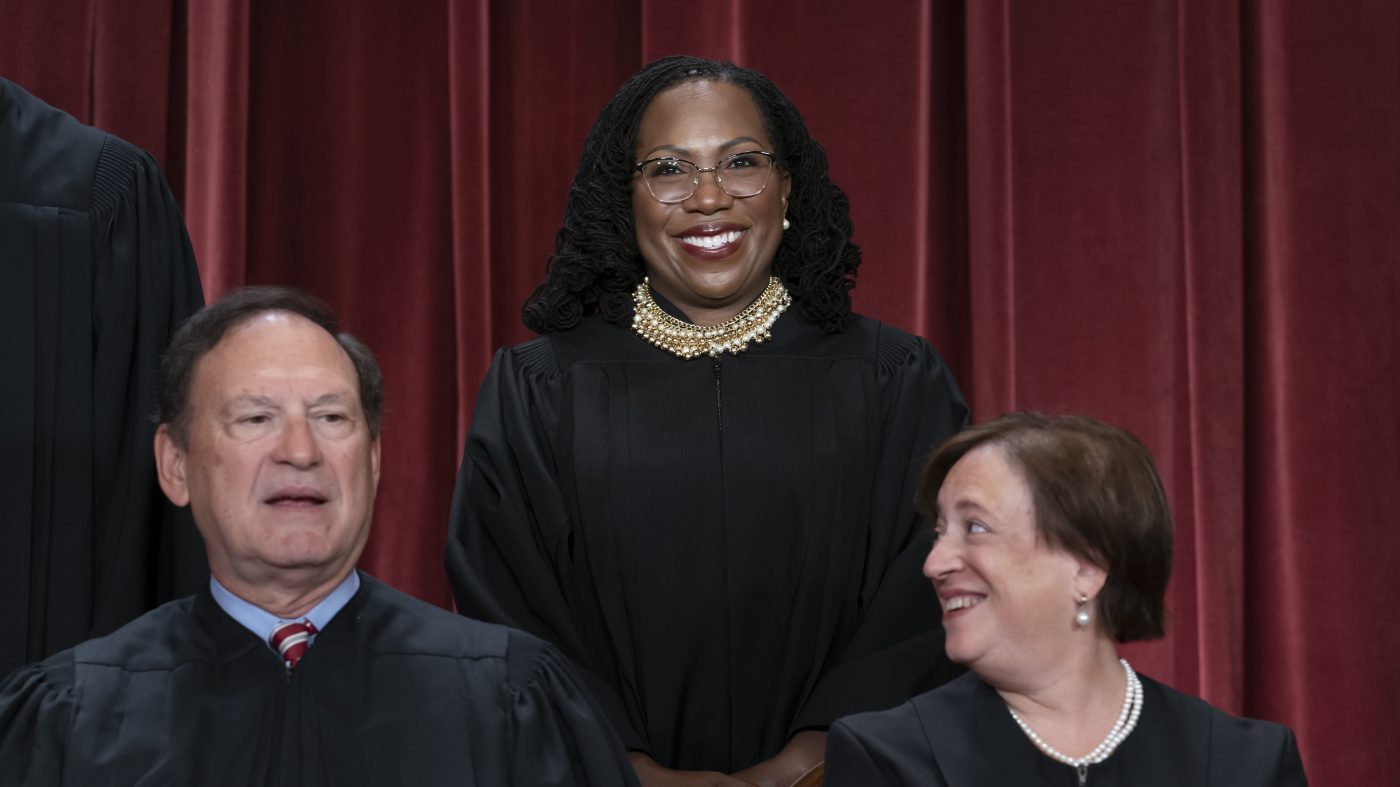
In a dissent, Jackson accused the majority of abandoning judicial constraints, writing that the court “unshackles itself” from established procedures. She argued the default rule should have been followed, especially given the chaos the decision has already caused in Louisiana's election timeline. Alito, joined by Justices Clarence Thomas and Neil Gorsuch, fired back, calling Jackson's remarks “baseless and insulting.” He insisted that delaying the ruling would force the 2026 elections to be conducted under an unconstitutional map.

The dispute underscores the high stakes of the court's 6-3 decision last week, which weakened a key provision of the Voting Rights Act by ruling that Louisiana's second Black-majority district was unconstitutional. The timing has thrown Louisiana's primary schedule into disarray, as overseas ballots were already being sent and early voting was imminent. Governor Jeff Landry, a Republican, has postponed the primary to give state lawmakers time to draw a new map.
Jackson warned that the ruling has “spawned chaos” in Louisiana, raising “a host of legal and political questions” independent of the original case. She noted that the court's expedited action leaves unresolved issues about how the state should proceed with its elections. The majority, however, offered no guidance on whether the map should be redrawn before the midterms, despite past rulings discouraging last-minute election changes.
The dispute over timing centers on dueling requests from the parties involved. The non-African American voters who challenged the map urged the court to forgo the waiting period to allow swift redrawing. Meanwhile, Black voters who originally pushed for the second majority-Black district argued the court should hold the case until after the election to avoid disruption. Louisiana itself took no position, asserting it already had authority to act.
This case is part of a broader redistricting battle that has seen both parties jockey for advantage ahead of the midterms. Republicans, encouraged by the White House and other groups, have redrawn maps in Texas, Missouri, North Carolina, and Florida. Democrats have responded by challenging GOP gains in California and Virginia. The House, seen as Democrats' best chance to flip a chamber, could become a battleground for investigations into President Trump's second term if they regain control.
The Supreme Court's decision has already prompted other states to act. Alabama has requested that the court release its case concerning a second Black-majority district, which had been held pending the Louisiana ruling. The court's expedited timeline in this case signals a willingness to accelerate redistricting fights, even as critics warn of voter confusion and legal uncertainty.
Alito defended the court's approach, writing that the dissent's charges “cannot go unanswered.” He emphasized that the alternative—allowing an unconstitutional map to remain—would undermine the integrity of the electoral process. But Jackson countered that the court's haste risks creating more problems than it solves, particularly for voters and election officials caught in the crossfire.
As the midterms approach, the Louisiana ruling is likely to intensify the partisan tug-of-war over congressional maps. With the court's conservative majority solidifying its stance on race and redistricting, Democrats face an uphill battle to protect minority representation, while Republicans see an opportunity to cement gains in the House. The fallout from this decision will reverberate through the 2026 elections and beyond.