The already precarious ceasefire between Washington and Tehran appears on the verge of collapse after President Donald Trump announced a new initiative, dubbed “Project Freedom,” aimed at guiding vessels through the strategic Strait of Hormuz. The operation, set to begin Monday, prompted an immediate and hostile response from Iran’s armed forces, who declared they would block any American combat forces or commercial ships lacking their authorization.
Clashes Erupt in the Strait
According to U.S. Central Command head Adm. Brad Cooper, Iranian forces opened fire on American warships and commercial vessels on Monday. In response, U.S. forces returned fire and destroyed six small Iranian boats. Cooper declined to confirm whether the ceasefire between the two nations had officially ended, leaving the situation in a precarious state.
The escalation threatens to reignite a conflict that had been paused under a temporary truce, just as Trump had assured lawmakers last week that the war was over, following its 60-day mark. The renewed violence also risks sending gas prices even higher, with the national average already hovering around $4.44 per gallon, up sharply from $3.17 a year ago, according to AAA.
Project Freedom Details
Trump announced Project Freedom on his Truth Social platform, claiming other nations had requested U.S. assistance to free their vessels “locked up in the Strait of Hormuz.” While the plan does not include dedicated U.S. escorts, Navy ships will remain in the vicinity, providing commercial vessels with information on safe maritime lanes, according to officials who spoke with Axios and The Wall Street Journal.
U.S. Central Command stated that the operation would involve “guided-missile destroyers, over 100 land and sea-based aircraft, multi-domain unmanned platforms, and 15,000 service members,” though it did not specify how these assets would directly assist in guiding boats. Cooper emphasized that the U.S. military “strongly advised” Iran to stay clear of American assets and confirmed that the naval blockade, preventing ships from leaving Iranian ports, remains in effect. As of Monday, Centcom reported that 50 commercial vessels had been redirected to avoid U.S. warships.
Iran’s Warning and Regional Strikes
Maj. Gen. Ali Abdollahi, head of Iran’s central command, had earlier warned that Tehran would attack “any foreign armed force” approaching the strait, “especially, the aggressive U.S. army.” He insisted that safe passage through the waterway must be coordinated with Iran “under all circumstances.”
The tensions have spilled beyond the strait. The United Arab Emirates reported that its air defense systems intercepted four Iranian missiles on Monday, with three downed and one falling into the sea. A fire also broke out at a petroleum site in Fujairah after an Iranian drone strike, according to the local media office. In Oman, a residential building in the coastal town of Wilayat of Bukha was struck, injuring two people, though the attacker remains unclear.
Official Reactions
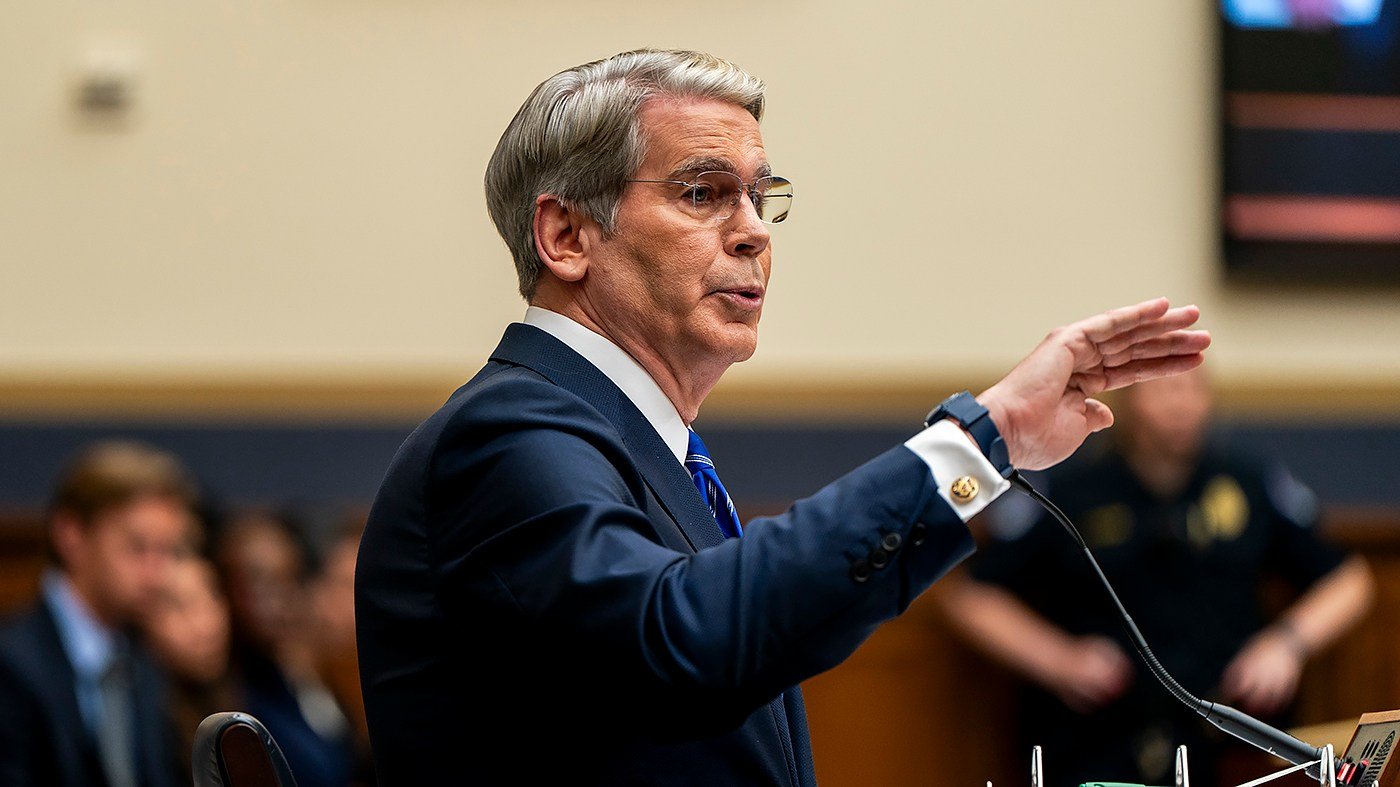
Treasury Secretary Scott Bessent stated that Project Freedom had not been coordinated with Iran and was “something that’s been in the works.” He warned that Washington was prepared to re-engage in conflict if Iran attacked U.S. ships. “We would encourage the Iranians to let these more than 300 vessels leave,” Bessent said on Fox News. “We’re just firing if fired upon, we’re not the provocateurs here, but if the Iranians want to escalate here we’re willing to escalate.”
On Capitol Hill, skepticism emerged. Rep. Suhas Subramanyam (D-Va.) told CNN that “it’s still unclear to me how that’s helpful, whether we’ll get more ships through the strait,” though he backed efforts to weaken Iran’s grip on the waterway. Retired Navy Adm. James Stavridis also cautioned on CNN, “We should not underestimate the effort it will take to open the strait and keep it open,” estimating the need for an aircraft carrier, two dozen destroyers, half a dozen frigates, and hundreds of aircraft.
Bessent sought to downplay the energy crisis, promising “help is on the way as of today,” and expressed confidence that prices would fall quickly once the conflict ends. However, Sen. Richard Blumenthal (D-Conn.) contradicted that optimism, saying on MS NOW that “the price of...”
The direct clash in the strait and renewed strikes on the UAE underscore the fragility of the ceasefire. With negotiations stalled and Iran resuming attacks on Persian Gulf neighbors, the prospect of a broader conflict looms large.