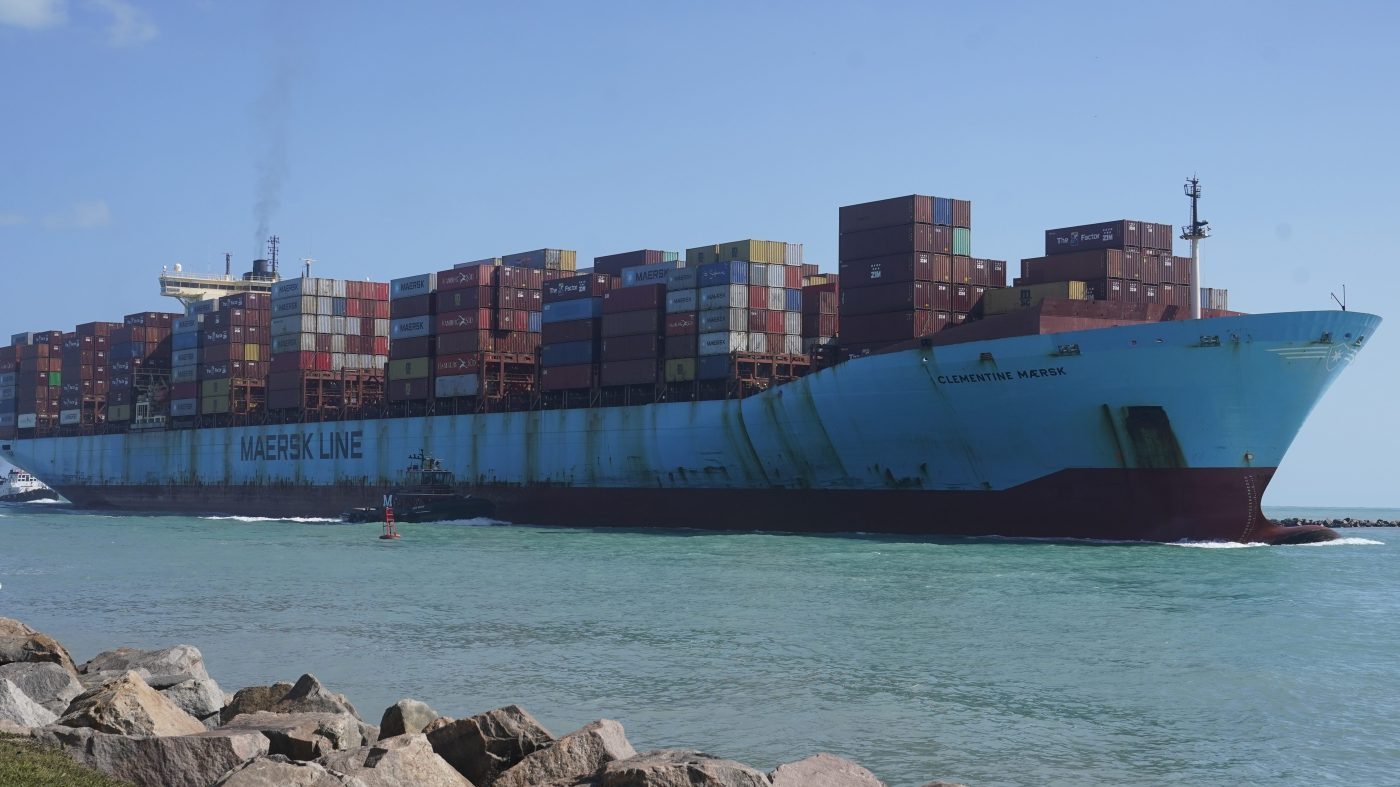
Danish shipping giant Maersk confirmed Monday that one of its U.S.-flagged vessels successfully navigated the Strait of Hormuz under the protection of American naval forces, marking a significant escalation in the ongoing confrontation between Washington and Tehran over the critical waterway.
The Alliance Fairfax, operated by Maersk's Farrell Lines subsidiary, had been stuck in the Persian Gulf since late February when hostilities between the U.S. and Iran erupted, according to a company statement obtained by CNBC. The vessel completed its journey without incident, and all crew members are safe, Maersk said.
Only a handful of commercial ships have managed to traverse the strait since Iran effectively imposed a blockade at the start of the conflict, a move that has rattled global oil markets. The waterway normally carries roughly one-fifth of the world's crude oil supply.
The transit was carried out under Project Freedom, a U.S. military initiative announced Sunday by President Trump to restore commercial shipping through the Strait of Hormuz amid a fragile ceasefire. U.S. Central Command confirmed that two American-flagged merchant vessels had successfully passed through the strait, with guided-missile destroyers now operating in the Arabian Gulf as part of the effort. CENTCOM said more than 100 aircraft and 15,000 service members are involved in the operation.
The move has already drawn sharp accusations from Tehran. Iranian Parliament Speaker Mohammad Bagher Ghalibaf posted on X that the United States and its allies have violated the ceasefire and imposed a blockade, warning that Iran has not yet fully responded. "The security of shipping and energy transit has been jeopardized by the United States and its allies through the violation of the ceasefire and the imposition of a blockade; of course, their evil will diminish," Ghalibaf wrote. "We know full well that the continuation of the status quo is intolerable for America; while we have not even begun yet."
Iranian state media reported Monday that a U.S. naval ship had been struck by two Iranian missiles, but CENTCOM dismissed the claim as false. The incident follows a warning from Iran's central command chief, Maj. Gen. Ali Abdollahi, who threatened to attack any foreign armed force attempting to enter the strait and insisted that safe passage must be coordinated with Tehran under all circumstances.
President Trump, in an interview with Fox News on Monday, responded bluntly: if Iran interferes with U.S. vessels escorting ships through the strait, it will be "blown off the face of the Earth."
Escalating actions in the Gulf threaten to unravel the tenuous ceasefire between the two nations. For more on the broader tension, see our coverage of Hegseth's boasts of a 'red, white and blue dome' over the strait and Tehran's formal accusations of a truce breach. Meanwhile, the crisis has driven U.S. gas prices up by 34 cents, as detailed in our report on the surge in fuel costs amid the naval escort operations.
As both sides dig in, the Strait of Hormuz remains a flashpoint with global energy security hanging in the balance.