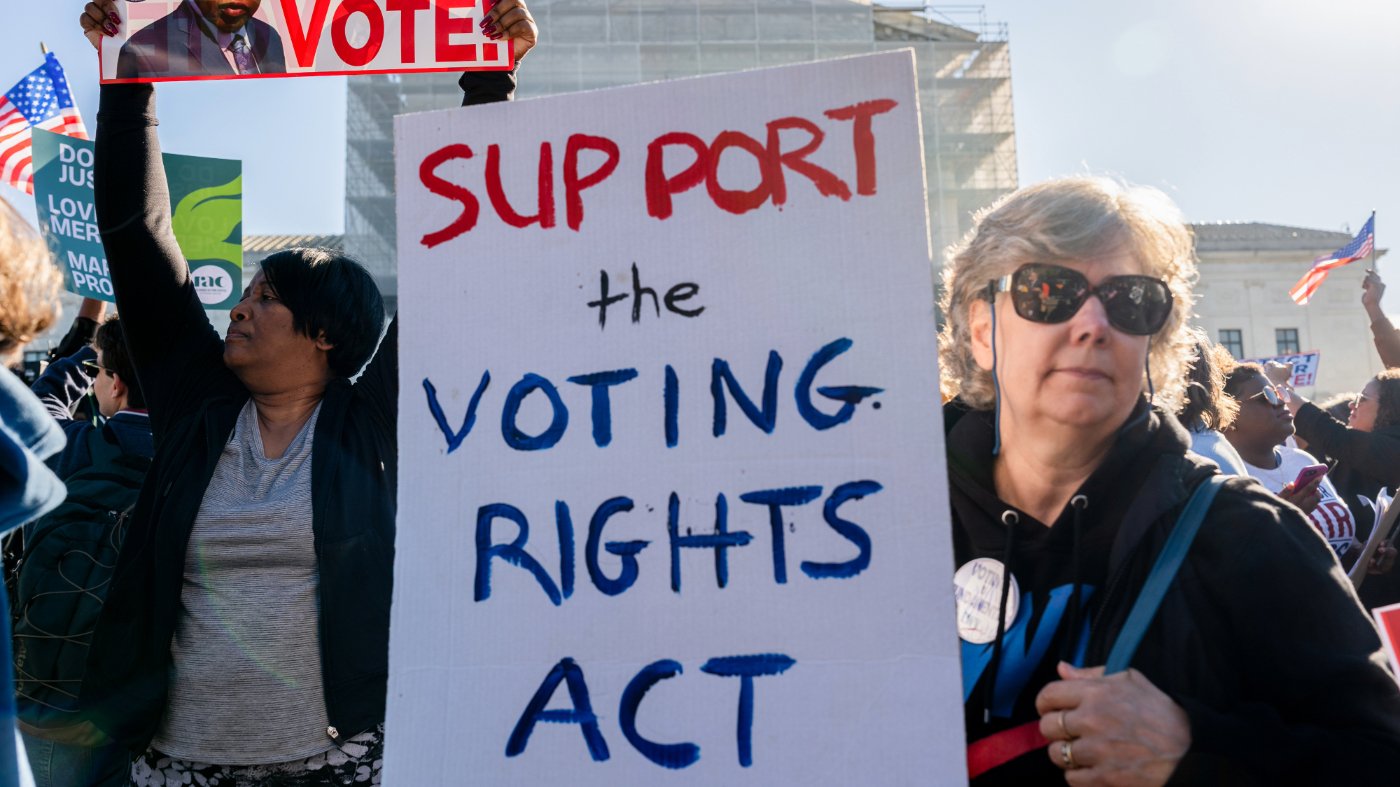
The Supreme Court dealt another blow to the Voting Rights Act last week, ruling 6-3 that Louisiana's creation of a second congressional district with a Black majority was unconstitutional because it considered race. The decision, backed by all six Republican-appointed justices, effectively allows partisan gerrymandering of such districts unless intentional racial discrimination can be proven—a high bar that critics say will be nearly impossible to meet.
The ruling targets a key provision of the landmark 1965 law, which was designed to end centuries of racial discrimination that barred Black Americans from voting. The court's decision forces Louisiana officials to delay their May 16 congressional primaries while they redraw district lines, likely leaving the state with only one Black-majority district out of six, despite Black residents making up 30% of the population.

This is the latest in a series of Supreme Court decisions since 2013 that have eroded the Voting Rights Act. The ruling overturns gains won by civil rights activists who faced beatings, jail, and even death in the 1950s and 1960s. The decision also threatens to reduce the number of Black elected officials nationwide, which has grown from about 1,500 in 1970 to over 10,000 today. Currently, there are 60 Black members of the House, 56 of whom are Democrats.
An NPR analysis warns that Republican-controlled state legislatures could eliminate at least 15 Black-majority congressional districts this year or by 2028. The New York Times paints an even grimmer picture, suggesting GOP-led states could wipe out most Democratic districts across the South. State legislative and local Black-majority districts are also at risk.
The partisan implications are clear. According to Pew Research Center, 83% of Black voters, 61% of Hispanic voters, and 63% of Asian American voters lean Democratic, while 56% of non-Hispanic white voters lean Republican. Reducing the voting power of people of color directly harms Democrats and boosts Republican electoral prospects. As political strategist Donna Brazile put it, the Republican-appointed justices were certainly aware they were giving GOP candidates an early Christmas present.
For millions of Black Americans, the Voting Rights Act was a ticket to participate in democracy. Before it became law, poll taxes, literacy tests, and absurd requirements—like guessing jellybeans in a jar—were used to deny Black people the vote in the South. The act outlawed these measures, leading to a New South where politicians had to respond to Black voters' needs and abandoned support for segregation.
To undo the damage, advocates are pushing for the John Lewis Voting Rights Advancement Act, which would ban partisan gerrymandering and strengthen federal oversight of voting discrimination. The measure passed the House in 2021 but died in the Senate. Democrats hope that winning control of both chambers in November will revive it.
Rev. Martin Luther King Jr., a key figure in the Voting Rights Act's passage, famously said that "the arc of the moral universe is long, but it bends toward justice." While the court's ruling is a setback, Brazile and others believe that people of goodwill will continue King's mission. As the civil rights anthem goes, "We shall overcome, someday."