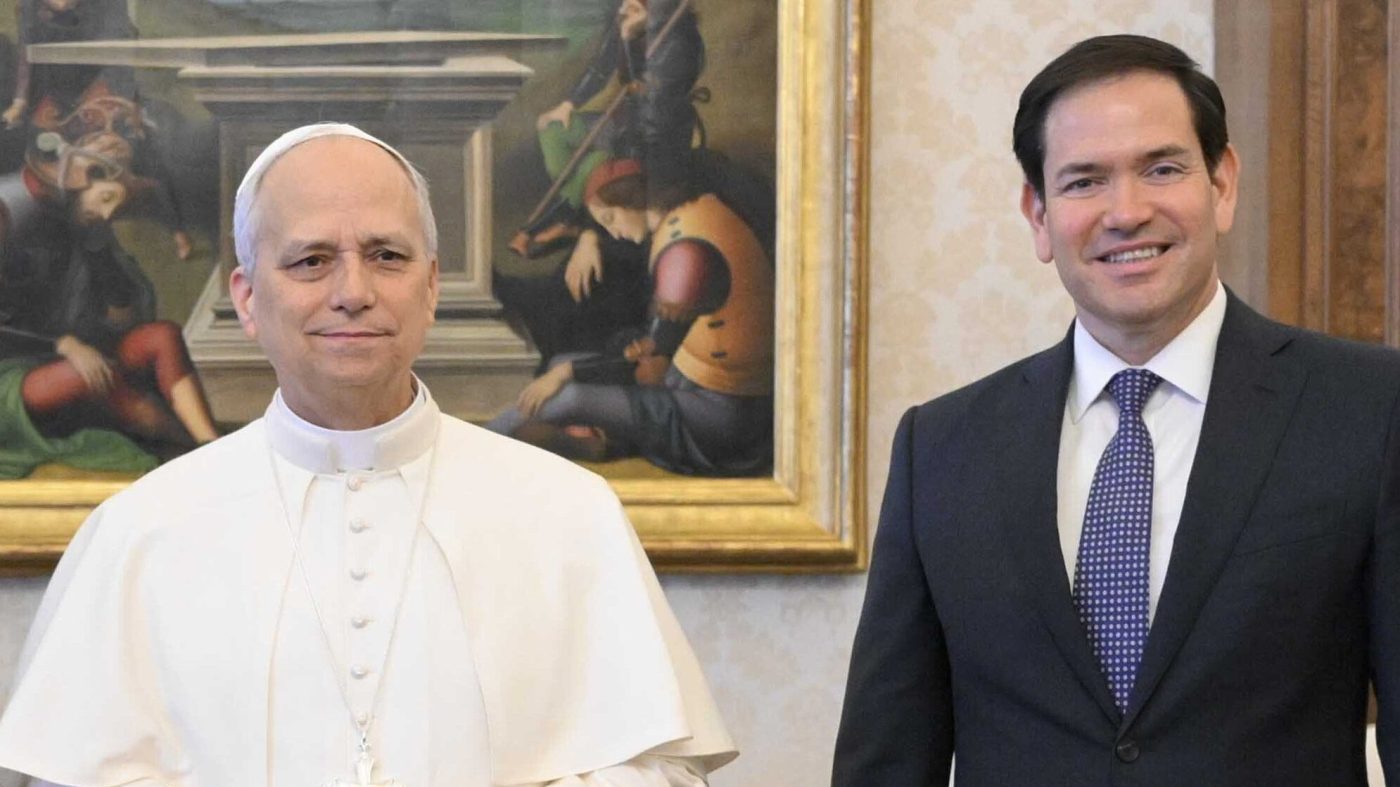
Secretary of State Marco Rubio is set to meet Pope Leo XIV on Thursday for what the U.S. ambassador to the Holy See described as a “frank conversation” about policy differences between the Trump administration and the Vatican. Ambassador Brian Burch, who assumed the post in September, emphasized that the talks would be guided by “fraternity and authentic dialogue,” aiming to address tensions that have escalated in recent weeks.
The meeting comes amid a public rift between President Donald Trump and Pope Leo XIV over the U.S. and Israeli military campaign against Iran. The pontiff has voiced opposition to the conflict, prompting Trump to accuse the pope of supporting Iran’s nuclear ambitions—an assertion the Vatican has not endorsed. In an interview Monday on the Hugh Hewitt show, Trump claimed the pope “would rather talk about the fact that it’s okay for Iran to have a nuclear weapon,” adding, “I think he’s endangering a lot of Catholics and a lot of people.”
Burch dismissed the notion of a “deep rift” between the U.S. and the Holy See, telling journalists that Rubio’s trip is about “better understanding each other” and working through differences. “Nations have disagreements,” Burch said, as reported by Reuters. “I think one of the ways that you work through those is through fraternity and authentic dialogue.”
Beyond the Iran dispute, the pope has criticized the Trump administration’s hardline immigration policies and called for dialogue with Cuba, a Catholic-majority nation that Trump has threatened to take over after the war with Iran. The president’s verbal attacks on Leo and social media posts widely interpreted as self-comparisons to Jesus have drawn backlash from U.S. Catholics and the Italian government.
Rubio’s itinerary includes meetings with senior Italian officials, including Prime Minister Giorgia Meloni, who has defended the pope against Trump’s criticisms and raised concerns about the U.S.-Israeli war against Iran. The secretary of state, who also serves as national security adviser, is expected to discuss these issues alongside broader U.S. policy priorities.
Ambassador Burch rejected the idea that Rubio’s visit is primarily about repairing ties. Instead, he framed it as an opportunity for both sides to engage in candid dialogue. “The secretary is coming here in that spirit, to have a frank conversation about U.S. policy, to engage in dialogue,” Burch said.
The meeting follows a series of escalating exchanges between Trump and the Vatican. The president’s threats to “destroy Iran’s civilization” have been met with papal opposition, and Trump’s comments on the pope’s stance on nuclear weapons have added fuel to the fire. Leo has never endorsed Iran acquiring a nuclear weapon, but the president’s rhetoric has strained relations.
Rubio’s trip to Italy is part of a broader diplomatic push, as the administration navigates tensions with allies and adversaries alike. The outcome of the Vatican meeting could signal whether the U.S. and the Holy See can find common ground on issues like Iran, immigration, and Cuba, or if the rift will deepen.