The Congressional Budget Office has once again sounded the alarm: the national debt is dangerously high and projected to climb sharply over the next decade. Yet on Capitol Hill, the sense of urgency remains muted. Fortunately, state governments—closer to the taxpayers who ultimately foot the bill—are stepping up to demand accountability.
The consequences of unchecked borrowing are not theoretical. Without reforms, Social Security trust funds are set to run dry by 2033, with Medicare and Medicaid close behind. These are hard fiscal realities, not partisan talking points. Moreover, as of 2025, over $8 trillion in U.S. federal debt is held abroad, including more than $800 billion by China. As former Director of National Intelligence Dan Coats warned, an unsustainable debt directly threatens both economic stability and national security. A nation that finances its present by mortgaging its future finds both diminished.
President Trump has taken steps to address the issue, appointing Vice President JD Vance to lead the newly created National Fraud Task Force, aimed at protecting taxpayers and ensuring government transparency. Meanwhile, initiatives like the Department of Government Efficiency and work by Russ Vought at the Office of Management and Budget signal a recognition that fiscal discipline is essential. But the question remains: can we afford the lack of restraint? The answer is a resounding no.
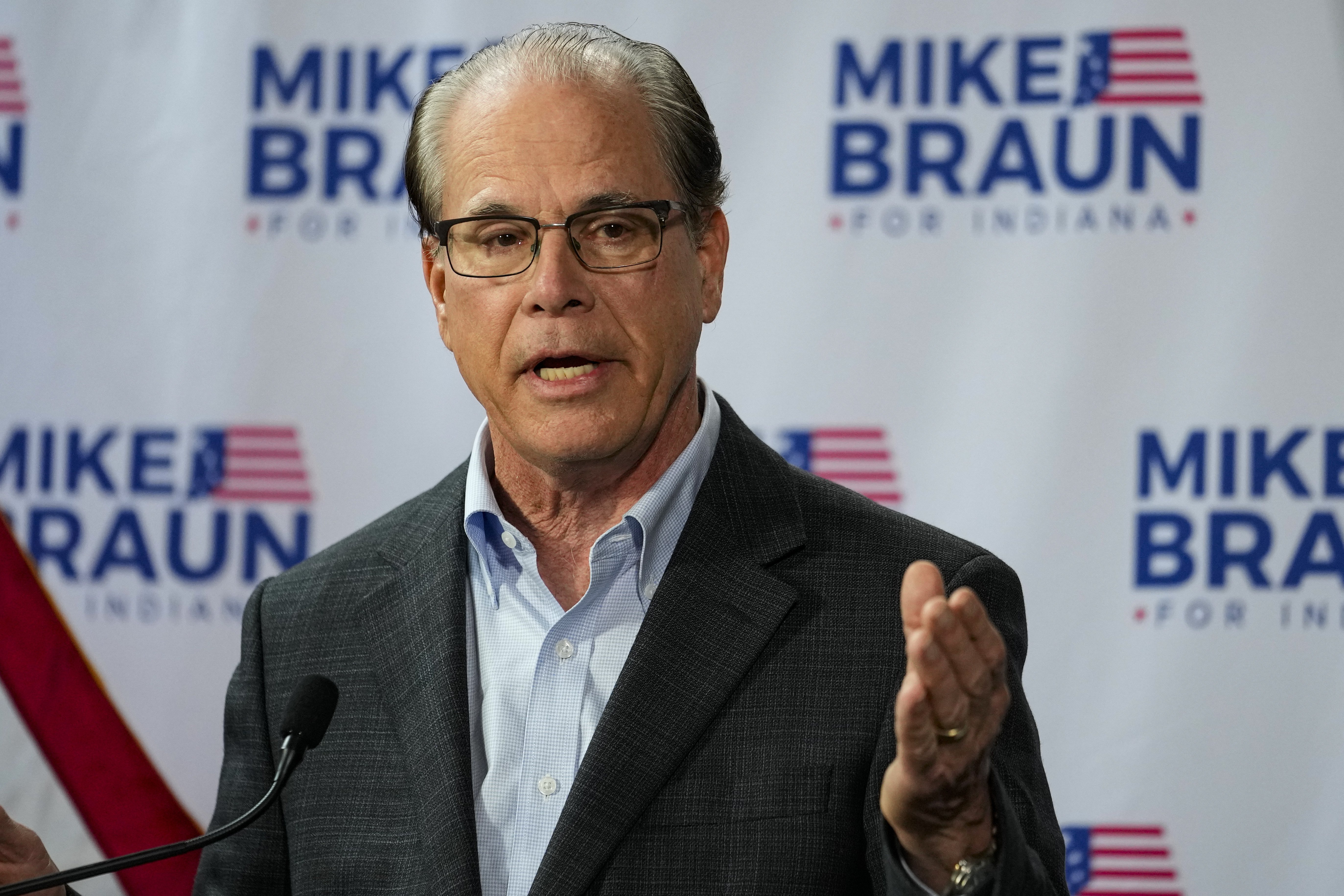
States are now leading by example. Indiana, which two decades ago faced a dire financial situation with heavy debt and underfunded pensions, has turned itself around. It now holds a AAA credit rating from all three major agencies. In 2018, with 71% voter support, the state passed what is considered the gold standard for balanced budget amendments—something California and other states lack in enforceability. Indiana’s lawmakers have also drawn attention to the federal debt crisis through a bipartisan resolution, inspired by a U.S. Senate resolution authored by then-Senator Mike Braun (R-Ind.), which passed unanimously in 2024.
The American Legislative Exchange Council (ALEC) has adopted Indiana’s resolution as a national model and included it in its Essential Policy Solutions for 2026. The model labels the federal debt a national security threat and urges Congress to restore regular budgeting order—a far-from-radical proposal. As Chip Roy warned, the national debt surpassing GDP is a ticking time bomb.
States that maintain balanced budgets remain financially vulnerable because the federal government adds roughly $2 trillion to the debt annually through deficit spending. There is an indispensable role for states to press Washington to return to fundamentals: balanced budgets, prudent spending limits, and transparent accounting. The federal government would do well to emulate fiscally responsible states like Tennessee, Florida, Arizona, and Utah, rather than chronic deficit producers like California, Illinois, and New York. Several states, including Colorado with its Taxpayer’s Bill of Rights, have enacted tax and expenditure limits to curb government overreach.
The lesson is clear: constraints matter, and arithmetic does not yield to wishful thinking. Without a decisive course correction, the nation faces not just a painful reckoning but a prolonged era of diminished opportunity—one that will negatively impact the inheritance we leave to our children and grandchildren. States are coming to understand that every dollar sent to them is borrowed, and it falls on their shoulders to work with federal leaders to solve this crisis. Restoring fiscal sanity requires structural reforms and a willingness to accept that resources are finite.