On April 21, students at UCLA disrupted a speech by James Percival, the Department of Homeland Security's general counsel, at a meeting of the conservative Federalist Society. According to Fox News, the protesters booed Percival, held signs with vulgar language—one reading “F— you, loser”—and set off various sounds on their phones while shouting “Nazi.”
The incident is the latest in a series of campus disruptions that have fueled the Trump administration's crackdown on higher education. The Foundation for Individual Rights and Expression reported 172 attempts to cancel or disrupt speakers or events on U.S. campuses in 2025 alone.
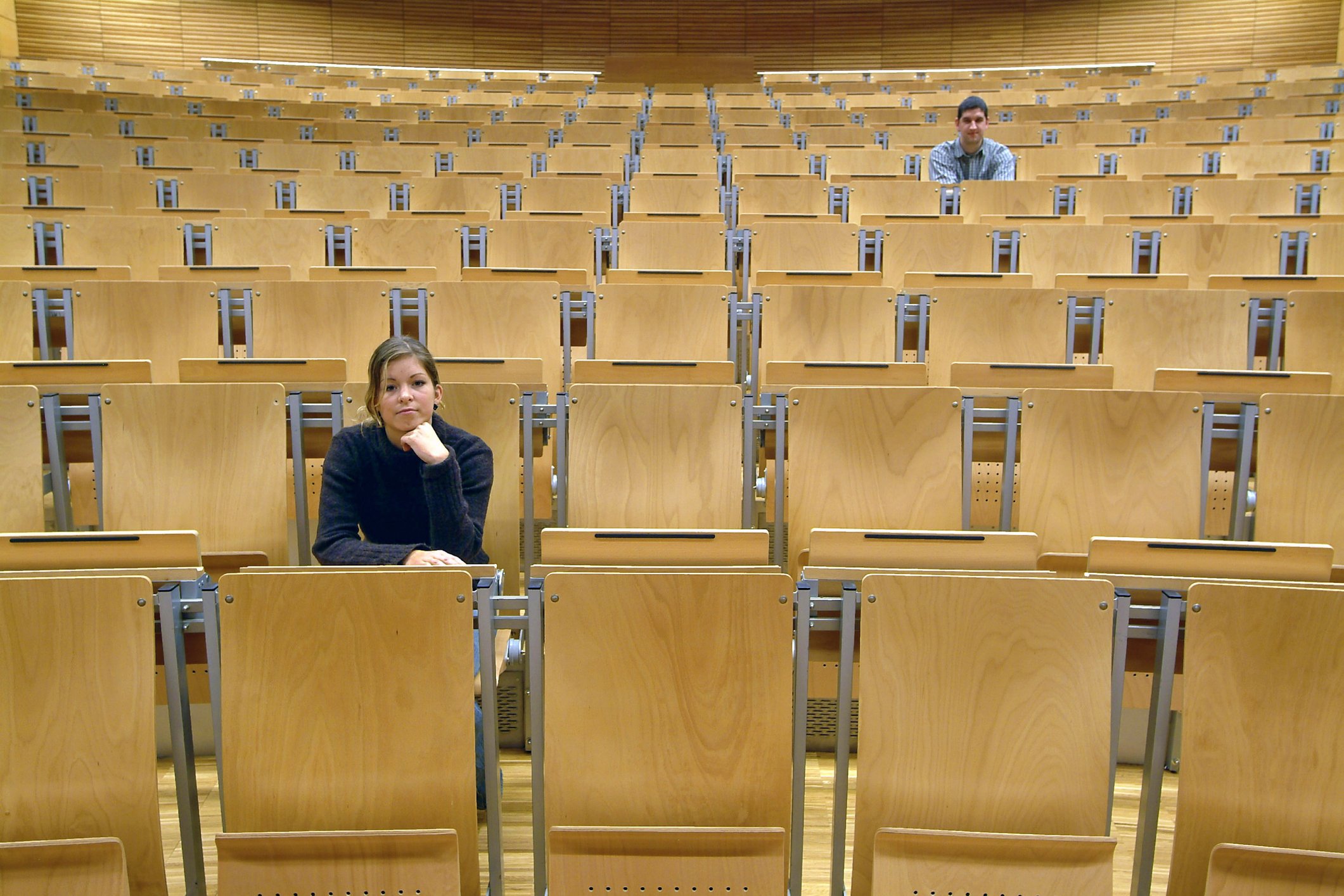
Colleges have tried nearly every tactic to protect free speech, but with limited success. A potential solution, however, may lie close at hand: the classroom itself.
Academic freedom vs. free speech
Campuses have two distinct arenas for expression: the classroom, where academic freedom governs, and public spaces where outside speakers like Percival are invited. The principle of academic freedom, rooted in the 1915 “Declaration of Principles on Academic Freedom and Academic Tenure” by the American Association of University Professors, protects professors from administrative retribution in their pursuit of truth. It encompasses freedom of inquiry, teaching, and extramural utterance, but also demands professionalism and intellectual rigor.
In the classroom, students should learn to weigh evidence, practice curiosity, confront unfamiliar ideas, and think beyond their own experiences. They should be asked to engage with perspectives they don't hold and to support their arguments with evidence—a training ground for democratic habits.
Critics like Greg Lukianoff and Jonathan Haidt argue that today's students are psychologically fragile and ill-equipped for free speech. But the classroom can teach them to endure those mental stressors. Lee Bollinger, former president of Columbia University, suggests professors repeatedly ask students simple questions beginning with “But have you considered …?”
Speech on campus can only flourish if students learn to navigate differences, listen generously, and think critically. That preparation may help them do what free speech requires: showing others the error of their ways, rather than silencing or humiliating them.
The UCLA students who refused to listen to Percival need to hear that question over and over. As a new poll finds 61% of Americans view Iran strikes as a misstep, the stakes for civil discourse extend well beyond campus.
This article is adapted from an analysis by Austin Sarat, the William Nelson Cromwell Professor of Jurisprudence and Political Science at Amherst College, and Aidan Gemme, a senior at Amherst College.