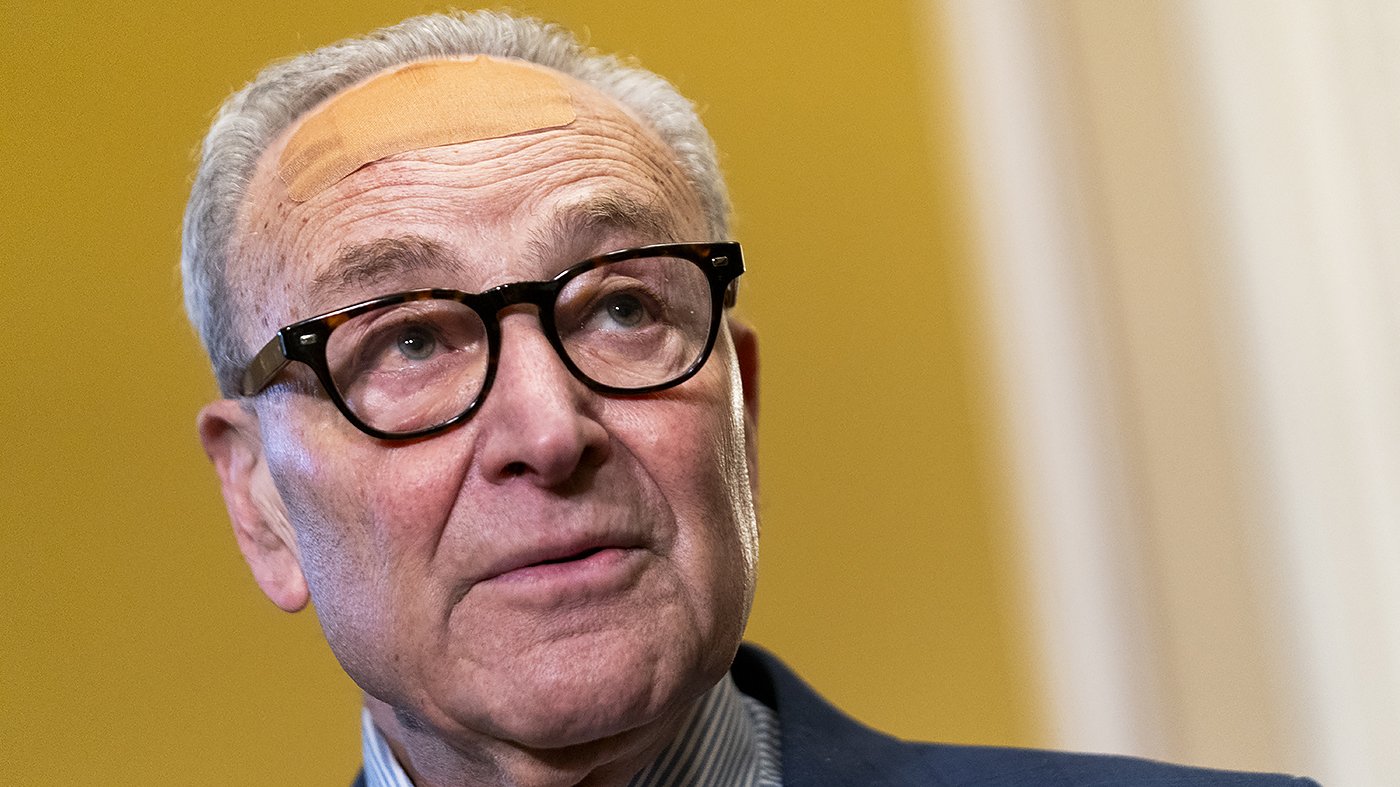
Senate Democratic Leader Chuck Schumer (N.Y.) is pressing the House of Representatives and the White House to enact a full ban on government officials using prediction markets, arguing that such activity poses a grave threat to national security. Schumer's call comes after revelations that 16 accounts each made over $100,000 by accurately predicting a U.S. military strike on Iran hours before the operation became public.
In a statement released Sunday, Schumer highlighted a recent case where a U.S. Army Special Forces soldier was charged with using classified information to net more than $400,000 on bets related to the capture of former Venezuelan President Nicolás Maduro. He also noted that three federal candidates in Virginia, Texas, and Minnesota were fined and banned by the prediction market Kalshi last month for trading on their own races.
“Insiders are cashing in on classified information, on military strikes, on their own elections, while the American people are kept in the dark,” Schumer said. “This isn’t a side hustle. This isn’t a hobby. This is a national security risk, and it is antithetical to the very foundations of our democracy.”
The Senate last Thursday unanimously passed a resolution sponsored by Sen. Bernie Moreno (R-Ohio) that prohibits senators and Senate staff from trading on prediction markets. The White House earlier this month issued a warning to staffers against using insider information to place bets on platforms like Kalshi and Polymarket.
Despite these steps, Schumer emphasized that employees at the White House, federal agencies, and the House remain legally able to participate in these betting markets, even though they have access to classified intelligence and can influence or foresee congressional votes. He is calling on the House to quickly pass a companion measure banning its members and staff from prediction market wagers, and he is urging President Trump to sign a comprehensive federal ban covering all government officials, staffers, and employees across the executive branch.
“This is a no-brainer. We must never allow Congress to turn into a casino, and we shouldn’t let the White House, or the West Wing, be one either,” Schumer argued. “Members and staff representing the public should never be able to gamble on wars, on economic crises, or on elections. The very possibility that a member’s vote could be influenced by a bet is reason enough to slam this door shut.”
The push for a broader ban follows the Senate's unanimous vote to restrict its own members, a move that Schumer now wants replicated across the government. The controversy has also drawn attention to the role of prediction markets in politics, with critics warning that they could undermine democratic integrity by allowing insiders to profit from non-public information.
Schumer's stance aligns with growing concerns about the intersection of financial speculation and classified data. A recent Senate vote to ban members from prediction market trading set a precedent, but Schumer insists that without a unified federal policy, the risk remains. The issue has also sparked broader debate about government accountability, with some lawmakers linking it to other governance challenges, such as Schumer's criticism of the Supreme Court over voting rights.
As the debate unfolds, Schumer's call for a total ban underscores the urgency of preventing classified information from being leveraged for personal gain. The Democratic leader's proposal would effectively close a loophole that currently allows executive branch employees and House members to engage in prediction market trading, a practice he describes as incompatible with public service and democratic principles.