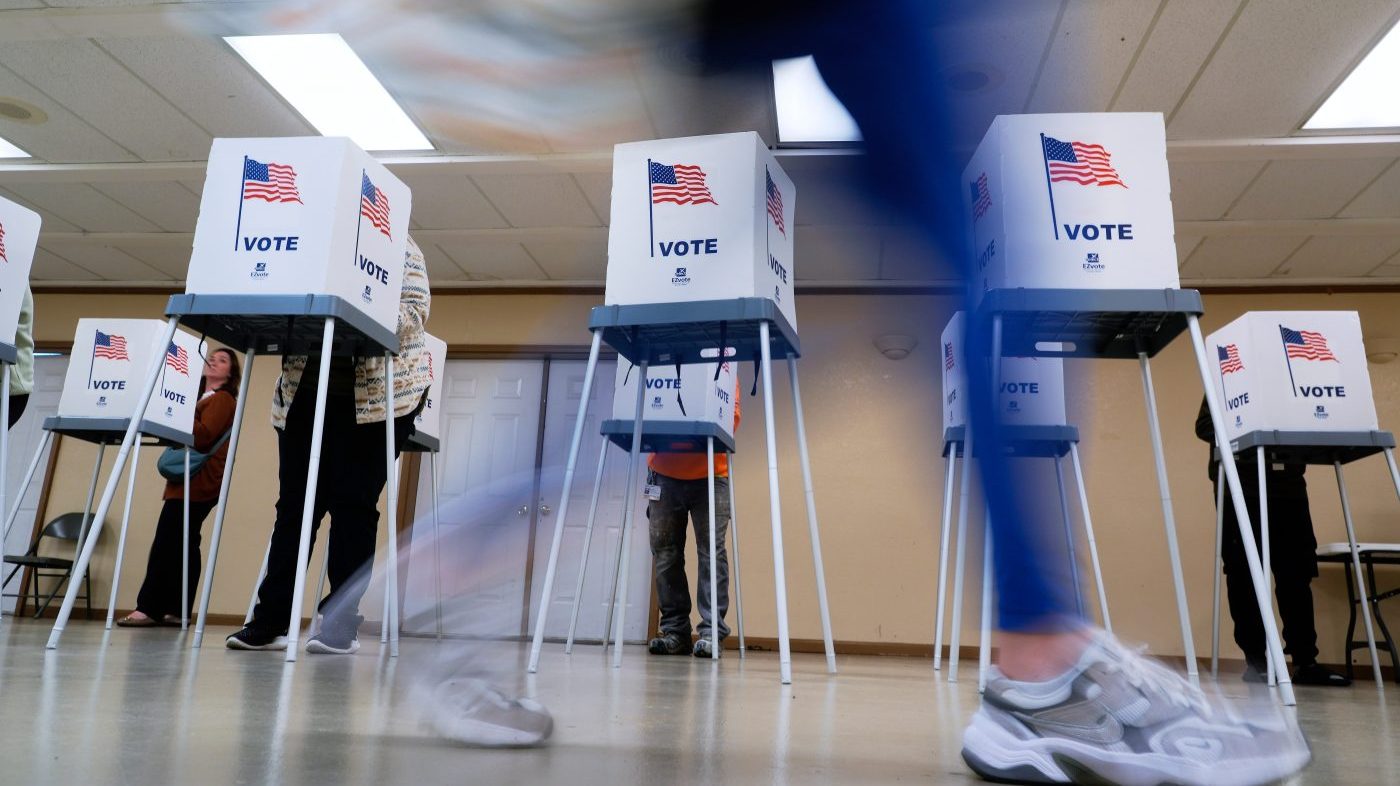
With just six months until the 2026 midterm elections, the battle for control of Congress is intensifying across key battleground states. Republicans currently hold narrow majorities in both the House and Senate, but Democrats see a clear path to flipping the House — while the Senate remains a steeper challenge.
A recent poll gives Democrats a 10-point lead in the generic House ballot, suggesting voter discontent with the GOP majority. All 435 House seats and 35 Senate seats are on the ballot in November, and both parties are pouring resources into a handful of competitive states that will determine control of Congress.

House in Play, Senate a Tougher Lift
Republicans hold a 53–47 advantage in the Senate. To take the majority, Democrats would need to pick up four seats — a tall order given the map. Competitive Senate races are emerging in Maine, North Carolina, and Michigan, all states where Democrats believe they can flip Republican-held seats.
Recent court rulings are also reshaping the political landscape. A Supreme Court decision on Louisiana's congressional maps has injected new uncertainty into redistricting, potentially shifting the balance in several House races. Democrats have seized on the ruling as evidence of GOP overreach, while Republicans argue it's a routine legal adjustment.
Key Issues Driving the Campaign
Policy fights are already animating the campaign trail. Democrats are hammering Republicans on reproductive rights, especially after an appeals court blocked telehealth access to abortion pills. Party leaders have vowed to make the issue central to their midterm messaging, particularly in suburban districts where the ruling is unpopular.
Meanwhile, former President Donald Trump is courting senior voters in Florida by proposing tax-free Social Security benefits, a move designed to shore up GOP support in a key swing state. The proposal has drawn criticism from Democrats who call it a fiscally irresponsible gimmick.
International affairs are also intruding on the domestic campaign. The standoff in the Strait of Hormuz threatens global food supplies, and Democrats are pressing the Trump administration for a clearer strategy. The White House and GOP leaders are clashing with Democrats over Iran war powers, a fight that could define the foreign policy debate in battleground states.
Democrats Eye Broader Coalition
Democrats are also trying to expand their coalition. The party sees an opening among voters disillusioned by Trump's pesticide policies, as detailed in a recent analysis of MAHA voters. At the same time, some Black voters, long a Democratic base, are expressing frustration over unmet promises — a dynamic explored in a piece on decades of loyalty and unmet debts.
With six months to go, the race remains fluid. Democrats have the polling edge in the House, but the Senate map is unforgiving. Both parties are bracing for a long, expensive campaign that will test their strategies across a divided electorate.