The simmering constitutional battle between President Trump and Congress over the Iran conflict has erupted into a full-blown political war, centered on the interpretation of a Vietnam-era law. As the clock struck the 60-day mark under the 1973 War Powers Act on Friday, Democrats seized the opportunity to force a series of votes aimed at compelling the president to either secure congressional approval or end the military campaign.
Trump and his Republican allies are pushing back, arguing that the conflict never constituted a formal war and that the current ceasefire, in place since April 7, effectively ended hostilities before the deadline. The White House contends the truce pauses the 60-day clock, a position that has drawn sharp criticism from Democrats who accuse the administration of twisting the law to avoid accountability.
“The Founders gave Congress the ultimate decision on when we go to war,” said Rep. John Garamendi (D-Calif.), who has introduced a war powers resolution. “Trump has no plan to sustain this conflict, no plan to transition Iran toward democracy, and no plan to de-escalate or contain the spread of violence in the region.”
Democrats, led by the Congressional Progressive Caucus, are employing a staggered strategy to introduce multiple resolutions that become eligible for floor votes at different times. This approach ensures a steady drumbeat of legislative action as the midterm elections approach, putting Republicans on record supporting an increasingly unpopular war. “I hope this becomes a steady stream until some Republicans join us,” said Rep. Jared Huffman (D-Calif.), who has sponsored his own resolution.
So far, GOP lawmakers have largely closed ranks against any attempt to limit Trump’s war powers. Two House resolutions and six Senate measures have been blocked, with Republicans warning that restraints would embolden Tehran. “We’re not in an active kinetic bombing or firing situation right now; we’re trying to broker peace,” Speaker Mike Johnson (R-La.) told NBC News. “I’d be reluctant to get in front of the administration during sensitive negotiations.”
Defense Secretary Pete Hegseth reinforced that message on Thursday, telling the Senate Armed Services Committee that the ceasefire pauses the 60-day count. “Our understanding is that the clock stops during a ceasefire,” he said.
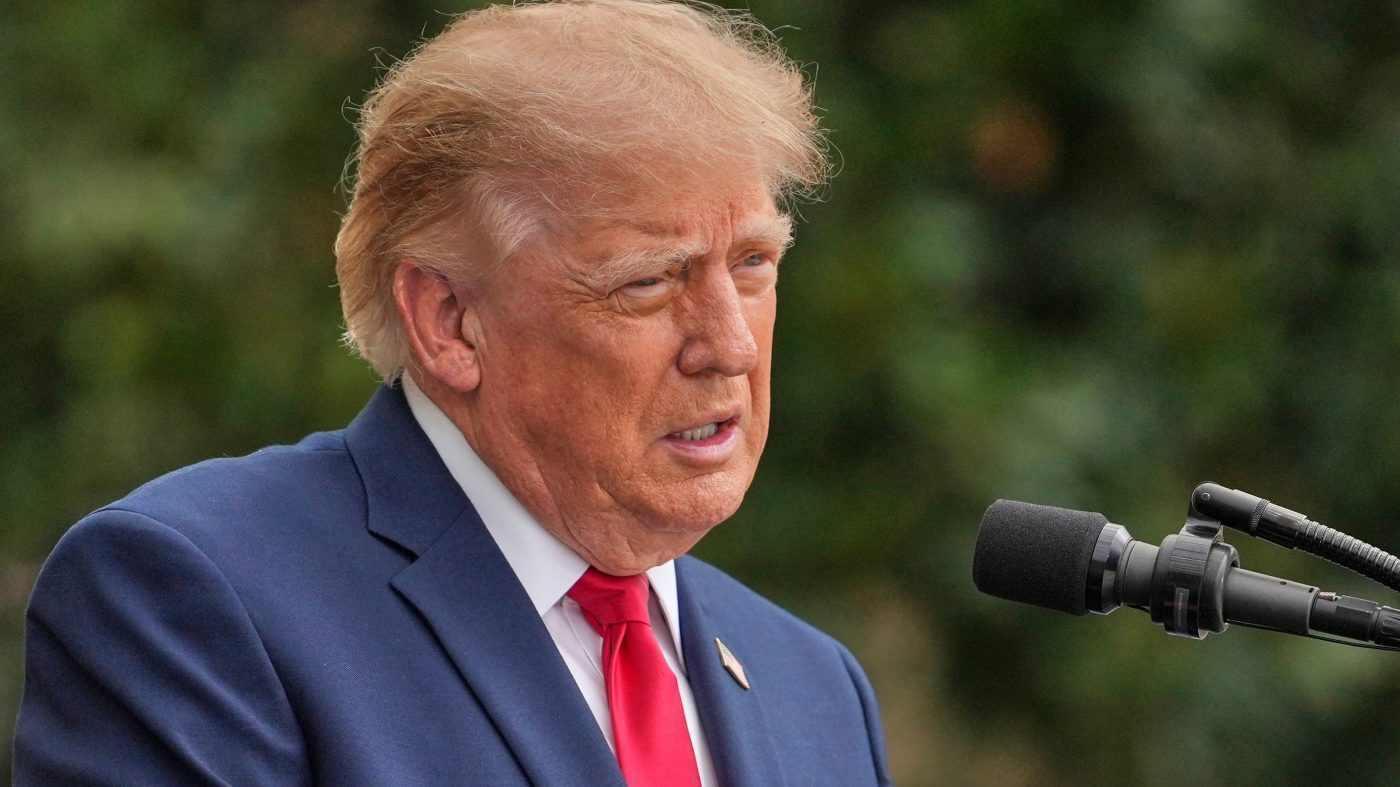
Trump escalated the fight on Friday by declaring the War Powers Act unconstitutional and sending a formal letter to Speaker Johnson and Senate President Pro Tempore Chuck Grassley (R-Iowa), asserting that hostilities have ended. “There has been no exchange of fire since April 7,” Trump wrote. “The hostilities that began on February 28 have terminated.” Still, he warned that Iranian forces remain a threat and kept U.S. forces on standby in the region, adding, “I appreciate the support of Congress in these actions.”
Democrats are not backing down. They accuse the administration of violating Article I of the Constitution, which vests war-declaring power solely in Congress. “Republicans are twisting the War Powers Act beyond recognition,” said Rep. Ted Lieu (D-Calif.), vice chairman of the House Democratic Caucus. “That statute was meant to limit the president’s power, not expand it. And no federal statute can override the Constitution—only Congress can declare war. And we’re in a war.”
The political stakes are high. Polls show growing public opposition to the conflict, fueled by rising gas prices and economic strain. Democrats see each vote as a chance to highlight that discontent and force Republicans to defend an unpopular engagement. The battle over war powers is far from over, with more votes expected in the weeks ahead.