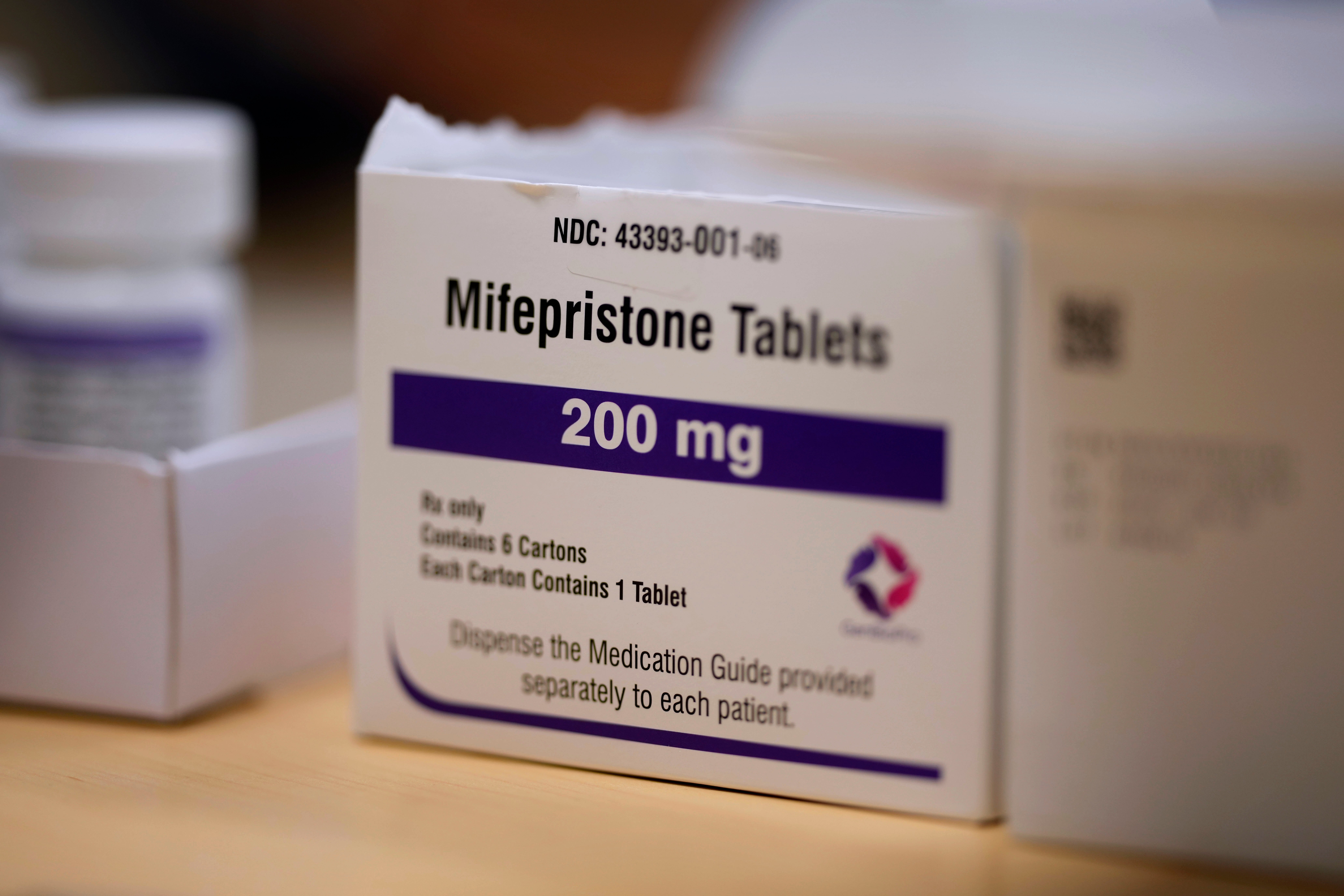
A federal appeals court late Friday issued a sweeping order that blocks doctors from prescribing the abortion pill mifepristone via telehealth or mailing it to patients, effectively reinstating a 2021 requirement that the drug be obtained in person.
A three-judge panel on the 5th U.S. Circuit Court of Appeals sided with Louisiana in its lawsuit against the Food and Drug Administration, granting a temporary nationwide injunction. The ruling overrides a lower court decision earlier this month that had paused the case while the Trump administration's FDA conducted a safety review of mifepristone.
The FDA permanently removed the in-person dispensing rule in 2023, a move that led to a sharp increase in online prescriptions for medication abortion after the Supreme Court overturned Roe v. Wade. Louisiana argued that the agency's looser rules made it easier for pills to be shipped into states with abortion bans, undermining their laws.
The appeals court agreed, stating that Louisiana had shown it is likely to succeed on the merits and that the state is suffering irreparable harm. “Every abortion facilitated by FDA’s action cancels Louisiana’s ban on medical abortions and undermines its policy that ‘every unborn child is human being from the moment of conception and is, therefore, a legal person,’” the ruling said.
Mifepristone is one of two drugs commonly used in medication abortions, which now account for the majority of abortions in the United States. The ruling effectively blocks access to the drug by mail even in states where abortion remains legal, a significant expansion of the court's reach.
The decision is the latest in a series of high-stakes battles over abortion access since the Dobbs decision. The 5th Circuit, known for its conservative leanings, has previously issued rulings on related issues, including a recent case where it struck down a home distilling ban as unconstitutional, setting up another potential Supreme Court clash.
The ruling also echoes other recent federal court actions that have blocked or altered Trump administration policies, such as a judge blocking the termination of Temporary Protected Status for Yemeni nationals while the Supreme Court weighs judicial authority. Legal experts expect the mifepristone case to similarly reach the high court.
For now, the injunction imposes a nationwide requirement that mifepristone must be prescribed and dispensed in person, reversing the FDA's 2023 policy. The ruling does not affect the availability of misoprostol, the second drug in the two-drug regimen, which can still be prescribed and mailed.
The Biden administration had defended the FDA's decision to expand telehealth access, citing safety data showing that medication abortion is safe and effective. The appeals court's order, however, prioritizes state sovereignty concerns over federal regulatory flexibility.
This decision is likely to intensify the ongoing political and legal battle over abortion access, with implications for both state-level enforcement and federal authority over drug regulation.