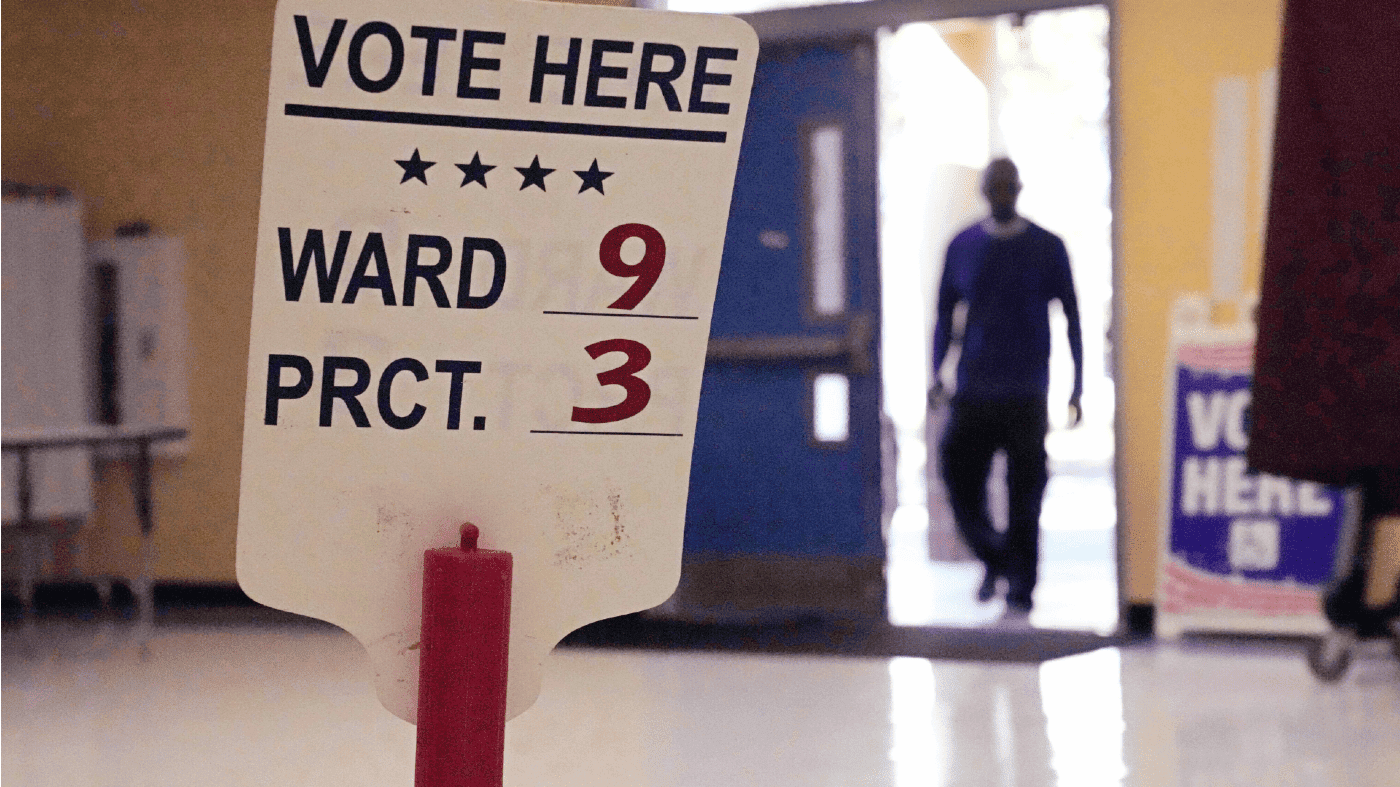
BATON ROUGE — Democratic congressional candidate Lindsay Garcia and a Louisiana voter filed a federal lawsuit Thursday challenging Governor Jeff Landry’s decision to halt the state’s House primary elections, arguing the suspension violates constitutional protections and disenfranchises voters who have already cast ballots.
The legal action comes just hours after Landry issued an executive order pausing the primaries, following a Supreme Court ruling that struck down Louisiana’s second majority-Black congressional district as an unconstitutional racial gerrymander. Garcia and co-plaintiff Eugene Collins contend the elections were already underway and that Landry’s move unlawfully interferes with the electoral process.
“The State, in short, has no lawful predicate for the cancellation it has ordered,” the complaint states. “It cannot conduct a primary under a remedial map that does not yet exist, in a remedial proceeding that has not yet begun, before a court that does not yet have jurisdiction.”
The lawsuit alleges violations of the First, Fourteenth, and Fifteenth Amendments, arguing the suspension nullifies absentee ballots already submitted and disrupts the established election timeline. Garcia and Collins are asking the court to block enforcement of the executive order, allow the elections to proceed, and count all votes cast so far. They also seek to prevent the state from “disenfranchising any qualified Louisiana voter or de-listing any qualified candidate” from the May 16, 2026, or June 27, 2026, ballots.
Landry’s order gives state lawmakers time to draw a new congressional map and reschedule elections “as soon as practical.” He cited Secretary of State Nancy Landry’s declaration of a state of emergency, arguing that holding elections under an unconstitutional map “flies in the face of the United States Constitution.”
Attorney General Liz Murrill defended the suspension, saying in a statement Friday that the Supreme Court “has spoken” on the matter. “I will vigorously defend the State against any lawsuits seeking to block the lawful suspension of congressional elections as our Legislature moves forward to adopt new dates and a constitutional map,” she said.
President Donald Trump praised Landry’s swift response to the high court’s decision, which split 6-3 along ideological lines and weakened a key provision of the Voting Rights Act of 1965. Democrats condemned the ruling as a throwback to Jim Crow-era tactics aimed at suppressing Black voters. Senator Raphael Warnock of Georgia called it “Jim Crow in new clothes,” noting that even after the 15th Amendment, “through literacy tests, through grandfather clauses, through poll taxes, they effectively disenfranchised Black voters.”
Nonpartisan election analysts at Cook Political Report and Sabato’s Crystal Ball warn the ruling could threaten seven Democratic-held congressional districts in Alabama, Mississippi, Tennessee, and South Carolina if those states follow Louisiana’s lead in redrawing maps. For more on the broader implications, see Johnson's call for states to redraw maps after the Supreme Court’s decision.
The lawsuit adds a new layer of uncertainty to Louisiana’s already chaotic election cycle. As Landry moves forward with a redraw, Garcia’s legal challenge could determine whether the current primary results stand or are swept aside entirely. For context on the governor's broader strategy, read Landry’s confirmation of the map redraw following the SCOTUS ruling.