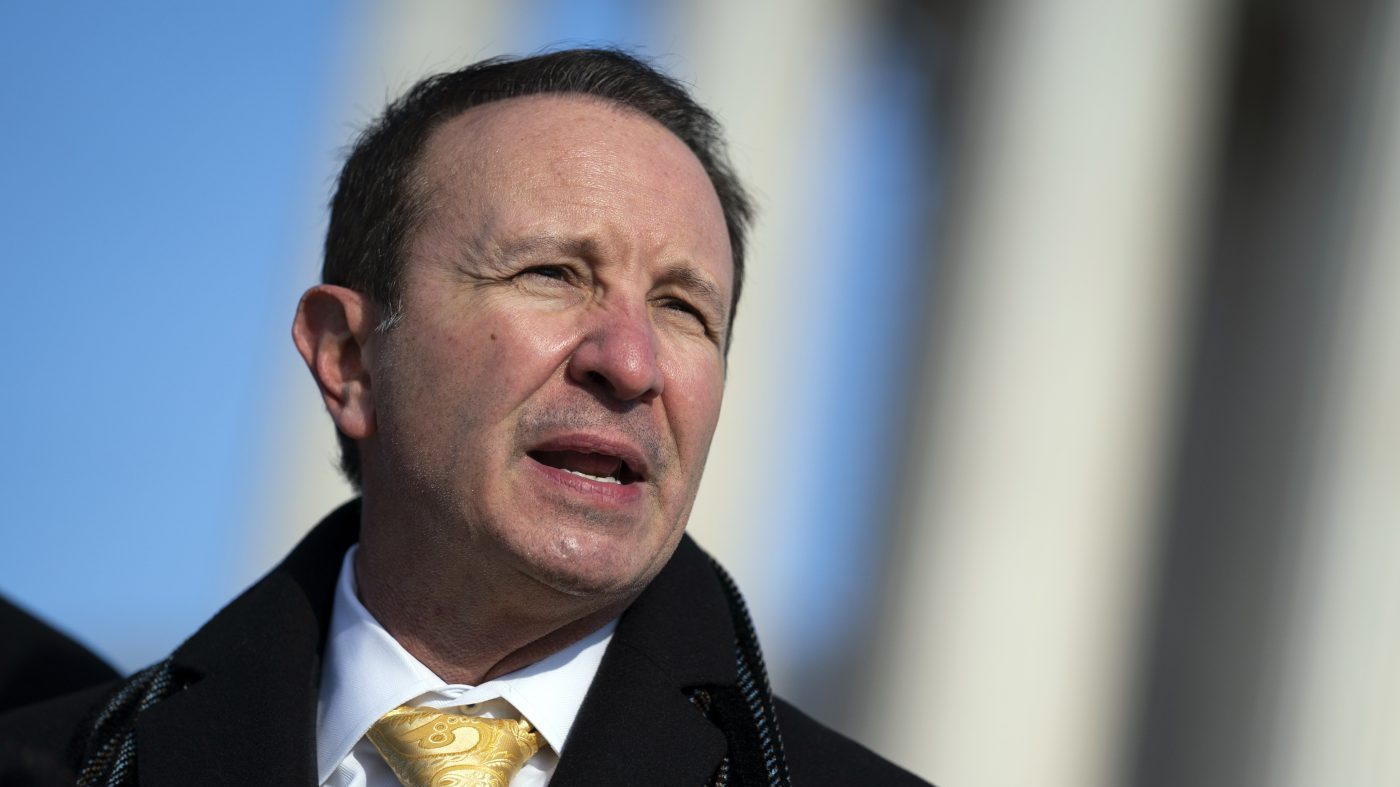
Louisiana Governor Jeff Landry and state Attorney General Liz Murrill confirmed Thursday that the state will adopt new congressional maps ahead of the 2026 midterm elections, responding directly to a landmark Supreme Court decision that invalidated the current map as an unconstitutional racial gerrymander.
In a joint statement posted on X, the two Republican officials said: “The State is currently enjoined from carrying out congressional elections under the current map. We are working together with the Legislature and the Secretary of State’s office to develop a path forward.” The statement underscores the urgency created by the high court’s 6-3 ruling, which effectively blocked Louisiana from using its existing district boundaries.
The Supreme Court’s decision, handed down Wednesday, declared that the addition of a second majority-Black congressional district violated the Constitution. Writing for the majority, Justice Samuel Alito argued that “that map is an unconstitutional gerrymander, and its use would violate the plaintiffs’ constitutional rights.” The ruling dealt a significant blow to Section 2 of the Voting Rights Act, which for decades has been a key tool for advocacy groups seeking to create majority-minority districts. Alito portrayed the decision not as an abolition of Section 2 but as an “update” to the framework governing such cases.
According to a report from The Washington Post on Wednesday, Landry is expected to pause next month’s scheduled primary elections, with an announcement possible as soon as Friday. The Hill has reached out to the governor’s office for confirmation on whether Louisiana’s May 16 primaries will be rescheduled. The state’s political calendar now hangs in the balance as lawmakers and election officials scramble to craft a legally compliant map.
Senate Minority Leader Chuck Schumer (D-N.Y.) sharply criticized the ruling, calling it “awful” and warning of its broader implications. “The consequence is as clear as it is dangerous: fewer protections for voters, more power for politicians to draw maps that silence them, particularly voters historically disenfranchised,” Schumer said in a statement. His remarks echoed concerns from civil rights groups that the decision will weaken minority voting power nationwide.
The ruling has already become a flashpoint in the run-up to the 2026 midterms, with Republicans celebrating it as a constitutional victory and Democrats decrying it as an assault on the Voting Rights Act. The GOP sees the decision as a midterm game-changer, potentially reshaping district lines in Louisiana and beyond. Meanwhile, the Supreme Court’s landmark ruling has set the stage for a contentious redistricting cycle.
Legal experts note that the decision does not eliminate Section 2 entirely, but it tightens the standard for proving racial discrimination in redistricting, making it harder for plaintiffs to force the creation of majority-minority districts. This shift could have ripple effects in other states with pending Voting Rights Act challenges, including Virginia and Florida, where map disputes are expected to intensify ahead of the midterms.
Louisiana’s path forward remains uncertain. The legislature must now craft a new map that satisfies both the court’s constitutional requirements and the political realities of a deeply divided state. With the primary calendar in flux, Landry and state officials face mounting pressure to deliver a plan quickly. The governor’s office has not yet commented on the timeline for the redrawing process, but the Thursday statement signals that work has already begun.
The controversy has also drawn attention to the broader political landscape, as Democrats warn that the ruling could embolden Republican-led states to push more aggressive gerrymanders. The decision is likely to become a central issue in the 2026 campaign, with both parties framing it as a battle over the fundamental right to vote.