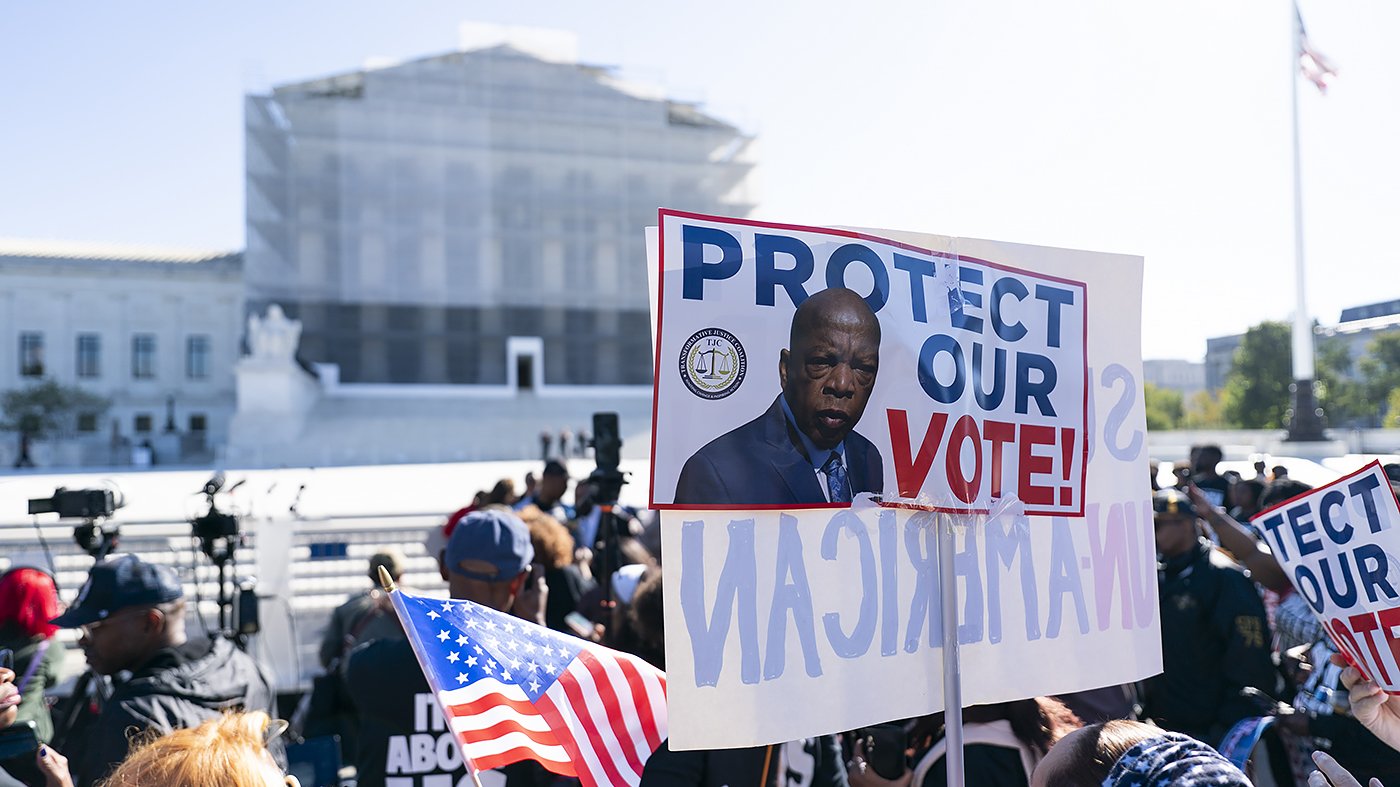
The Supreme Court delivered a seismic blow to the Voting Rights Act on Wednesday, striking down Louisiana’s congressional map that added a second majority-Black district in a 6-3 decision split along ideological lines. The ruling, written by Justice Samuel Alito, curtails the ability of civil rights groups to use the landmark 1965 law to force states to create districts that boost minority voting power.
Alito characterized the decision not as a repeal of Section 2 of the Voting Rights Act, but as an “update” to the legal framework that has governed such cases for decades. He argued lower courts had stretched the provision too far, allowing racial gerrymandering under the guise of compliance. “That map is an unconstitutional gerrymander, and its use would violate the plaintiffs’ constitutional rights,” Alito wrote.
The case originated after Louisiana’s Republican-controlled Legislature drew a map with only one majority-Black district following the 2020 census. Then-Gov. John Bel Edwards, a Democrat, vetoed the plan, but the legislature overrode him. Black voters and civil rights groups, including the NAACP and ACLU, sued, arguing the design diluted Black voting power in violation of Section 2. A lower court agreed, but the Supreme Court allowed the map to be used for the 2022 midterms while litigation continued.
After the justices upheld Section 2 in a similar Alabama case, Louisiana Republicans reluctantly drew a new map with a second majority-Black district stretching from Shreveport to Baton Rouge. State leaders emphasized the design protected powerful GOP incumbents like Speaker Mike Johnson, Majority Leader Steve Scalise, and Rep. Julia Letlow. But a group of self-described “non-African American” voters challenged the new map as an unconstitutional racial gerrymander, and a lower court agreed.
The Supreme Court’s decision now limits court-ordered redistricting that intentionally uses race as a factor, potentially endangering majority-minority districts across the South and beyond. Civil rights groups are bracing for a wave of litigation that could reshape the political landscape ahead of the 2026 midterms, where Republicans aim to hold their slim House majority. Meanwhile, Texas has already passed a new map with GOP pickup opportunities, sparking a mid-decade redistricting arms race that has drawn in states like California and Missouri.
Louisiana’s legal saga, which has ping-ponged through courts since the 2020 census, thrust the state into the center of conservatives’ push to weaken the Voting Rights Act. The ruling adds a new layer to an already volatile redistricting cycle, with implications for future elections that extend well beyond Louisiana. For more on how the Court is handling immigration cases, see our coverage of a challenge to Trump’s TPS cuts for Haiti and Syria and the fate of 1.3 million TPS holders.
In a rare procedural move, the justices heard re-argument in the case before reaching Wednesday’s decision. Alito’s opinion stops short of striking down Section 2 entirely, but it significantly narrows the tool that advocacy groups have used for decades to force new majority-minority districts. The decision leaves Louisiana’s map in limbo and sets the stage for further legal battles over racial representation and voting rights across the country.