The Supreme Court hears oral arguments Monday in a pair of cases that could determine whether the Trump administration can strip temporary protected status from hundreds of thousands of Syrians and Haitians, effectively rendering them undocumented and deportable. The outcome could reshape the lives of more than 1.3 million people from 17 countries currently covered by the program.
Temporary protected status, created by Congress, allows the U.S. government to grant protections to nationals from countries experiencing war, violence, environmental disasters, or extraordinary instability. The Trump administration is now moving to terminate those protections for nations still in crisis, despite warnings from its own experts that Syria remains unsafe and the region is engulfed in new conflicts.
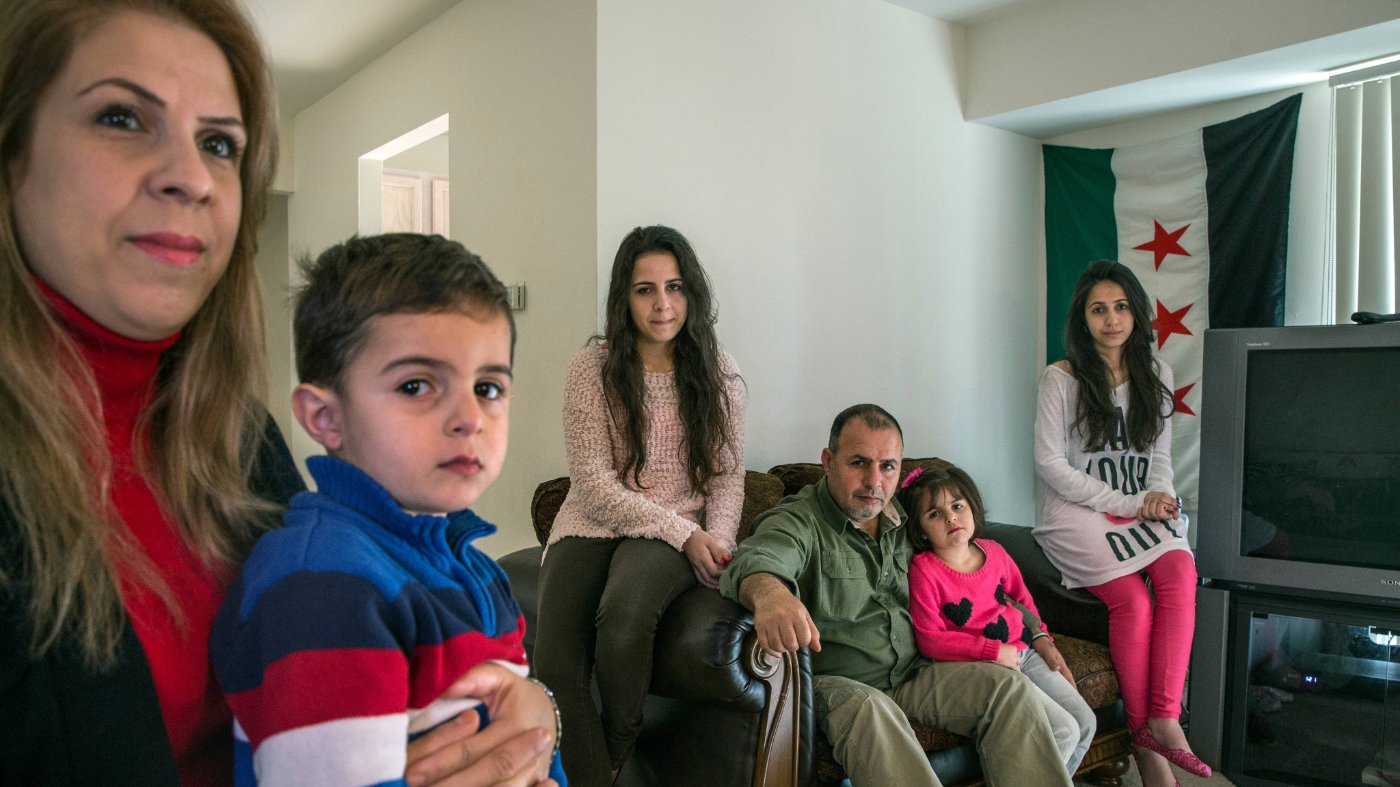
At the heart of the case is Dahlia Doe, a Syrian plaintiff who has lived in the U.S. since 2015. She works as a research director and is the primary caregiver for her elderly father, a permanent resident with Parkinson's disease. If forced to return to Syria, she would be separated from her family, placed in a country she has never lived in, and face life as a religious minority with no immediate ties.
“Dahlia’s story is just one of many,” said Sharif Aly, president of the International Refugee Assistance Project, which represents Syrian TPS holders in the lawsuit. “These are doctors, nurses, caregivers—people who have built lives, families, and careers here. All of that could be shattered in an instant.”
The administration’s lawyers argue not only that the president has broad authority to end TPS, but that courts have no role in reviewing that decision. Critics say this is an attempt to bypass Congress and the judiciary, undermining the rule of law itself. “This is a profound threat to all protected status holders and to anyone who believes in constitutional checks and balances,” Aly added.
The move is part of a wider campaign to strip legal status from immigrants of color, according to advocates. The administration has also targeted refugees and asylum seekers, and has imposed travel bans on several TPS-covered countries, blocking individuals from applying for other forms of relief. “These terminations are not rooted in fact or law, but in politics and racial prejudice,” Aly said.
If the Supreme Court sides with the administration, more than a million people could be added to the undocumented population overnight, destabilizing families and communities across the country. Many TPS holders work in essential roles, including healthcare and elder care, and their removal would ripple through the economy.
The cases also raise broader questions about the limits of executive power. The Trump administration has already faced legal challenges over its efforts to end birthright citizenship, as a recent poll showed 64% of Americans oppose that move. The Supreme Court is also weighing the legality of the travel ban, which blocks nationals from several TPS countries from seeking other immigration pathways.
For now, hundreds of thousands of Syrians and Haitians wait in limbo, their futures hanging on the Court’s ruling. “Temporary protected status and broader refugee protections are not loopholes to be closed,” Aly said. “They are commitments rooted in humanitarian values, international law, and common sense. To abandon those seeking protection is to abandon the very principles that define who we are.”