Saturday night's security breach at the Washington Hilton has dramatically shifted the calculus in the ongoing controversy over the proposed $400 million White House ballroom. Cole Tomas Allen, a 31-year-old Harris donor from California, stormed a security checkpoint armed with a shotgun, handgun, and knives, while President Trump and his entire Cabinet were gathered in the ballroom below. A Secret Service agent was shot but is expected to recover.
The attack was not random. Allen's manifesto, obtained by CBS News, explicitly listed Trump administration officials as targets, ranked from highest to lowest. Law enforcement, hotel staff, and guests were deemed obstacles he was willing to kill. The premeditated nature of the assault underscores the vulnerabilities inherent in hosting presidential events at commercial venues.
Critics of the ballroom project have focused on aesthetics and preservation law, but anyone with firsthand experience in presidential security knows this is not a close call. I've worked private security at major hotels and alongside Secret Service advance teams. Hosting a major event at an off-site venue is an operational nightmare. The planning for a state dinner begins weeks ahead, with bomb-sniffing dogs, secure communications, and background checks for every staffer. Yet the Washington Hilton is not a secure facility. Allen checked in the night before. Agents stopped him at the perimeter, but the system should never have that level of exposure when the nation's entire executive leadership is in one room.
This is not the first time the Hilton has been the site of a security failure. Forty-five years ago, John Hinckley Jr. shot President Reagan outside the same hotel, earning it the nickname "Hinckley Hilton." That attack prompted a redesign, including a special presidential suite. Trump was rushed to that same suite Saturday night. Some lessons, it seems, need repeating.
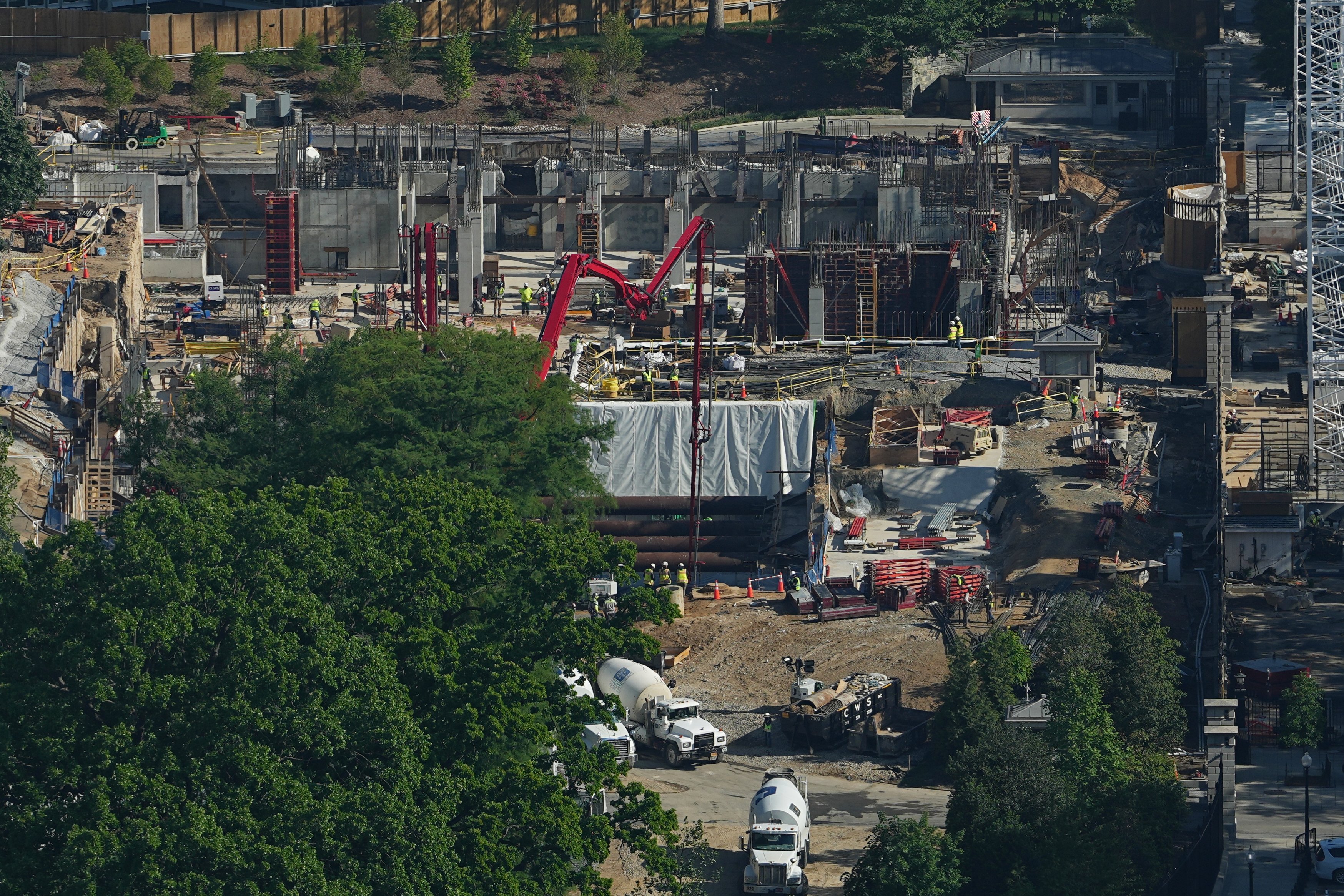
The architectural objections have some merit. Preservationists argue the ballroom would overshadow the White House's classical design. The National Trust for Historic Preservation sued in December 2025, winning a preliminary injunction that blocked above-ground construction. An appellate court later allowed work to continue through a June 5, 2026 hearing. The National Capital Planning Commission approved the design in an 8-1 vote on April 2. But security geometry cannot be compromised for aesthetics.
The financial argument is equally compelling. Premium Washington venues charge $15,000 to $50,000 per event for the room alone. Catering for 1,000 guests runs $150,000 to $500,000. Staffing adds $25,000 to $150,000. Security is the dominant cost, ranging from $500,000 to several million per event. Annualized across a dozen major events, costs can exceed $40 million to $60 million. The ballroom, funded largely by private donors, would break even in under a decade. Over 20 years, savings could reach $800 million to $1.2 billion against a one-time $400 million outlay. In private equity, that's an attractive risk-adjusted return. Only in Washington would it be called a vanity project.
The Justice Department has pressed a judge to lift the blockade on the ballroom project in the wake of the Hilton attack. White House press secretary Karoline Leavitt noted the ballroom would seat roughly 650 guests and eliminate the tent installations currently used on the South Lawn. Once operational, every state dinner, joint press conference, and formal gathering would occur within a controlled perimeter, behind a security envelope no hotel can replicate. No guest rooms above the ballroom, no open corridors, and no attacker checking in the night before.
Saturday night's shooting did not create this argument; it settled it for good. The ballroom is privately funded, ahead of schedule, and positioned behind the gates of the most secured complex in the world. The debate over aesthetics and preservation is now secondary to the imperative of security.