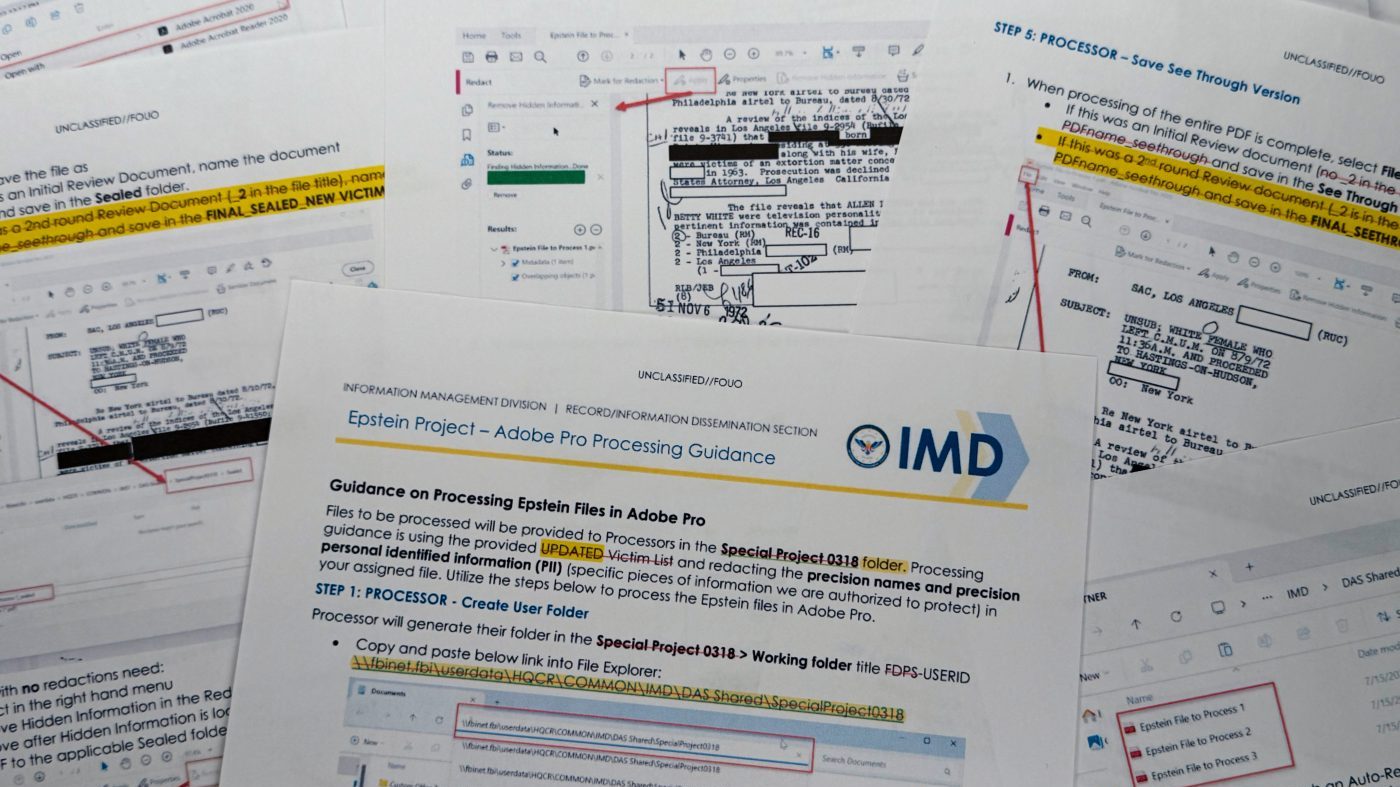
The Government Accountability Office (GAO) confirmed Wednesday it will investigate the Justice Department's compliance with a congressional directive to release files related to deceased financier Jeffrey Epstein. This marks the second federal review of the department's handling of the documents, following an internal probe launched last week by the DOJ's inspector general.
The move comes in response to a bipartisan request from lawmakers who have repeatedly questioned whether the department is fully adhering to the law. A GAO spokesperson stated, 'GAO has accepted a congressional request to review DOJ’s processes in reviewing, redacting, and releasing the Epstein files. The first thing GAO does once it has accepted work is determine the full scope of what we will cover and the methodology to be used.' The Washington Post first reported the development.
Acting Attorney General Todd Blanche has previously stated that just over 3 million files have been made public, with the DOJ telling lawmakers that the remaining 6 million are duplicates. But members of Congress have insisted that all files must be released, pointing to gaps and inconsistencies in the department's disclosures. The controversy has deepened as evidence emerges that the DOJ failed to release all records from an interview with a woman who accused President Trump of a violent encounter when she was a minor—leading to additional releases after media scrutiny. Reports indicate about 30 pages from her account remain missing.
Redactions have also drawn sharp criticism. Critics note that some redactions failed to protect the identities of Epstein victims, while others shielded the names of individuals who communicated with Epstein. After lawmakers were allowed to review unredacted files in a DOJ office, they complained that many documents were still heavily redacted—a condition the department attributed to the state in which the files were received.
Reps. Ro Khanna (D-Calif.) and Thomas Massie (R-Ky.), who sponsored the law mandating the release, said they saw the names of six men 'likely incriminated' among the redacted files. Khanna later revealed those names on the House floor, escalating pressure on the department.
The GAO review adds to mounting oversight challenges for the Trump administration, which has faced allegations of mishandling the Epstein case. For context, public trust in government has hit historic lows amid polarization and policy failures, and the Epstein scandal has further eroded confidence. Meanwhile, the DOJ is also dealing with other legal battles, such as a federal judge tossing a suit over Arizona voter list access, but the Epstein file controversy remains a flashpoint for bipartisan scrutiny.
The department has also faced heat over its broader transparency record. As the GAO begins its work, lawmakers are demanding a complete accounting of the files, with some threatening further action if compliance is not achieved.