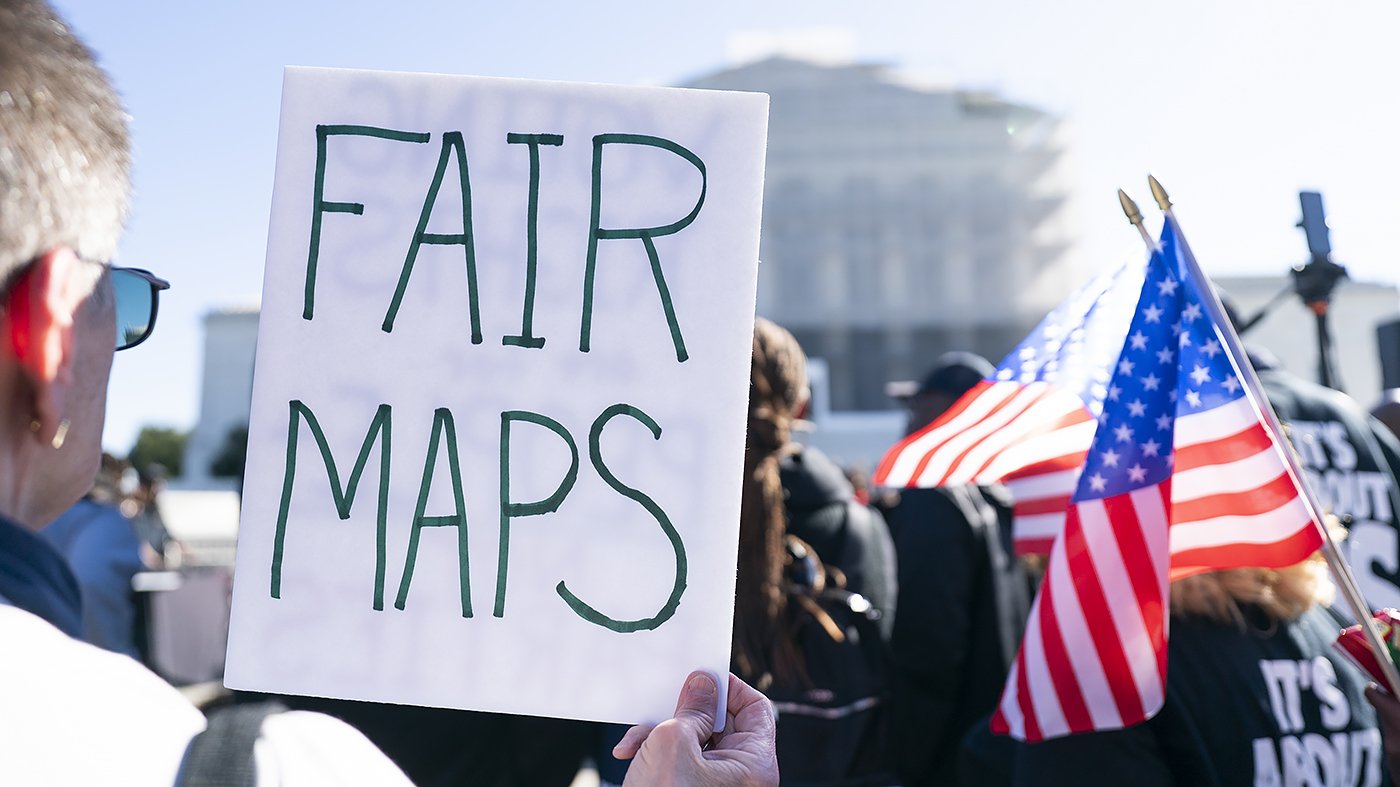
The Supreme Court's liberal wing delivered a blistering rebuke Wednesday, accusing the conservative majority of finishing the job of gutting the Voting Rights Act in a ruling that struck down Louisiana's second majority-Black congressional district as an unconstitutional racial gerrymander.
Justice Elena Kagan, writing a 48-page dissent joined by Justices Sonia Sotomayor and Ketanji Brown Jackson, described the 6-3 decision along ideological lines as the “now-completed demolition” of the landmark 1965 law. She read her dissent aloud from the bench, a rare move signaling deep disagreement.

“At this last stage, the Court’s gutting of Section 2 puts that achievement in peril,” Kagan wrote, referring to the law’s key provision barring voting practices that discriminate on the basis of race. “I dissent because Congress elected otherwise. I dissent because the Court betrays its duty to faithfully implement the great statute Congress wrote. I dissent because the Court’s decision will set back the foundational right Congress granted of racial equality in electoral opportunity. I dissent.”
The ruling, which struck down Louisiana's majority-Black district, curtails the ability of advocacy groups to force the creation of new districts when they argue minority voting power is diluted. Justice Samuel Alito, writing for the conservative majority, characterized the decision as an “update” to the Voting Rights Act framework to prevent judges from overextending the law. Kagan dismissed that framing, writing that even an “antiseptic” description understates the impact.
Kagan accused her colleagues of a decade-long campaign to erode the Voting Rights Act. She invoked the law’s origins in the civil rights movement, writing: “It was born of the literal blood of Union soldiers and civil rights marchers. It ushered in awe-inspiring change, bringing this Nation closer to fulfilling the ideals of democracy and racial equality. And it has been repeatedly, and overwhelmingly, reauthorized by the people’s representatives in Congress.”
She emphasized that only Congress has the authority to decide the law is no longer needed. “Only they have the right to say it is no longer needed—not the Members of this Court,” she continued. “I dissent, then, from this latest chapter in the majority’s now-completed demolition of the Voting Rights Act.”
The decision has immediate political implications, with Republicans hailing it as a constitutional win. The NRCC praised the ruling, while Democrats and voting rights advocates warned it will make it harder to challenge racially discriminatory maps. This comes amid a broader legal battle over redistricting, as seen in Virginia's blocked redistricting certification and a Wisconsin court dismissing a gerrymandering challenge.
The ruling is expected to reshape how courts handle future Voting Rights Act claims, potentially limiting the use of race as a factor in drawing district lines. Kagan’s dissent underscores the deepening ideological divide over voting rights and racial equality in American elections.