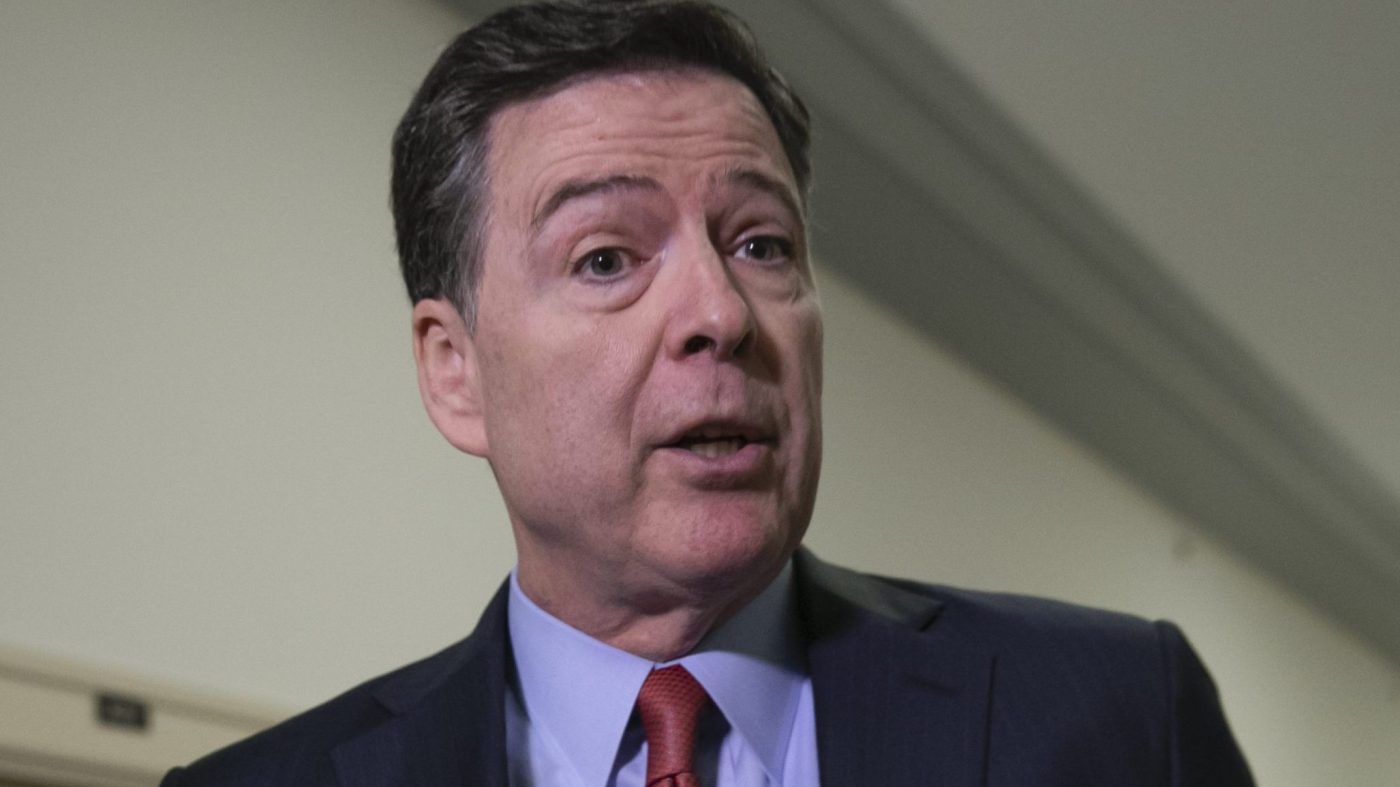
The Department of Justice has brought new charges against former FBI Director James Comey, this time centering on a seemingly innocuous beach photo he posted on Instagram last May. The grand jury indictment, filed in the Eastern District of North Carolina, alleges that Comey “did knowingly and willfully make a threat to take the life of, and to inflict bodily harm upon” President Trump by posting a picture of seashells arranged to form the numbers “86-47.”
Comey’s caption for the image read simply: “Cool shell formation on my beach walk.” But prosecutors argue that “86” is slang for “to kill,” and that the post was a veiled assassination threat against Trump, the 47th president. Trump himself made that claim at the time, telling Fox News, “He knew exactly what that meant. A child knows what that meant. If you’re the FBI director and you don’t know what that meant, that meant assassination.”
Merriam-Webster’s dictionary notes that “86” has origins in 1930s soda-counter slang meaning “to throw out” or “to refuse service to,” but it has since evolved. The dictionary adds that “among the most recent senses adopted [of the number] is a logical extension of the previous ones, with the meaning of ‘to kill.’” However, Merriam-Webster notes it does not officially enter that definition “due to its relative recency and sparseness of use.”
Comey quickly deleted the post after backlash and later explained on Instagram that he “assumed” the shells were a “political message” but “didn’t realize some folks associate those numbers with violence.” He added, “It never occurred to me but I oppose violence of any kind so I took the post down.” The indictment counters that a “reasonable recipient who is familiar with the circumstances would interpret” the shell formation “as a serious expression of intent to do harm” to the president.
Comey responded defiantly Tuesday, posting a video on Substack in which he said, “I’m still innocent, I’m still not afraid and I still believe in the independent federal judiciary, so let’s go.” He previously faced charges of obstruction and making false statements to Congress in 2020, but a federal judge dismissed that case last year over the unlawful appointment of the prosecutor.
Democratic lawmakers quickly condemned the new indictment. Rep. Ted Lieu (D-Calif.), a member of the House Judiciary Committee, called it “ridiculous” on social platform X and predicted the DOJ “will lose in court, again.” He cited the Merriam-Webster definition and argued, “Comey’s speech is protected by the First Amendment.” The House Judiciary Committee Democrats also pushed back, writing, “Trump’s DOJ just criminally indicted James Comey for a beach photo of seashells and no other evidence cited.”
Critics note that the same “86” slang has been used by Trump allies without legal consequence. CNN reporter Aaron Blake pointed out that far-right activist Jack Posobiec wrote “86 46” online in 2022, seemingly referencing then-President Biden. Blake wrote, “Also, to the extent ‘86’ messages are now treated as legally actionable threats, it would seem to be bad news for a lot of other people, including Trump allies.” For more on the legal debate, see Turley’s warning that the indictment sets a free speech trap for prosecutors.
Legal experts are divided. Some argue the case is a stretch, while others say intent can be inferred from context. Former FBI Deputy Director Andrew McCabe dismissed the indictment as a DOJ misstep, warning it fits a pattern of Trump-era retribution. Meanwhile, Rep. Jamie Raskin (D-Md.) called the indictment “surreal” and a political vendetta.
The case is the latest twist in the long-running legal saga between Comey and the Trump administration. It also raises questions about the line between protected speech and criminal threats, especially in an era where political rhetoric often blurs the two. The indictment is expected to face significant First Amendment challenges as it moves through the courts.