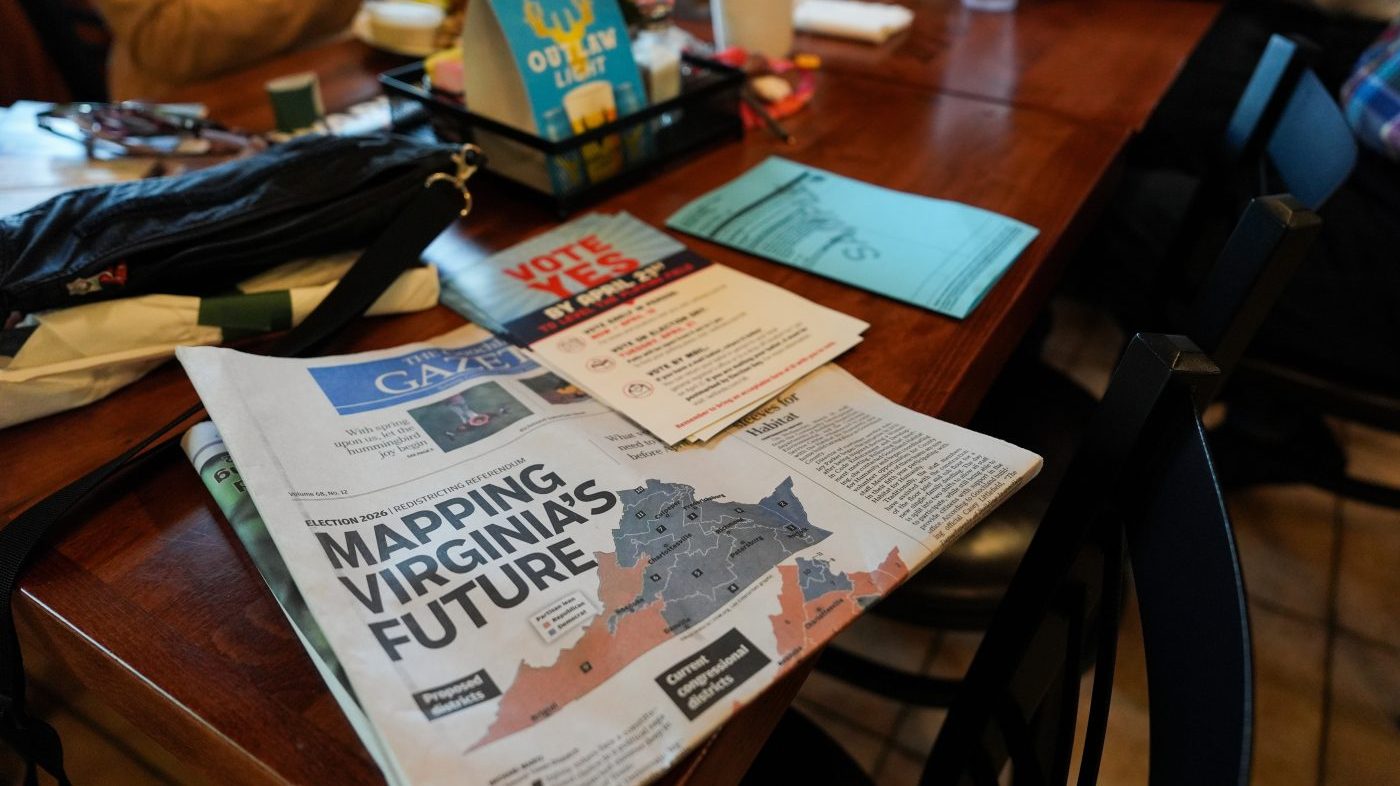
Virginia voters approved a new congressional map last week that leans Democratic, potentially shifting House control in the midterms. But Florida is moving ahead with a Republican-friendly map that could neutralize those gains, setting up a final battle in the national redistricting war.
The two states represent the latest fronts in a tit-for-tat struggle over congressional lines. Texas kicked off the cycle last year with a map that gave Republicans an edge, prompting other red states to follow. California countered with a plan benefiting Democrats. Now, Florida is widely seen as the last chance for a state to redistrict this cycle, unless the Supreme Court issues a ruling that could weaken the Voting Rights Act and trigger more changes.

Democrats need to net just three seats to flip the House this fall, raising the stakes for both parties to secure advantages through gerrymandering. Republicans expect to gain up to nine seats from redistricted states so far, while Democrats think they could pick up ten. Florida could add a few more seats for the GOP. But each party still needs its favored candidates to win in the newly drawn districts.
Here’s a breakdown of key states and the expected gains:
Texas: 5 GOP Seats
Texas started the redistricting war last year when the state legislature approved a new mid-decade map under pressure from President Trump and his allies. Democratic lawmakers fled the state to stall the map, drawing national attention and sparking redistricting talks elsewhere. They returned only after California introduced a blue-friendly map to offset the Texas gains. The Texas map created five new Republican-leaning districts that Trump won by double digits in 2024, a major win for the GOP.
California: 5 Democratic Seats
California Democrats responded to the Texas push with their own plan. Voters overwhelmingly passed the measure in a November special election, giving the party up to five pickup opportunities in the blue stronghold, where Democrats already hold 42 of 52 House seats.
Virginia: 4 Democratic Seats
Virginia Democrats approved a state constitutional amendment last week that allows the legislature to temporarily redraw lines mid-decade, potentially giving the party four more pickup opportunities. The referendum was pitched as a response to Trump-backed redistricting in red states. Under the new maps, Democrats would expand their House delegation from a 6-5 majority to a 10-1 edge, a critical boost after Texas and California effectively canceled each other out. However, the Virginia Supreme Court is weighing legal challenges that could invalidate the referendum, complicating Democrats' plans. The court's decision could upend the new lines.
Florida: 4 Likely GOP Seats
Florida could end the redistricting war soon. State lawmakers are convening for a special session to consider a map pushed by Governor Ron DeSantis. DeSantis revealed a plan on Monday that appears to give Republicans as many as four seats, expanding their current 20-8 advantage. Some observers note the GOP may only gain three seats. DeSantis has indicated he wants to redistrict before the midterms but has pointed to a pending Supreme Court case on the use of race in redistricting, which could shake up plans. The aggressive map aims for a 24-4 GOP edge.
Missouri: 1 GOP Seat
Missouri Republicans moved forward with a map that gives the party one more pickup opportunity. The map dismantles Representative Emanuel Cleaver's district in Kansas City, splitting the urban center to make it more conservative. The Missouri Supreme Court ruled the map does not violate the state constitution, and a judge blocked a petition campaign to force a statewide vote.
North Carolina: 1 Republican Seat
North Carolina Republicans advanced their congressional map last fall, offering a pickup opportunity that would expand the GOP's 10-4 advantage. The map targets a Democratic-held seat and solidifies the party's hold in the Tar Heel State.
The redistricting war has reshaped the battle for the House, with both parties claiming gains. But the final outcome depends on court rulings, candidate performance, and the Florida map. The Florida plan is now moving through committees, and its passage could determine which party enters the midterms with an edge.