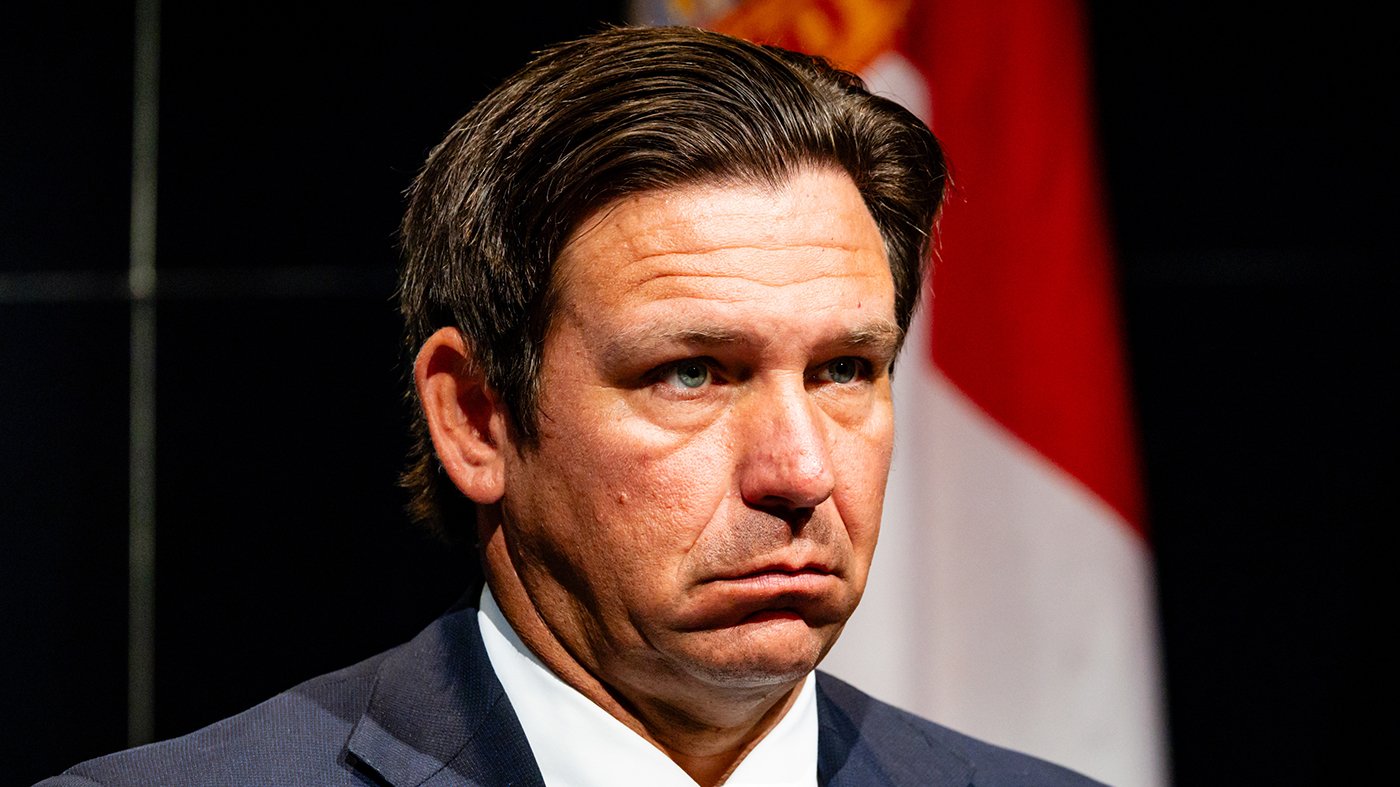
Florida Governor Ron DeSantis unveiled a controversial congressional redistricting map on Monday, just one day before state lawmakers convene for a special session. The proposal seeks to flip four House seats from Democratic to Republican control, reshaping the state's delegation from its current 20-8 GOP advantage to a dominant 24-4 majority.
DeSantis's office first released the map to Fox News Digital, signaling an aggressive push to redraw districts mid-decade. The new lines would eliminate Democratic Representative Kathy Castor's Tampa-based seat and Darren Soto's Central Florida district. Maxwell Frost's district would shrink, while five South Florida Democratic incumbents—Jared Moskowitz, Debbie Wasserman Schultz, Lois Frankel, Frederica Wilson, and the district formerly held by Sheila Cherfilus-McCormick—would be consolidated into three seats.

Political analysts immediately flagged the map as a high-risk gambit. Dave Wasserman of the Cook Political Report noted that Castor, Soto, Moskowitz, and Wasserman Schultz appear most endangered. But he warned that in a volatile 2026 environment, not all 24 Republican-leaning seats would be safe. Kyle Kondik of Sabato's Crystal Ball estimated the map might yield only three GOP pickups, with some districts rated as toss-ups or lean Republican.
Zachary Donnini of VoteHub echoed skepticism, tweeting that Republicans are probably under 50-50 odds to flip four seats in Florida next cycle. At minimum, he said, Castor's FL-14 race would be highly competitive.
The map's partisan coloring directly challenges Florida's constitutional anti-gerrymandering provisions, adopted by voters over a decade ago. The state constitution explicitly bars drawing districts to favor a party or incumbent, or to diminish racial minorities' electoral opportunities. DeSantis's legal team, led by David Axelman, argued in a letter to legislative leaders that using race in redistricting should never happen, citing a pending U.S. Supreme Court case on the Voting Rights Act. Axelman wrote that the Fourteenth Amendment forbids dividing citizens based on race, even partially.
Florida's redistricting saga has already caused chaos for incumbents and candidates, as detailed in recent reporting. The governor's move also follows broader national trends, including the Virginia Supreme Court weighing the legality of a Democratic redistricting referendum and GOP strategist Karl Rove warning that aggressive plans could backfire.
DeSantis has dared critics to challenge him, including a public confrontation with House Democratic Leader Hakeem Jeffries. But the map still faces an uncertain path through the legislature, where some Republicans expected a more conservative proposal. The special session, seen as the last chance to redraw lines before November, will test whether DeSantis can overcome internal party doubts and intense Democratic litigation.
As lawmakers begin deliberations Tuesday, the political stakes are enormous. The outcome could determine control of the House in 2026 and set a precedent for how far states can go in partisan redistricting under the Voting Rights Act.