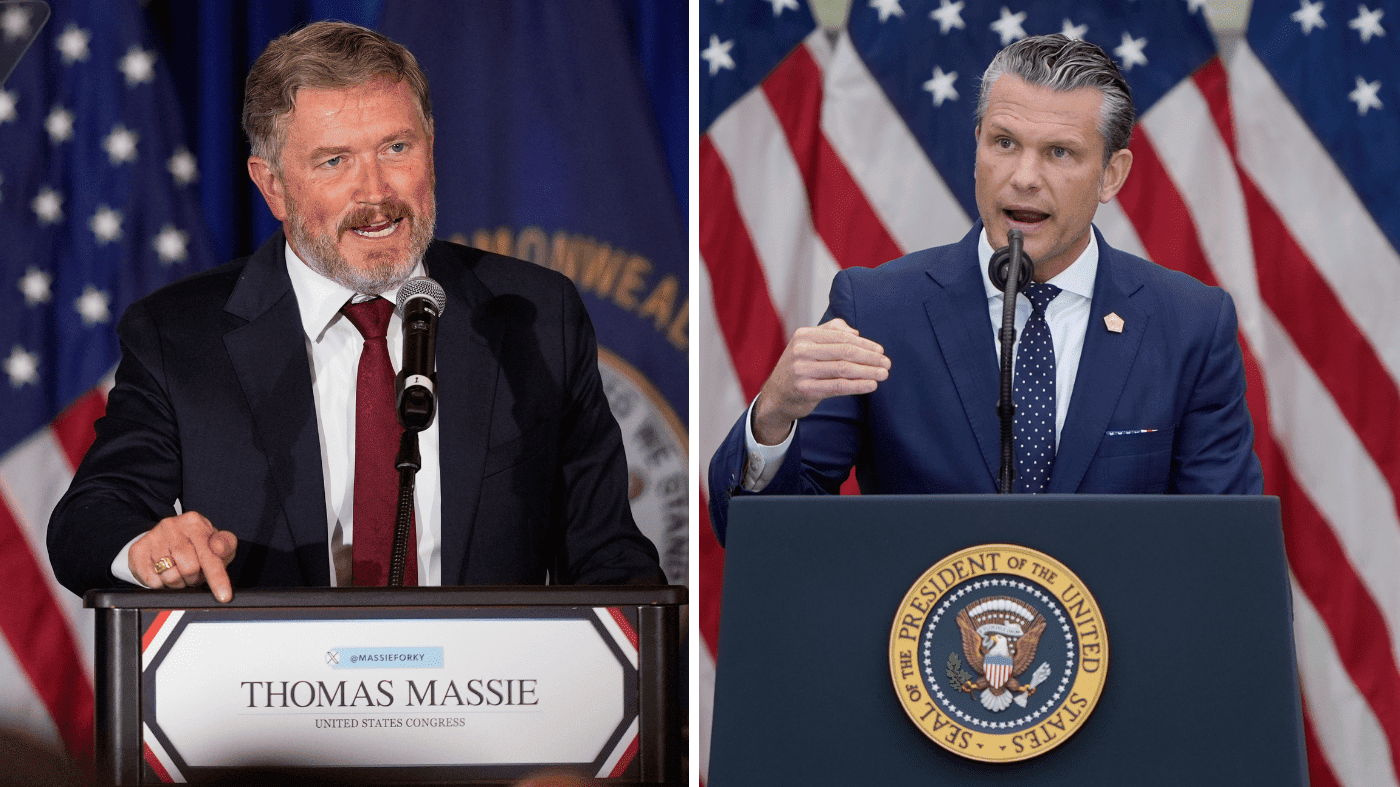
Republican lawmakers are set to confront Defense Secretary Pete Hegseth this week over the Trump administration's management of the Iran conflict and a series of high-profile dismissals at the Pentagon, as Hegseth makes back-to-back appearances on Capitol Hill.
On Wednesday, Hegseth will appear before the House Armed Services Committee for his first sworn testimony since hostilities with Tehran erupted, followed by a Thursday session with the Senate Armed Services Committee. He will be joined by Joint Chiefs of Staff Chairman Gen. Dan Caine, and both are expected to promote a $1.5 trillion fiscal 2027 budget request for the Defense Department—the largest, adjusted for inflation, since World War II.
Lawmakers from both chambers have voiced alarm over Hegseth's recent removal of Army Chief of Staff Randy George and Navy Secretary John Phelan, warning of a leadership vacuum at the Pentagon. The White House also faces mounting criticism over its inability to end the war in Iran, with a 60-day deadline to conclude fighting without congressional approval expiring this week.
“We’re in the middle of a war. We got to know that things are being managed well,” said Sen. Lisa Murkowski (R-Alaska), when asked about George’s firing. “So, not good,” she added.
Sen. Thom Tillis (R-N.C.) expressed similar unease, telling The Hill, “He has separated some of the most extraordinary generals that we’ve had in play. I don’t quite know what’s going on there.” Tensions between Hegseth and Army Secretary Dan Driscoll—a close ally of Vice President Vance—have also fueled concern on Capitol Hill. Driscoll defended the firings during his own congressional testimony last week, stating, “The civilian leadership, the design of our system, is that they get to pick the leaders that they want.”
Senate Republicans are increasingly skeptical of Hegseth's Pentagon leadership, as reported in a recent analysis. Some GOP defense hawks are urging Hegseth to “move on,” though they acknowledge the decision rests with President Trump. Sen. Mitch McConnell (R-Ky.) published a scathing op-ed in the Washington Post on Tuesday, questioning why the Pentagon is holding back $400 million in authorized aid for Ukraine, with his criticism directed at policy chief Elbridge Colby.
The Iran war remains a sore point. While Republicans broadly support the conflict's aims, questions are mounting about its trajectory and the administration's transparency on costs. NBC News reported this week that U.S. military bases and equipment in the Middle East have sustained far heavier damage from Iranian strikes than officially disclosed, with repairs expected to cost billions. After a classified House Armed Services Committee briefing last month, members from both parties said they left without a clear grasp of the administration's strategy in Iran. Committee Chair Mike Rogers (R-Ala.) told reporters that officials were “tight-lipped” on planning and troop movements, asserting lawmakers “deserve more answers than we’re given.”
President Trump is expected to request $80 billion to $100 billion in supplemental funding for Iran operations. The conflict, which began on Feb. 28, is currently under a ceasefire that Trump extended last week to allow Tehran to present a negotiating proposal.
Another irritant for some GOP lawmakers is Hegseth's announcement last week ending the decades-long requirement for service members to receive flu vaccines. Senate Armed Services Committee Chair Roger Wicker (R-Miss.) called the decision “a mistake,” noting the flu vaccine's long track record of safety compared to the more controversial COVID-19 shot.
The Pentagon's record $1.5 trillion budget request—a roughly 40 percent increase from 2026 levels—is a non-starter for Democrats. House Armed Services Committee ranking member Adam Smith (D-Wash.) described it as “way too bloated” and “a fiscal catastrophe.” However, Hegseth may find broad GOP support on this front. The Senate Armed Services Committee has begun touting the budget as a job creator and economic boost for local communities.