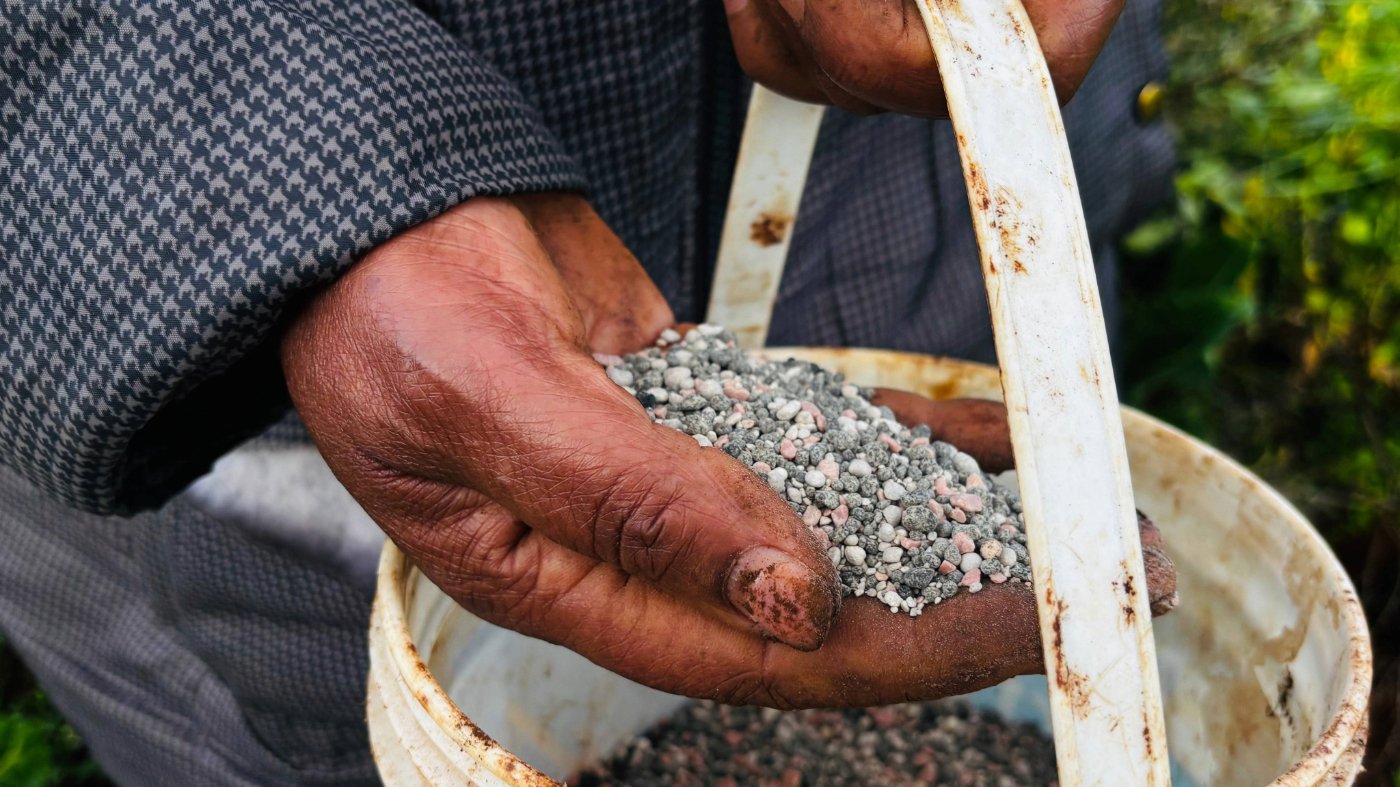
A silent deadline is approaching, one that doesn't register on news tickers or social media feeds. It's embedded in the agricultural calendars of the Northern Hemisphere, where spring fertilizer application must be completed by June. For parts of Africa, the primary planting season is already underway, a critical window for the continent's most food-insecure populations. Missing this window doesn't just delay a harvest—it eliminates it. The consequences won't be visible until next fall, when food prices spike and shelves go empty.
This is the dimension of the Hormuz crisis that most coverage overlooks. The standoff isn't just about energy prices; it's about breaking the global food supply chain. The Strait of Hormuz carries roughly a third of the world's fertilizer trade. If farmers can't get the nutrients they need in time, no amount of catch-up planting will salvage the lost output. The International Grains Council projects that global wheat and coarse grain production could fall 53 million tons below last season, a shortfall larger than Ukraine's typical annual grain exports.
The damage is already materializing. Five of Bangladesh's six domestic fertilizer factories have shut down. In Somalia, commodity prices have jumped 20 percent. The World Food Program warns that if the conflict persists beyond June with oil above $100 a barrel, an additional 45 million people will slide into acute food insecurity, pushing the global total to a record 363 million. Helios AI forecasts a 12 to 18 percent rise in global food prices by the end of 2026. For Americans and Europeans, that means higher grocery bills. For millions across Africa, South Asia, and the Middle East, it means not enough to eat.
A Stalemate That Hurts Both Sides
The United States and Iran remain locked in a standoff over the strait. Political scientist I. William Zartman's ripeness theory suggests that such stalemates break only when both sides experience significant pain with no path to victory, and when a face-saving exit exists. Right now, both conditions are partially met. Iran's economy is contracting sharply. The Trump administration faces falling poll numbers and rising food and energy costs ahead of a tough midterm election season. But neither side sees an off-ramp that avoids humiliation. Iran's new supreme leader cannot reopen the strait under U.S. military pressure without appearing to capitulate to the Islamic Revolutionary Guard Corps. President Trump cannot accept anything less than total Iranian compliance.
A Proven Model: The Black Sea Grain Initiative
The Black Sea Grain Initiative of 2022 offers a template. When Russia blockaded Ukraine's grain ports, a comprehensive agreement was impossible. Instead, a narrow humanitarian corridor was created: Russia and Ukraine each signed separate documents with Turkey and the United Nations, not with each other. That initiative moved nearly 33 million tons of grain to global markets.
The infrastructure for a Hormuz version is already in place. On April 21, UNOPS Executive Director Jorge Moreira da Silva confirmed that the U.N. has a "one-stop platform" mechanism ready to launch within seven days once political authorization is given. Oman, which has long maintained a backchannel to Iran, is prepared to serve as intermediary.
The ask is deliberately narrow: a temporary suspension of blockades for a defined category of humanitarian cargo—urea, ammonia, and fertilizer—destined for non-combatant nations. Not a full reopening of the strait. Not a nuclear agreement. Just a fertilizer corridor.
Political Framing That Saves Face
The messaging writes itself. For Iran: "The Islamic Republic has authorized limited passage for fertilizer, consistent with its humanitarian obligations. The Revolutionary Guard retains full authority over the Strait." For the U.S.: "This narrow humanitarian exception does not change our demands for elimination of Iran's nuclear program and unfettered Strait passage." Neither side backs down. Both can claim they acted for the world's most vulnerable people.
There are also political calculations that both governments should weigh. High food prices often trigger unrest, as seen during the Arab Spring. A U.S. president who helps broker a corridor that stabilizes food prices is in a stronger position heading into midterms than one facing high food prices caused by a standoff. Iranian leadership that opens a humanitarian corridor on its own terms generates international goodwill in a way that indifference to mass starvation would not.
Every week of delay narrows the diplomatic window and widens the potential for disaster. David Laborde, director of the FAO's Agrifood Economics division, framed the choice starkly: "We are in an input crisis; we don't want to make it a catastrophe. The difference depends on the actions we take."
The corridor is ready. The mediators are ready. The U.N. is ready. The clock on the planting season is ticking.