President Trump signed an executive order on Friday that significantly widens the scope of U.S. sanctions against the Cuban government, escalating a campaign to isolate Havana economically and diplomatically. The move comes as the administration seeks to force Cuba to address a deepening humanitarian crisis that has worsened since the U.S. cut off oil shipments from Venezuela and Mexico in January.
The new order expands sanctions to target not only Cuban officials but also what the White House described as “agents, officials, or material supporters of the Cuban government,” those who back the country’s security apparatus, and individuals “complicit in government corruption or serious human rights violations.” This broadens the net to include foreign entities and individuals who do business with the regime.
A key provision of the executive order aims to restrict Cuba’s access to the global banking system by imposing secondary sanctions on foreign financial institutions that conduct significant transactions with sanctioned Cuban-linked parties. The order authorizes the U.S. government to penalize any bank or financial entity that facilitates transactions for or on behalf of those tied to Cuba’s government, effectively tightening the financial noose around the island.
The White House framed the action as a national security measure. “The President is addressing the national security threats posed by the communist Cuban regime by taking decisive action to hold the Cuban regime, and those that perpetuate it, accountable for its support of hostile actors, terrorism, and regional instability that endanger American security and foreign policy,” a press release stated.
The sanctions build on earlier Trump administration policies, including the cutoff of Venezuelan and Mexican oil shipments to Cuba, which sent the island’s economy into a tailspin. The State Department reportedly dispatched a delegation to Havana in April to explore potential deals to alleviate the humanitarian crisis, but no breakthrough has been announced.
Trump has previously floated the idea of toppling the Cuban government. In March, he stated, “Whether I free it, take it, I think I can do anything I want with it.” That rhetoric underscores the administration’s confrontational approach, even as Cuban President Miguel Díaz-Canel signaled a willingness to negotiate. In an April interview with NBC’s Kristen Welker on “Meet The Press,” Díaz-Canel said, “I think we can have an approach in terms of what is possible and what is difficult. I think dialogue and deals with the U.S. government are possible, but they’re difficult.”
The latest sanctions echo the administration’s broader strategy of using economic pressure to achieve foreign policy goals. For context, the Treasury Department has similarly warned U.S. ships about paying tolls in the Strait of Hormuz, signaling a consistent pattern of secondary sanctions. Meanwhile, Trump has also used a ceasefire with Iran to bypass the War Powers Act, highlighting his willingness to sidestep legislative constraints in foreign affairs.
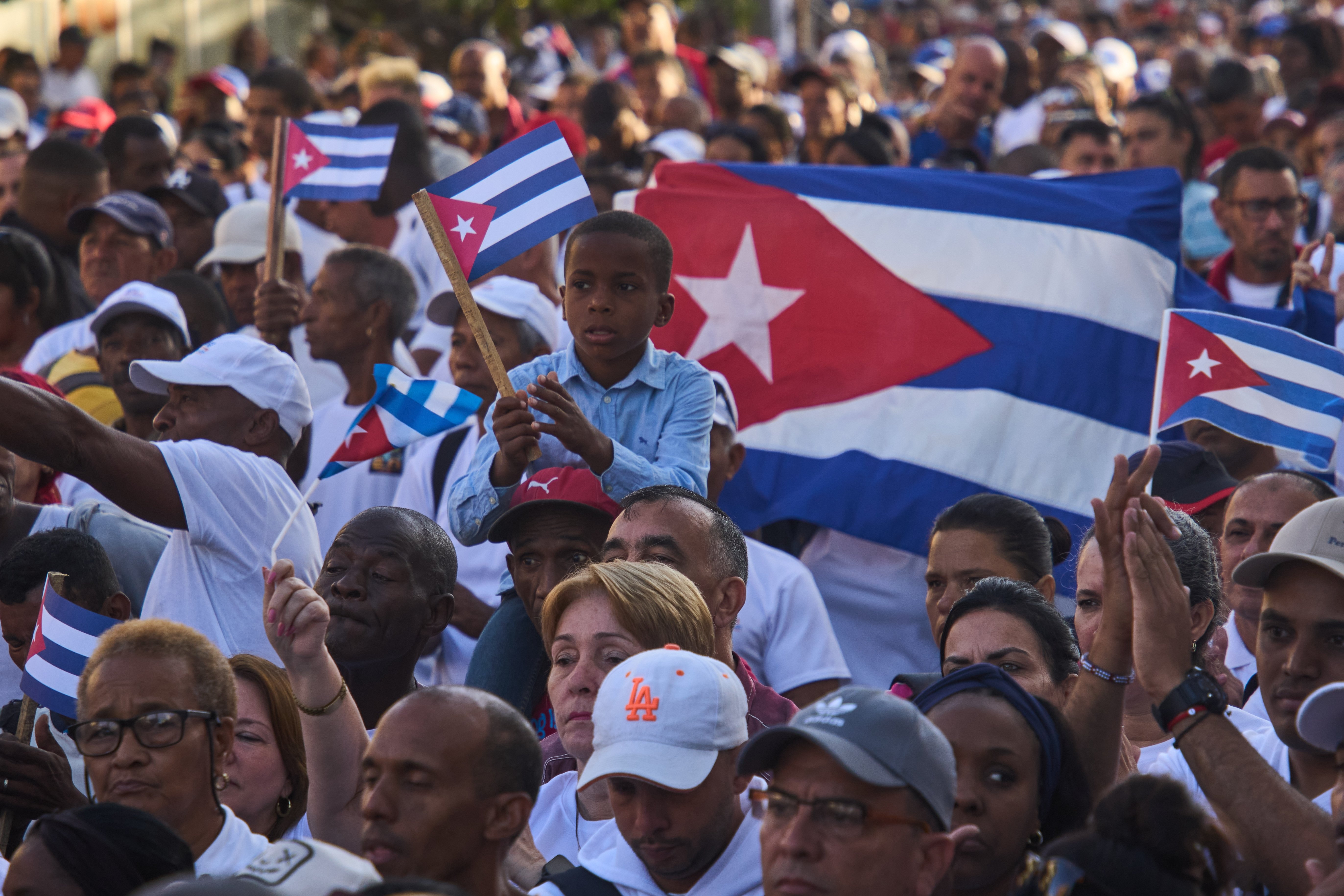
The humanitarian situation in Cuba remains dire. The cutoff of oil shipments has led to widespread blackouts, fuel shortages, and a collapse in basic services. Critics argue that the sanctions exacerbate the suffering of ordinary Cubans, while the administration insists they are necessary to pressure the regime to change its behavior.
As the 2026 midterms approach, the Cuba sanctions could become a political flashpoint, particularly in Florida, where Cuban-American voters hold significant sway. Trump has already pitched tax-free Social Security to Florida seniors, signaling his focus on the state’s electorate. The expanded sanctions may further solidify his support among hardline anti-Castro voters.