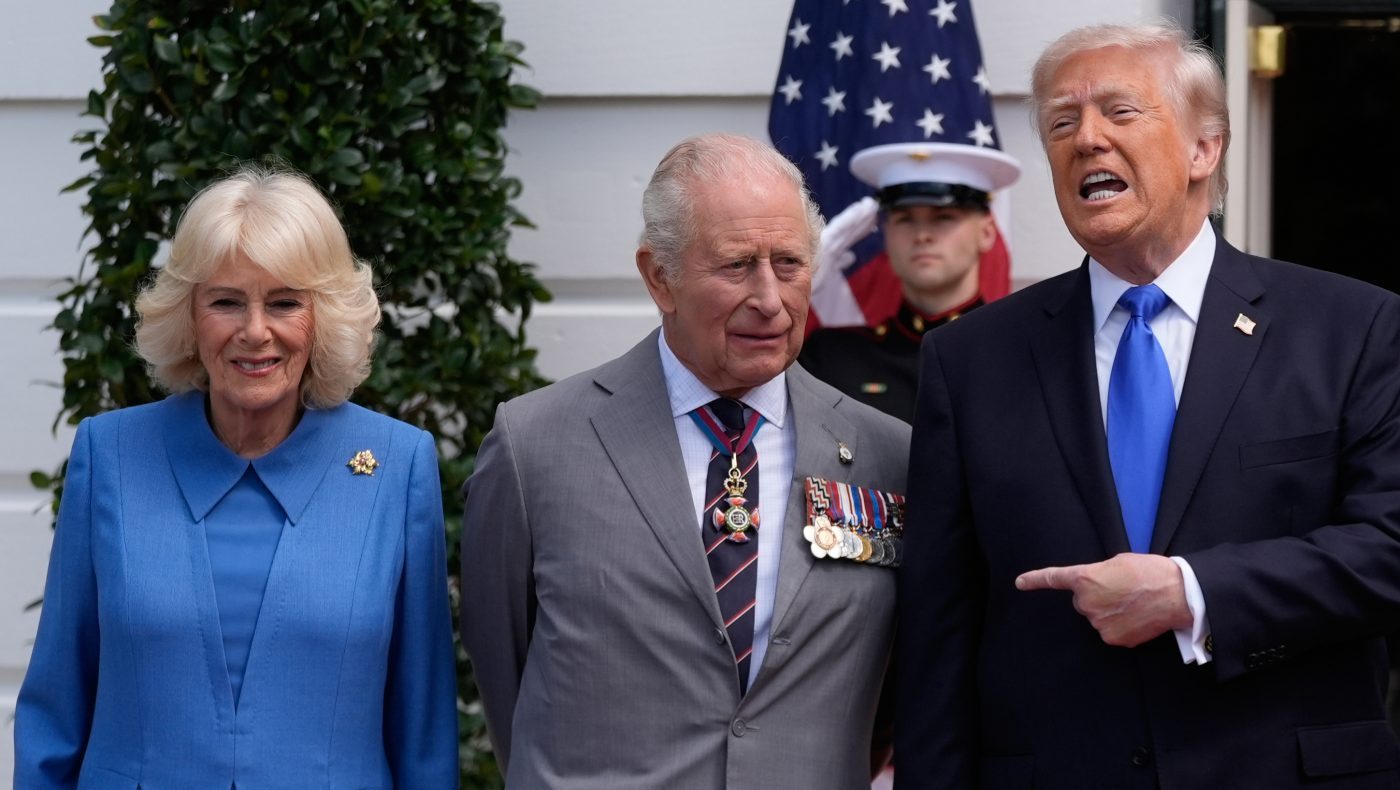
President Donald Trump on Thursday announced the removal of tariffs on Scotch whiskey, crediting the visit of King Charles III and Queen Camilla for breaking a longstanding trade impasse. The decision lifts a 10% duty imposed last April as part of a sweeping tariff package that targeted nearly every country.
In a post on Truth Social, Trump wrote that he will eliminate “the Tariffs and Restrictions on Whiskey having to do with Scotland’s ability to work with the Commonwealth of Kentucky on Whiskey and Bourbon.” He described both industries as “very important” to their respective regions and noted that the move had long been sought by trade partners.
“People have wanted to do this for a long time, in that there had been great Inter-Country Trade, especially having to do with the Wooden Barrels used,” Trump added. “The King and Queen got me to do something that nobody else was able to do, without hardly even asking!”
The Scotch Whisky Association quickly praised the tariff removal. Chief Executive Mark Kent said in a statement that the deal “is a significant boost for the Scotch Whisky industry in our most valuable export market.” He added that distillers “can breathe a little easier during a period of significant pressure on the sector.”
Kent also acknowledged the collaborative effort behind the announcement. “For months, many have worked tirelessly to return zero-for-zero tariff trade for whisky and bourbon. The special relationship that the Scotch Whisky and American Whiskey industries share will be reinvigorated by this announcement,” he said.
The tariff reversal comes as Trump continues to wield trade policy as a diplomatic tool, often linking it to high-profile visits. The King’s trip, a rare state visit by a British monarch, appears to have provided the political cover for a move that industry advocates had pushed for since the original tariffs were imposed.
The decision also underscores the intertwined nature of the whiskey trade between Scotland and Kentucky, where bourbon production relies on similar supply chains, including the use of oak barrels. Trump’s mention of “wooden barrels” highlighted a key point of cooperation between the two regions.
While the White House framed the move as a victory for personal diplomacy, critics noted that the tariffs had been a source of tension with a key ally. The removal is expected to ease costs for Scottish distillers and could pave the way for broader trade negotiations with the United Kingdom.