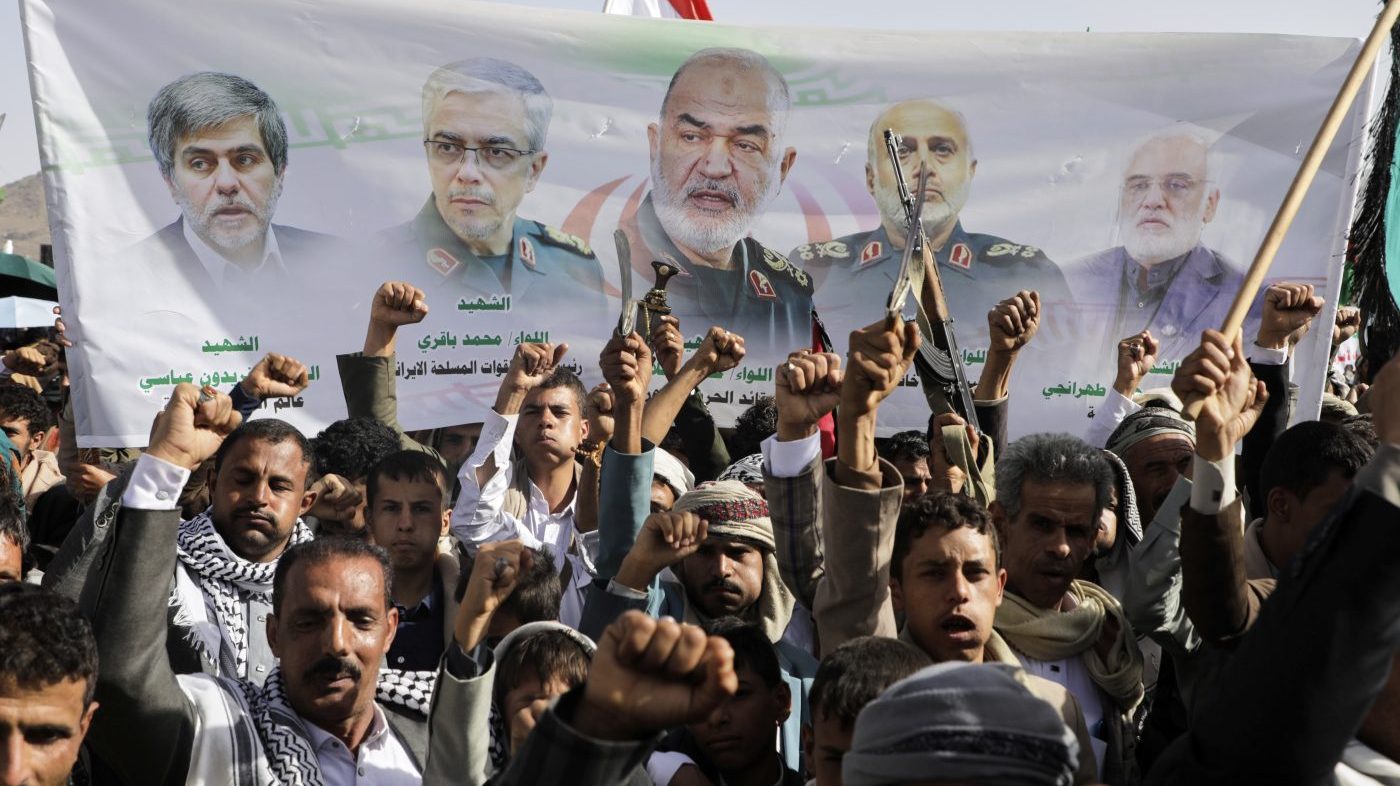
The Iran-aligned Houthi movement issued a stark warning on Friday, threatening direct military intervention in the ongoing conflict involving Iran if the United States, Israel, or other Middle Eastern nations cross three specific boundaries. The statement, released by the Yemeni Armed Forces, outlines five key positions and explicitly ties the group's actions to the defense of Iran and its regional network.
Three Conditions for War
In a detailed fourth point, the Houthis stated their "fingers are on the trigger" for immediate engagement should any of three scenarios unfold. First, they warned against Middle Eastern countries forming alliances with the U.S. and Israel for joint attacks on Iranian territory. Second, they declared they would not permit the Red Sea to be used by American or Israeli forces to conduct hostile operations against Iran or any Muslim nation. Third, they cautioned against the continued escalation of military operations targeting Iran and what they term the "Axis of Jihad and Resistance."

The group's other demands include a call for a diplomatic resolution to the crisis, an end to what it describes as aggression against Muslim populations in Palestine, Lebanon, Iran, and Iraq, and the lifting of the blockade on Yemen. The statement concludes by asserting that Houthi military operations are solely aimed at Israeli and American targets to counter what they call a "Zionist scheme," and are not directed at Muslim peoples.
Strategic Maritime Flashpoints
This warning intensifies fears over critical global shipping lanes. The threat follows Iran's own closure of the Strait of Hormuz, a chokepoint for roughly a third of the world's seaborne oil, which has already sent energy prices soaring. The Houthis separately cautioned they would enter the fray if vessels attempted to transit the Bab el-Mandeb strait, a vital passage between Yemen and Djibouti responsible for about 10% of global maritime trade.
Violence has previously flared in this area, with the Houthis firing anti-ship missiles at U.S. Navy vessels in the Bab el-Mandeb in 2023 and 2024. The group's capacity to disrupt this corridor presents a significant economic and security challenge, compounding the instability from the closed Strait of Hormuz. This escalation is rooted in longstanding regional animosities and security dilemmas that continue to drive the conflict.
Broader Conflict and Diplomatic Stalemate
The Houthi declaration adds another layer of complexity to a confrontation that has seen direct strikes between Israel and Iran. Recent events, including an Israeli strike that killed a senior Iranian naval commander, have heightened tensions around the Strait of Hormuz. Meanwhile, Israel has vowed further escalation against Iranian targets despite a U.S.-brokered pause on certain strikes.
Diplomatic efforts to de-escalate have thus far failed. The United States and Iran have exchanged proposals, but Tehran rejected a 15-point American peace plan in favor of its own, which demands a complete cessation of hostilities, an end to strikes killing Iranian officials, and reaffirms Iranian sovereignty over the Strait of Hormuz. The Houthis, formally designated as a Foreign Terrorist Organization by the U.S. in early 2025, now position themselves as a potential wildcard capable of widening the war.
The group's threat underscores the networked nature of the conflict, where actions by state actors can trigger responses from powerful non-state militias, risking a rapid and uncontrollable regional conflagration. As the standoff continues, the enforcement of these "red lines" by the Houthis could open a dangerous new front in the volatile Middle East.