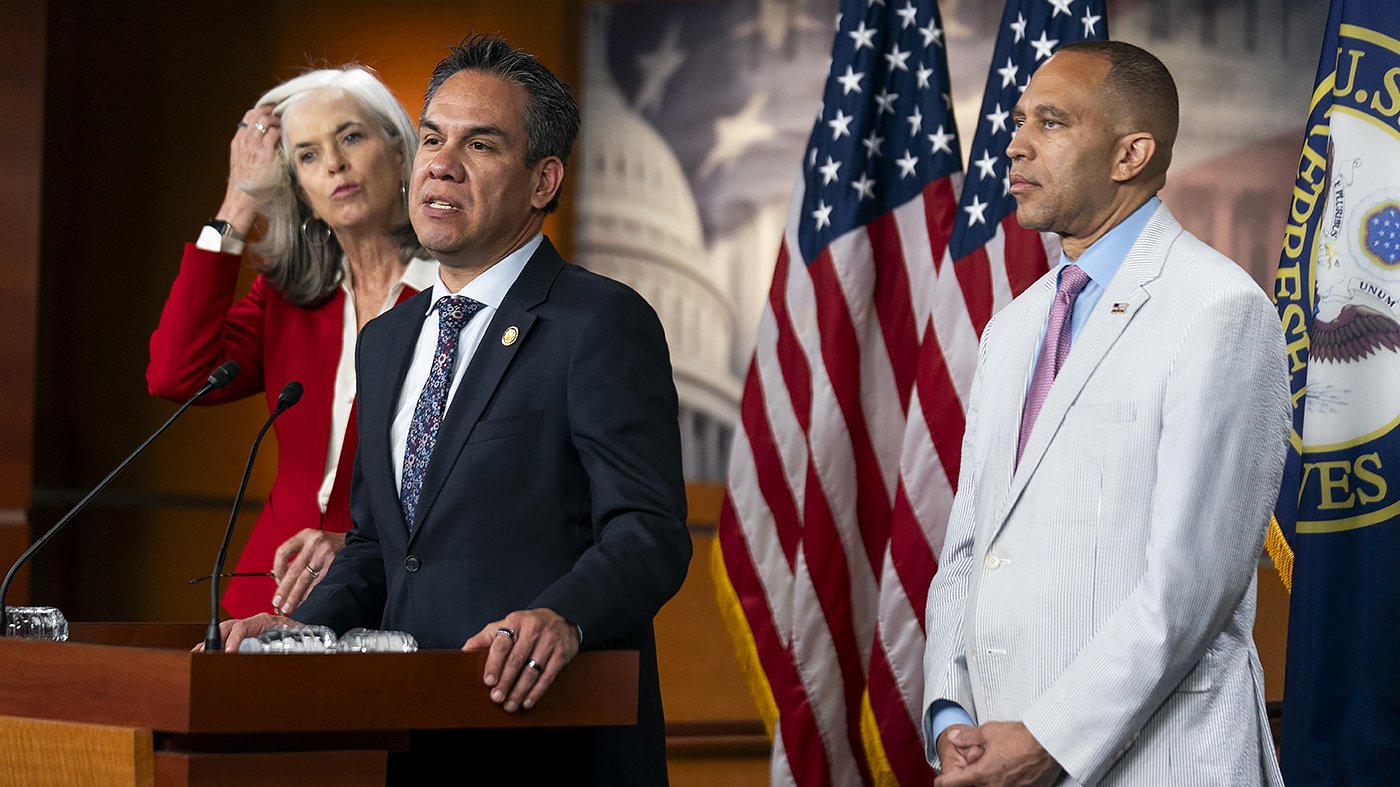
House Democratic leaders are set to address the press Tuesday morning, as recent primary wins by progressive candidates underscore a widening ideological split within the caucus. The event, scheduled for 10:45 a.m. EDT, comes at a moment of heightened tension for the party, which is also grappling with external pressures from a Republican conference mired in its own internal standoff led by conservative hard-liners.
The press conference follows President Trump’s formal notification to Congress that the United States has resumed military strikes against Iran. Under the War Powers Act, this move grants the Pentagon an additional 60 days to deploy forces without seeking explicit congressional approval—a step that has drawn sharp criticism from Democrats. The party has been vocal in opposing the administration’s escalation in the Middle East, including passing a resolution last month to end the conflict.
These developments come as the progressive wing of the Democratic Party has gained momentum in recent primaries, with candidates like Mamdani riding a wave of socialist enthusiasm. Mamdani’s summer surge has sparked debate about whether his socialist platform can translate into midterm victories for Democrats, further complicating the party’s strategic calculus. The rise of such figures has intensified friction between moderates and progressives, a divide that political strategists warn could undermine the party’s electoral prospects.
This internal rift was recently highlighted by veteran strategist James Carville, who blasted far-left Democrats as a key obstacle to party unity, arguing that their uncompromising stance alienates swing voters. Similarly, former Democratic Senator John Kennedy has predicted that the influence of Democratic Socialists will drag the party to defeat in November. These voices reflect a broader anxiety among establishment figures who fear that progressive gains could alienate moderates in battleground districts.
The party’s troubles are not limited to ideological battles. In Maine, the sudden exit of candidate Platner has deepened the divide between moderates and progressives, forcing a scramble to fill the vacancy. This turmoil has redirected donor dollars to other key Senate races, potentially reshaping the electoral landscape. Meanwhile, a recent analysis suggests that generational differences now outweigh party affiliation in shaping American political behavior, adding another layer of complexity for leaders trying to build a cohesive message.
On the Republican side, the floor standoff led by conservative hard-liners continues to paralyze legislative action, giving Democrats a temporary political opening. However, the GOP’s internal chaos does little to resolve the underlying policy disputes, particularly on defense and foreign policy. Trump’s decision to escalate in Iran has forced both parties to confront the limits of executive power and the role of Congress in authorizing military action.
As the press conference unfolds, Democratic leaders are expected to reiterate their opposition to the Iran strikes and call for a renewed focus on domestic priorities. But with the party’s progressive wing gaining strength and moderates pushing back, the path forward remains uncertain. The outcome of these internal struggles will likely shape not only the party’s legislative agenda but also its chances in the upcoming midterm elections.
Watch the live video above for the full remarks.