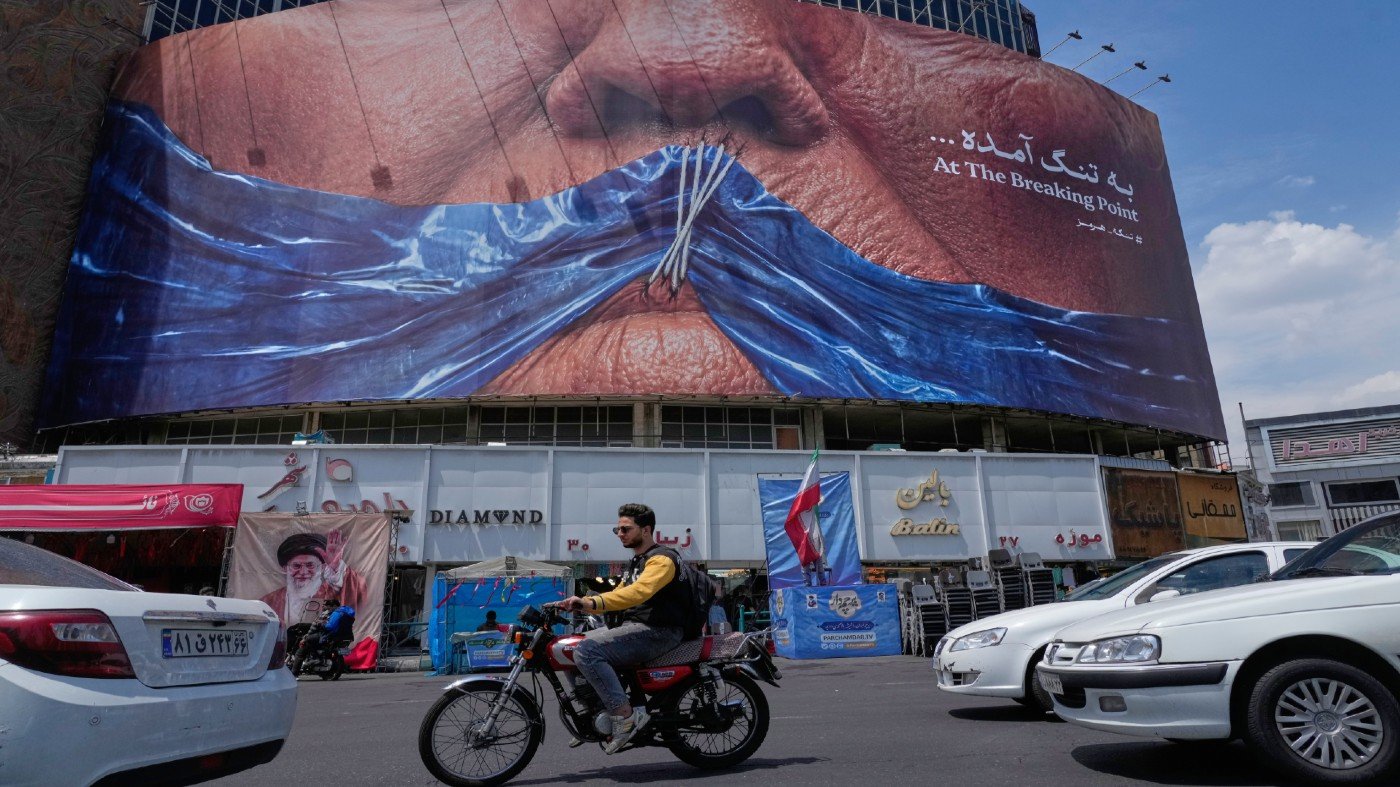
The strategic landscape of the Middle East is shifting as American influence shows signs of decline. President Trump is nearing an agreement with Tehran to reopen the Strait of Hormuz, the world's most critical energy chokepoint. Both sides exchanged airstrikes during negotiations, and the draft could be finalized within days.
For analysts who have spent decades studying the region, this appears to be a case of snatching defeat from the jaws of victory. At stake is the credibility of global American power. During World War II, the British Empire and France waited six months after declaring war on Nazi Germany before taking meaningful action, a period known as the “Phony War.” Even after the British Expeditionary Force barely escaped Dunkirk, some leaders in London advocated negotiations with Adolf Hitler.
Clear war goals are essential for military victory. As articulated by the president and Secretary of State Marco Rubio, America's objectives in the current conflict were clear: deny Iran nuclear weapons, degrade its ballistic missile capabilities, and dismantle or weaken the proxy network Tehran has cultivated to control the Middle East, from Hamas in Gaza to Hezbollah in Lebanon and the Houthis in Yemen. These goals were strategically vital, yet the emerging framework agreement appears to meet none of the necessary conditions for a durable peace. Instead, it risks becoming another temporary patch masking a deeper strategic failure.
The Gordian knot remains Iran's nuclear program. Iran's semi-official Tasnim news agency announced that Tehran “has not yet accepted” proposals related to its nuclear program. That alone should set off alarm bells. Any agreement must secure the surrender of Tehran's nuclear stockpiles, the dismantlement of its centrifuge cascades, and the destruction of its heavy-water production facilities. So far, none of this has been agreed upon. If the nuclear infrastructure survives, Washington will leave Iran capable of racing toward weaponization whenever its leadership chooses, as was the case in the summer of 2025. That is not conflict resolution; it is merely kicking the can down the road before the next crisis, much like the Obama administration's nuclear deal with Iran.
Equally troubling is the survival of Iran's broader power-projection architecture: its ballistic missile force and proxy network. Missing is a commitment to missile disarmament, let alone an enforceable mechanism to halt the transfer of Iranian funds, weapons, and trainers to its armed proxies. Iranian Foreign Minister Abbas Araghchi reaffirmed Tehran's unwavering support for Hezbollah terrorists. Hezbollah's chief has threatened a coup in Lebanon and continuously demands that the government stop peace talks with Israel. The Iranian regime has not moderated its strategic ambitions; it is simply buying time.
The logic behind this apparent U.S. retreat is clear. The Trump administration is deeply concerned about inflationary pressures ahead of the midterms, particularly rising oil and liquefied natural gas prices, as well as shipping and insurance costs tied to instability in the Gulf. Iran wants to drag the talks into the midterms. But substituting economic anxieties for strategic discipline has historically been a losing formula when dealing with the Islamic Revolutionary Guard Corps. Backed by its expanding alignments with Moscow and Beijing, Tehran no longer behaves like an isolated regional actor. It is part of a broader anti-Western coalition threatening American global posture, as seen in how Beijing's influence extends even into U.S. institutions.
There is also a threat to the global commons. Allowing Iran to retain de facto leverage over the Strait of Hormuz would establish a dangerous precedent for the international system. Tehran has weaponized geography to extract concessions from the U.S. If it succeeds, other revisionist powers will watch and learn. Today, Hormuz. Tomorrow, Bab el-Mandeb, the Bosphorus, or the Strait of Malacca. The consequences would be profound: permanently militarized shipping lanes, higher global inflation, chronic energy insecurity, and further erosion of the rules-based order that has underpinned international commerce since 1945.
The message this sends to Beijing may be the most dangerous consequence of all. Strategic vacuums fill up fast, and deterrence is psychological. Once perceptions of weakness take hold, adversaries move aggressively to exploit them. Washington entered this latest Gulf crisis without aligning its NATO and European partners, while allowing tensions over Ukraine and Greenland to fester. America's broader alliance structure is under strain, as highlighted by the GOP's midterm weakness and internal divisions. Great powers lose credibility incrementally, then suddenly. The Hormuz stalemate is part of a sad, long trajectory that started with the ineffective Western response to Russia's 2008 invasion of Georgia and the 2014 annexation of Crimea.