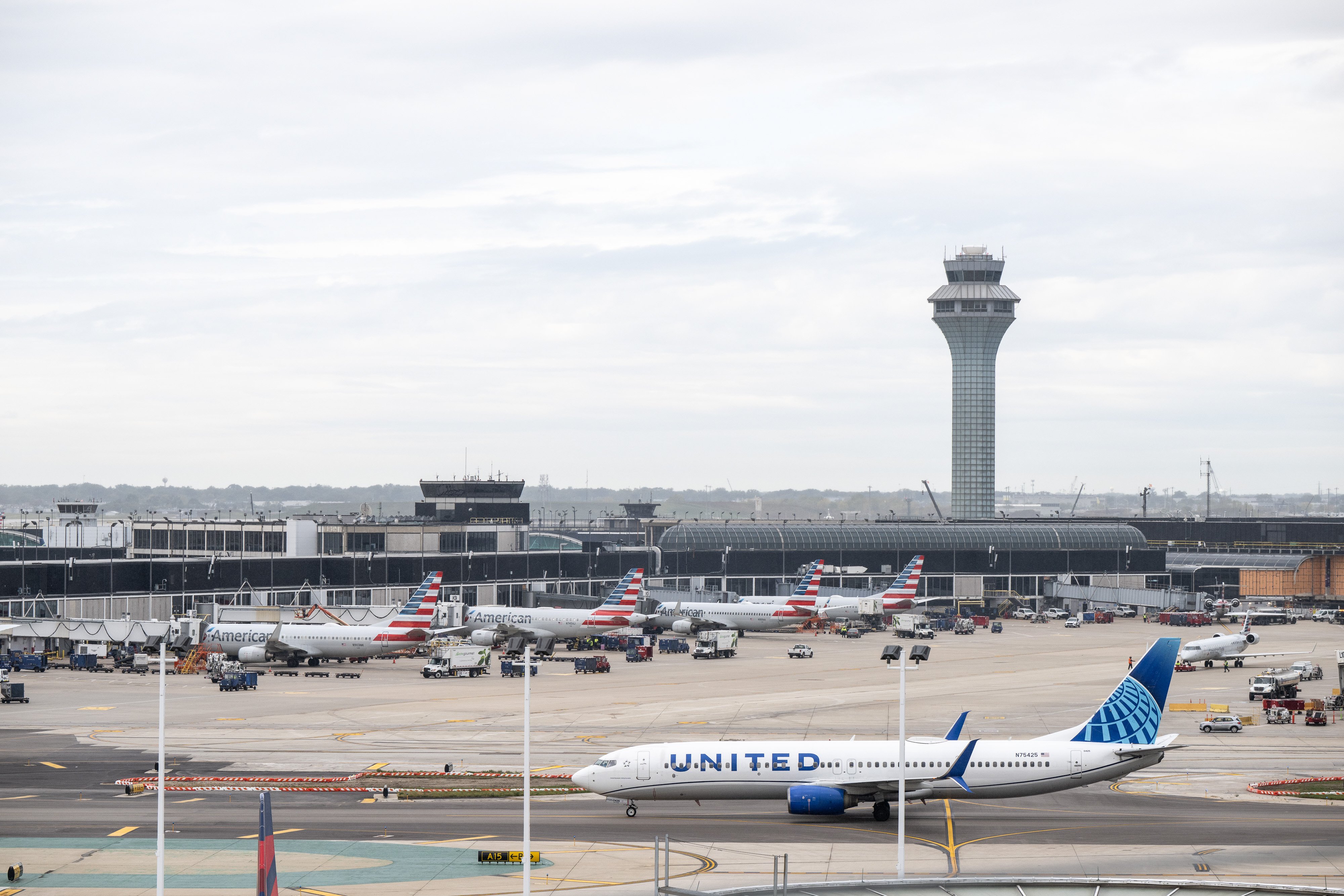
The Federal Aviation Administration is imposing mandatory flight reductions at one of the nation's busiest aviation hubs, announcing Thursday that it will cap daily departures at Chicago O'Hare International Airport throughout the peak summer travel season. The move represents a direct federal intervention to manage what officials describe as an untenable surge in scheduled flights amid parallel operational crises.
Operational Caps and Schedule Reductions
Effective May 17 through October 24, the FAA will limit O'Hare to 2,708 daily departures. This restriction directly counters airline scheduling: carriers had planned for up to 3,080 flights on peak summer days, a nearly 15 percent increase over last year's operations. The mandated cut translates to a reduction of roughly 370 flights on the busiest days.
In a statement, FAA Administrator Bryan Bedford framed the decision as a safety imperative. "Our number one priority is the safety of the flying public, and that means ensuring airline schedules reflect what the system can safely handle," Bedford said. "We appreciate the airlines working together with us to reach a responsible level of operations that strengthens safety and delivers a more reliable travel experience for the American public."
Construction and a Cascade of Crises
The immediate trigger for the caps is major airfield construction at O'Hare. Federal officials specifically cited aggressive expansion plans filed by both United Airlines and American Airlines for this summer, warning that these schedules, combined with the ongoing construction, "could lead to significant Summer 2026 delays." The work is expected to impede normal runway and taxiway operations, reducing the airport's overall capacity.
This infrastructure challenge is compounded by a severe security staffing shortage. The ongoing shutdown at the Department of Homeland Security, now stretching over two months, has left Transportation Security Administration agents working without pay. Many have subsequently called out from work, slowing passenger screening and creating bottlenecks that ripple through terminal operations. The Senate is expected to vote on a funding bill to reopen the agency next week.
Simultaneously, the aviation sector is grappling with soaring fuel costs linked to the ongoing conflict with Iran. According to the Argus U.S. Jet Fuel Index, the average price in four major U.S. cities hit $4.32 per gallon Thursday, up sharply from $2.50 before hostilities began. This economic pressure is forcing airlines to reconsider their own schedules independent of federal action.
Airline Economics and Future Cuts
United Airlines CEO Scott Kirby warned last month that sustained high oil prices would inevitably push airfares higher. In a late March interview with CNBC, Kirby indicated his company was already planning to scale back flying to manage costs. "We're going to do a little less flying than we otherwise would, willing to leave a little bit of demand on the table if oil prices are lower, but want to be prepared for a scenario where oil prices are higher for longer," Kirby stated. He characterized the planning cost for such a contingency as "pretty small."
The FAA's preemptive cap essentially formalizes and coordinates these inevitable cuts, aiming to prevent a summer of cascading delays and cancellations. The agency's action underscores how intersecting policy failures—from protracted budget standoffs affecting security staffing to geopolitical instability impacting energy markets—directly constrain critical national infrastructure. The decision also highlights the federal government's role as the ultimate traffic controller for a privatized airline industry, especially when safety and operational integrity are at stake.
The broader context includes significant federal budgetary pressures elsewhere, such as the Pentagon's request for $54.6 billion for autonomous systems, which compete for resources within the same constrained fiscal environment that has hobbled the DHS. For millions of travelers, the O'Hare caps will be the tangible result of these wider political and economic currents.