President Trump's serious exploration of a peace deal with Iran—one that would reopen the Strait of Hormuz but also lift sanctions on the longtime U.S. adversary—is tearing apart Senate Republicans in a heated debate set to dominate the chamber this week.
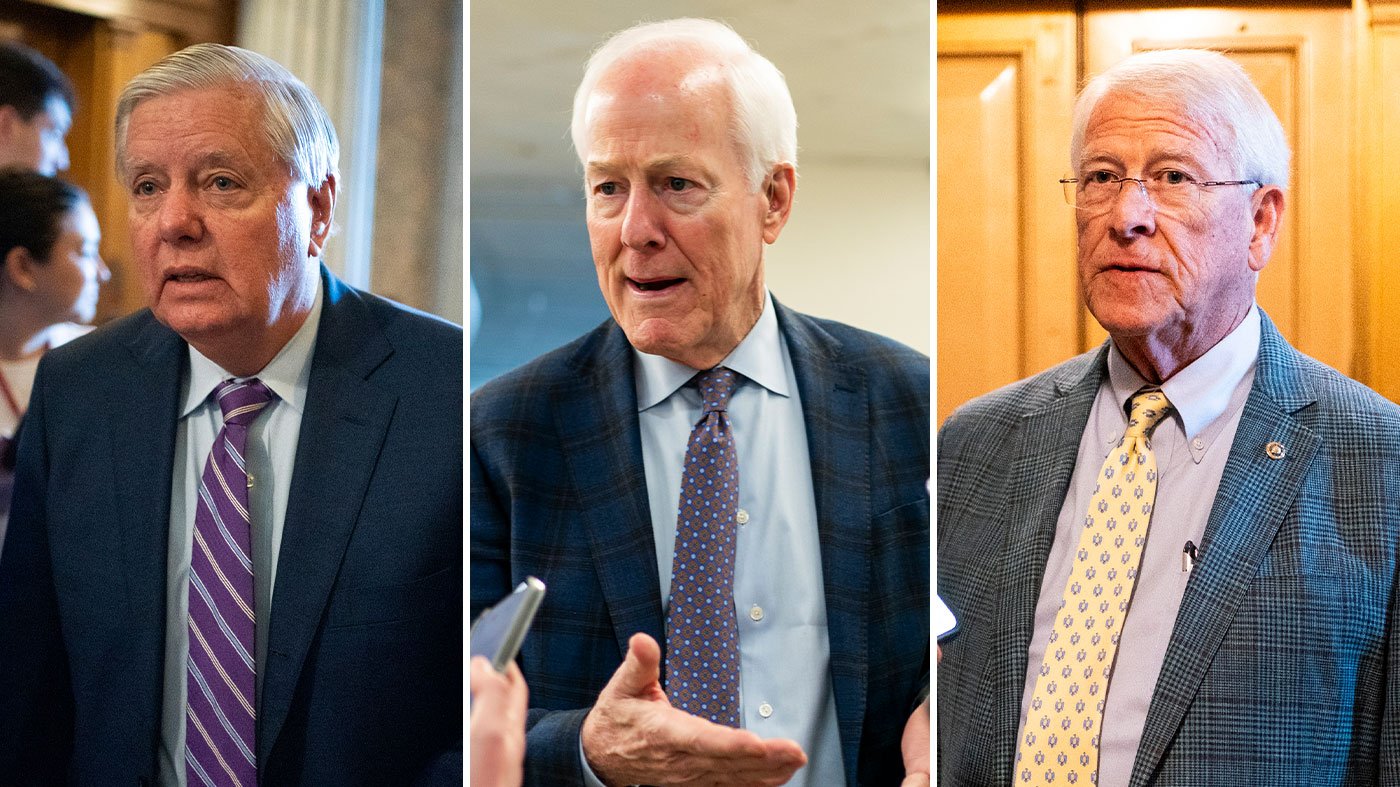
Defense hawks, led by Senate Armed Services Committee Chair Roger Wicker (R-Miss.), along with Sens. Lindsey Graham (R-S.C.) and Ted Cruz (R-Texas), have sharply criticized the emerging framework, which Trump has yet to formally approve. They argue it would allow Iran to retain its nuclear enrichment capabilities and continue backing militant groups like Hezbollah and Hamas, while receiving billions in sanctions relief.
On the other side, a growing bloc of GOP senators—frustrated with the administration's unclear endgame and eager to de-escalate—are pushing for a swift resolution. The conflict has driven U.S. gas prices up nearly $1.40 per gallon since late February, adding urgency to calls for a deal. Some Republicans are even backing a war powers resolution to force a withdrawal of U.S. troops from hostilities against Iran.
Danielle Pletka, a distinguished senior fellow at the American Enterprise Institute, warned the reported terms would be weaker than the 2015 Joint Comprehensive Plan of Action (JCPOA) that Trump abandoned. “The reporting on it suggests that it’s a terrible deal, that the president has gotten basically nothing that he said he was getting, and that his negotiators have embarrassed him,” she said. “Anything that ends with Iran believing that it can open and close Hormuz at times of its choosing is a loss for the United States.”
Wicker dismissed Iranian negotiators as untrustworthy, predicting a “disaster” if Trump accepts the deal. Graham warned it could make Iran a “dominant force” in the region, creating a “nightmare for Israel.” Cruz added that any agreement allowing the Islamist-led regime to “receive billions of dollars” while keeping the ability to shut the strait would be a “disastrous mistake.”
The New York Times reported the deal might include a $300 billion-plus investment fund for Iran to repair damage from U.S.-Israeli strikes—a provision likely to face fierce opposition from fiscal conservatives. Meanwhile, French President Emmanuel Macron has been pushing regional leaders to back the agreement, as the Strait of Hormuz closure strains global markets, reported separately.
John Ullyot, a Republican strategist and former National Security Council spokesperson under Trump, said the deal has “many moving parts” and that Trump knows any pact must be carefully verified. “It’s hard to predict that any deal, if reached, will hold even in the short term. Trump knows more than anyone that the approach with Iran has to be ‘distrust and triple-verify’ and to his credit, he’s doing just that,” Ullyot said. He added that while critics like Wicker, Graham, and Cruz will voice loud objections, they have little leverage to block a deal since it doesn’t require Senate approval.
Four Republican senators—Rand Paul (Ky.), Susan Collins (Maine), Lisa Murkowski (Alaska), and Bill Cassidy (La.)—voted before the Memorial Day recess to advance a war powers resolution directing Trump to withdraw troops from Iran hostilities. The measure cleared committee with three GOP absences; one more Republican vote could pass it in the full Senate, delivering a sharp rebuke to the president.
The Senate is expected to vote this week on a motion to proceed, though Majority Leader John Thune (R-S.D.) and Democratic Leader Chuck Schumer (N.Y.) must first agree on timing. The resolution also has enough support to pass the House, though Trump would almost certainly veto it. All eyes are on Sen. John Cornyn (R-Texas), who lost his primary after Trump endorsed his opponent, state Attorney General Ken Paxton—a move some strategists called a costly blunder. Cornyn’s vote could signal whether personal grievances outweigh party loyalty.
As the debate intensifies, the split underscores a deeper rift within the GOP: between those who see any deal with Iran as a betrayal of hardline principles and those who view endless conflict as unsustainable. For now, Trump holds the cards, but the Senate’s growing unease suggests his grip on the party may be loosening.