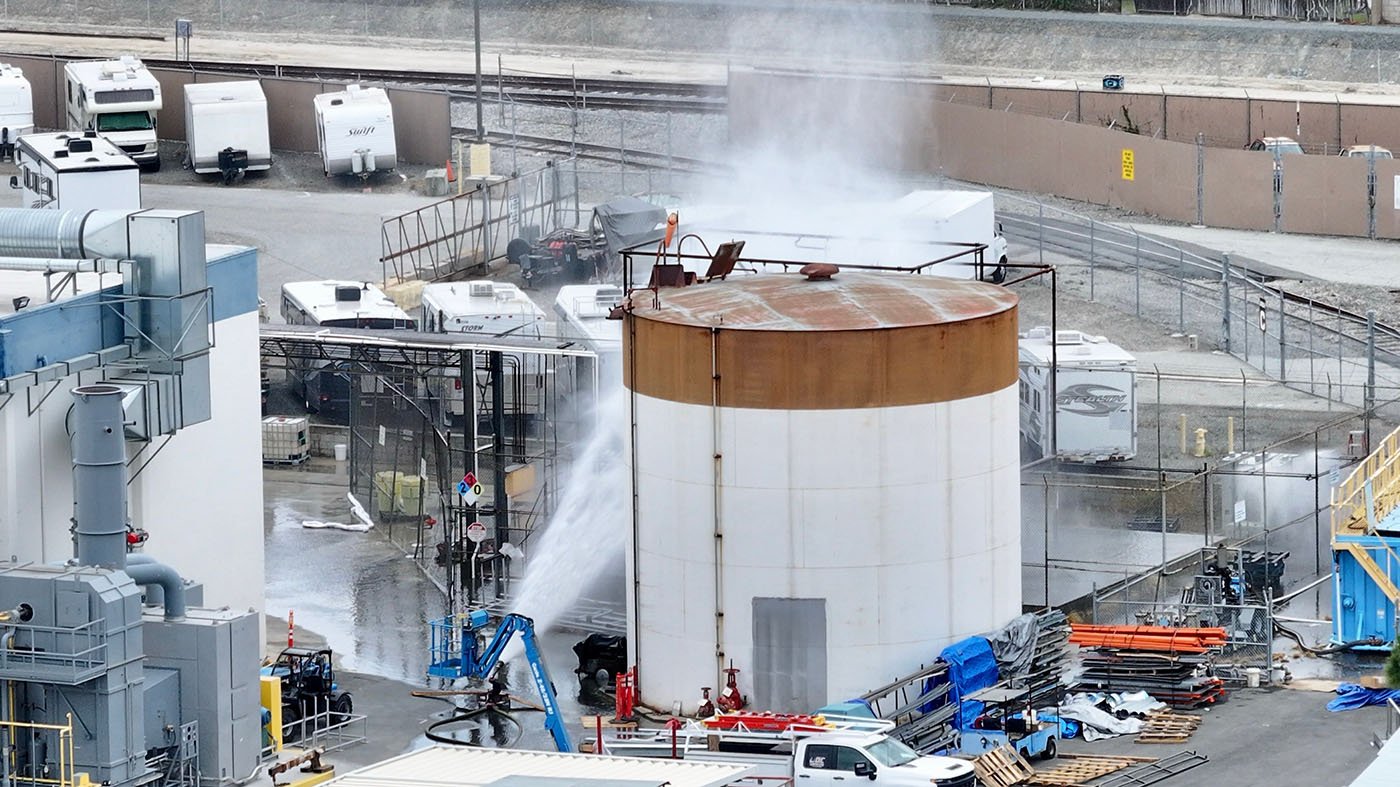
Two major chemical incidents on the West Coast have reignited a fierce debate over industrial safety regulation, as the Trump administration pushes forward with plans to weaken Obama-era protections. Last week, roughly 50,000 residents in Southern California were ordered to evacuate after a chemical tank began overheating and threatened to explode. The evacuation order was later lifted, but the scare underscored the dangers of reactive hazards. This week, a chemical tank implosion at a paper mill in Washington state killed at least eight people, with three others missing and presumed dead.
The timing of these events is politically charged. The Environmental Protection Agency (EPA), under President Trump, has proposed rolling back stricter chemical safety standards that were finalized under President Biden. Critics argue that the recent disasters show the need for more oversight, not less, but the EPA insists its proposal will not affect the rules governing the incidents. "Neither of these incidents fell under RMP regulations," an EPA spokesperson said in an unsigned email. "Both, however, are highly regulated."

The agency’s proposal would revise the Risk Management Program (RMP) rule, which applies to roughly 11,500 facilities nationwide, including chemical manufacturers, oil refineries, water treatment plants, and food processors. The EPA claims the changes will "strengthen chemical accident prevention, enhance compliance, and reduce unnecessary burdens on regulated facilities." But critics say the real effect will be to gut protections that have been in place for years.
Environmental advocates are particularly alarmed by the Trump administration’s push to remove requirements for facilities to assess safer technologies and to share hazard information with nearby communities. "There is so much more that can and must be done to prevent chemical disasters and mitigate the life-altering and life-ending horrors that result," said Cynthia Palmer, senior analyst for petrochemicals at Moms Clean Air Force.
Jane Williams, executive director of California Communities Against Toxics, pointed out that the chemical involved in the California incident—a reactive hazard—is not covered by any version of the RMP rule, whether from Trump, Biden, or Obama. "Those reactive hazard chemicals are not covered by the current Trump rule, not covered by the Biden rule, not covered by Trump one and not covered by the Obama-era rule," Williams said. She added that "hundreds of these reactive hazard chemical disasters" have occurred over the past two decades, calling for their inclusion in the regulations.
The RMP rule has been a political football for years. The Obama administration tightened it after a 2013 fertilizer plant explosion in West, Texas, killed 15 people. President Trump’s first term loosened those rules, and President Biden restored and expanded them. Biden’s version required third-party compliance audits, root-cause investigations after incidents, evaluation of safer technologies, and public disclosure of risks to communities within six miles of a facility. It also gave employees a formal process to report unaddressed hazards.
While compliance deadlines for Biden’s rule don’t kick in until next year, facilities should already be working toward them, said Emma Cheuse, a senior attorney at Earthjustice. "EPA is attempting to pull the rug out from under the protection before those deadlines fully kick in," she said.
The Trump administration’s February proposal would scrap requirements for existing facilities to assess safer technologies and eliminate the employee hazard-reporting process. It would also replace public disclosure with an EPA data tool, and is considering whether to keep third-party audits only for facilities with two or more accidents in five years—or eliminate them entirely.
The chemical industry has welcomed the rollback. The American Chemistry Council, a trade group, argued in a formal comment that the provisions targeted by the EPA are "overly burdensome requirements that have not been proven to improve process safety" and may actually increase risk by diverting resources from higher-priority hazards.
But the Chemical Safety Board, the federal agency that investigates industrial accidents, strongly disagrees. In a formal comment on the proposal, board members Steve Owens and Sylvia Johnson—both Biden appointees—wrote: "The EPA’s proposed revisions would be a significant step backwards after more than a decade of safety progress toward preventing catastrophic chemical accidents.” The board is currently investigating the Washington state implosion.
The debate also echoes broader political battles. Trump’s focus on deregulation has drawn sharp criticism from figures like Cindy McCain, who recently urged the administration to restore food aid after USAID cuts. And as the 2024 campaign heats up, the chemical safety issue is likely to remain a flashpoint, especially as Trump’s agenda continues to face scrutiny from both parties and advocacy groups.