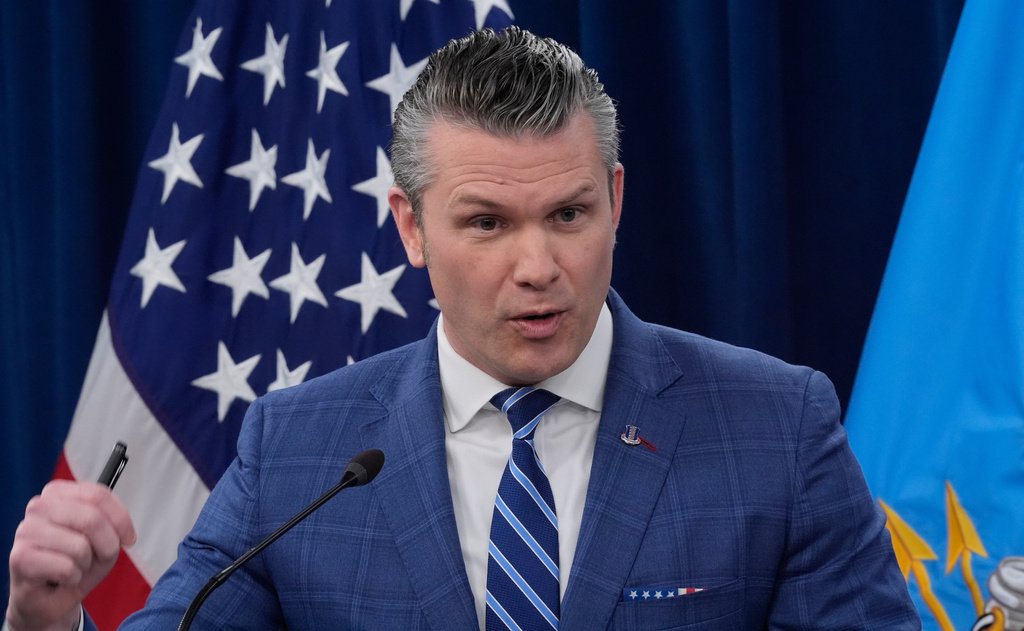
President Donald Trump confronts mounting political damage from the ongoing Iran conflict, with his administration's optimistic war predictions failing to materialize and public support eroding. Facing one of the most severe tests of his political resilience, Trump appears poised to assign blame downward, with Defense Secretary Pete Hegseth positioned as the most probable casualty.
The Loyalist's Downfall
Hegseth's tenure has been defined by unwavering alignment with the President's desires, from orchestrating military parades to aggressively purging senior officers in a campaign against diversity initiatives. This dynamic, where Hegseth delivers precisely what Trump wants to hear, has now created a critical vulnerability. The Secretary consistently assured Trump that Iran would quickly capitulate following the targeted killing of its leader—a narrative reportedly bolstered by Israeli Prime Minister Benjamin Netanyahu despite internal objections from officials like Vice President JD Vance and Secretary of State Marco Rubio.
This pattern of affirmation extended to the war itself. Hegseth, alongside General Dan Caine, publicly touted the decimation of Iran's military capabilities while privately selling the same story of imminent victory to the Commander-in-Chief. The strategy backfired as the conflict devolved into a protracted stalemate, exposing a familiar rift between presidential preference and military reality. Trump's historical friction with experienced Pentagon leaders like Jim Mattis and Mark Esper led him to appoint a more pliable figure, but that very pliability has compounded the current crisis.
A Pattern of Misrepresentation
The situation echoes past military controversies where optimistic assessments obscured grim truths. While propaganda and misdirection are standard in warfare, Hegseth is accused of crossing a line by fostering a dangerously inaccurate narrative for domestic consumption, including the President's. His claims of divine backing for the war and relentless cheerleading have sparked fierce clashes with senior military leadership, including a notable dispute with Army Secretary Dan Driscoll.
The consequences are now inescapable. The promised swift victory has dissolved, replaced by a complex military engagement, economic strain, and a fierce political firestorm. As the administration grapples with the fallout, Trump's established method of political survival—distancing himself from failing ventures—points directly to his top defense official. Hegseth's role as the primary advocate for the war's optimistic trajectory makes him the obvious candidate for blame.
Further complicating the landscape, the administration faces parallel challenges, such as when the Lebanese president publicly rejected direct talks with Israel, undermining another foreign policy announcement. Meanwhile, domestic priorities advance, evidenced by efforts like the defense budget surge defended by Russ Vought, which entails significant domestic spending cuts.
The Inevitable Sacrifice
Trump's operating style prioritizes declarative action over nuanced detail, a trait Hegseth expertly catered to. However, the Secretary's failure to temper the President's expectations with operational realities has created a potentially fatal disconnect. With the war's political costs escalating and Trump's core supporters showing skepticism, a reset requires a visible sacrifice.
The Secretary's previous performances, including fiery briefings where he compared the Pentagon press to Biblical Pharisees, now appear as part of a problematic pattern of rhetoric over substance. Even operational actions like the naval blockade touted as pressure on Iran have not yielded the decisive results promised.
As pressure builds, the President must choose between loyalty and political preservation. History suggests that when Trump's narrative fails to resonate, he finds a new one—often at the expense of the person who helped write the old script. For Pete Hegseth, the bill for unwavering loyalty may finally have come due.