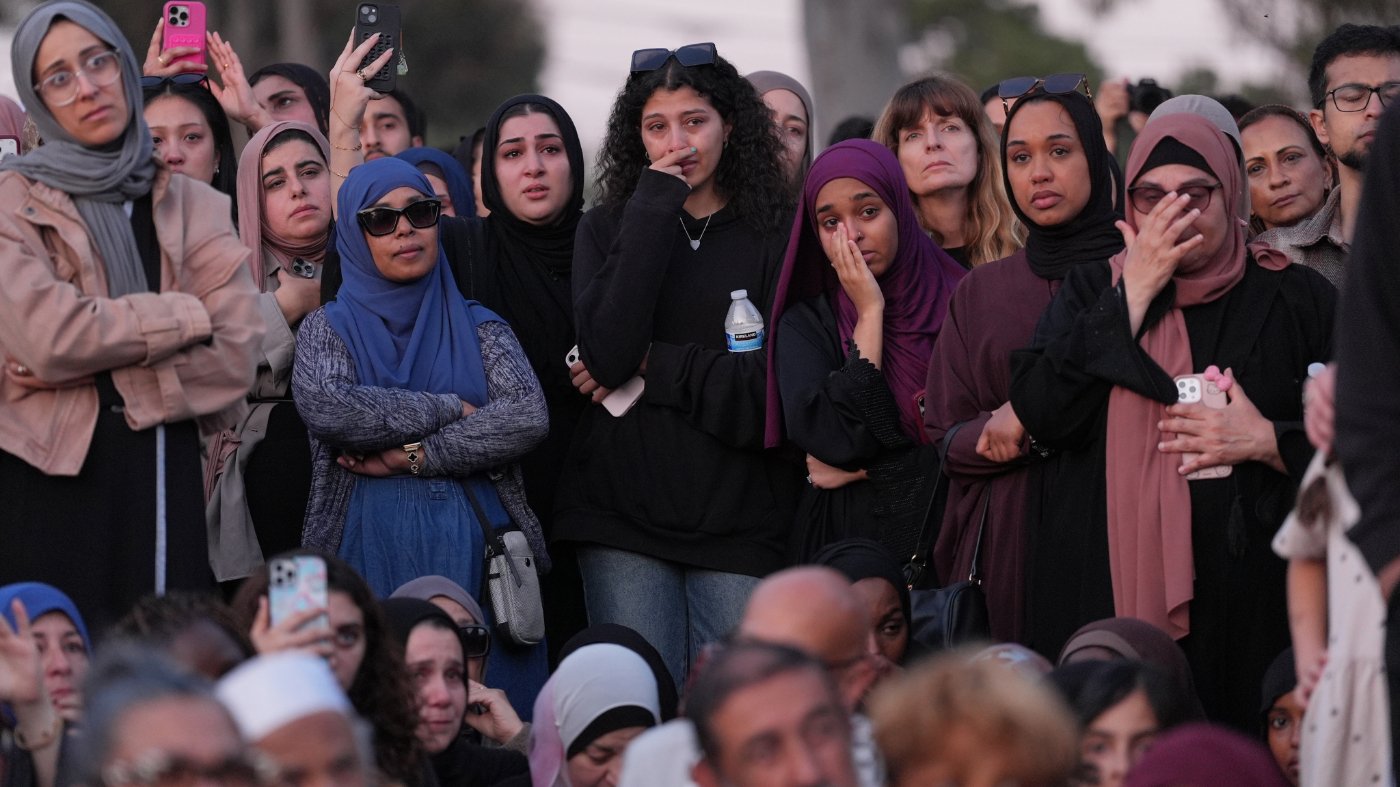
On the morning of May 18, a gunman opened fire at the Islamic Center of San Diego, killing a security guard and two worshippers during morning prayer. By Monday afternoon, San Diego’s police chief told reporters there was “definitely hate rhetoric involved.” Investigators reportedly found anti-Islamic writings in the suspect’s car.
Before the day was out, Laura Loomer—a Trump ally with documented White House access—had a different message for federal law enforcement. In a social media post, she called the mosque “evil” and demanded the FBI and Immigration and Customs Enforcement raid it. Not to investigate a hate crime, but to raid the victims.
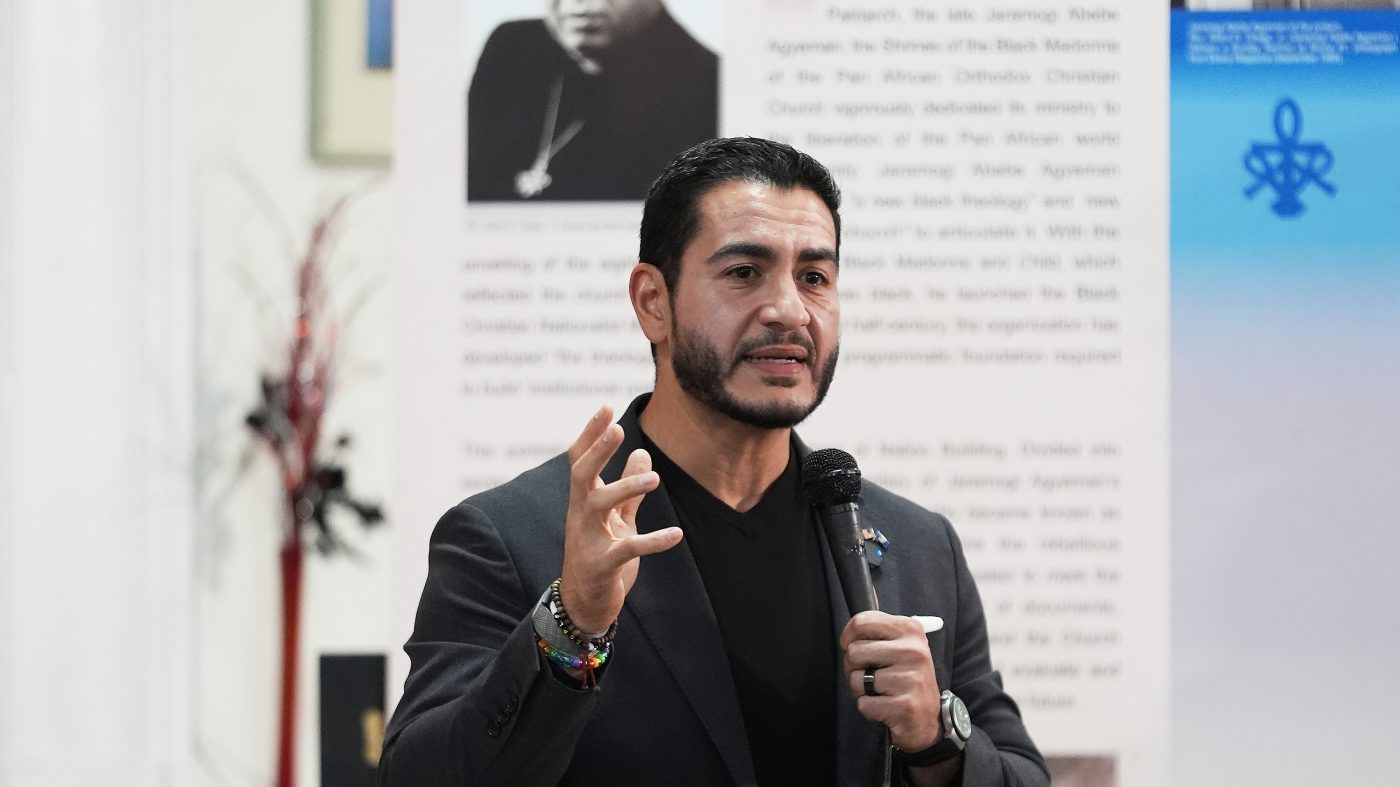
Haris Tarin, vice president of Policy and Programming at the Muslim Public Affairs Council and a former senior advisor at the Department of Homeland Security, has spent more than a decade at the intersection of national security and American Muslim civic life. “I know what it looks like when political pressure is applied to federal institutions,” he wrote. “I have watched it happen to the ones I helped build. What I am watching now is more direct than anything I saw then.”
Loomer is not a fringe voice in this administration. She is a named ally of the president, whose influence on personnel decisions at federal agencies has been reported and documented. When she tells the FBI—publicly, the same day as a mass shooting—that the appropriate response is to raid the mosque rather than investigate the attack on it, that is not a random post. It is pressure. And the FBI has done nothing to suggest that pressure is being resisted.
The bureau put out three official statements on San Diego. Not one used the words “hate crime.” On the same day as the shooting, the Justice Department announced federal hate crime charges in Los Angeles for an assault on a Jewish man at a protest.
Some will say these are just posts, just politics, just noise. But none of those explains the asymmetry. Loomer does not operate in isolation. In February, Rep. Randy Fine (R-Fla.) posted on his official congressional account: “If they force us to choose, the choice between dogs and Muslims is not a difficult one.” A bipartisan coalition, including all 21 members of the Congressional Jewish Caucus, called for his censure. House leadership did not act.
In April, Rep. Chip Roy (R-Texas) posted: “No more Muslims. No more criminals. No more Marxists.” He has made more than 240 posts about Muslims, Islam, or Sharia law since January. Again, House leadership did not act. This is the political environment in which the FBI is being asked to investigate a hate crime against Muslims.
A 2025 nationally representative poll commissioned by the Concordia Forum found that nearly half of American Muslims report increased concerns about anti-Muslim violence over the past year, and approximately 40 percent have changed their daily routines because of it. These are the people waiting to find out which way the FBI goes.
Respected international institutions are already saying what American officials have not. Dr. Mohammad Al-Issa, secretary-general of the Muslim World League, delivered the keynote at the United Nations’ first International Day to Combat Islamophobia, calling it “one of the most alarming manifestations of hate speech.”
What can be changed is upstream. Speaker Mike Johnson (R-La.) can decide tomorrow that members who post “the choice between dogs and Muslims is not a difficult one” do not sit on committees. House Republican leadership can decide that “No more Muslims” is a sentence that ends a congressional career, not extends one. The Congressional Jewish Caucus has already said it plainly: members of Congress must lead by example, not fuel hatred through dehumanization.
Tarin knows what it looks like when a federal institution genuinely commits to protecting a community because he helped build some of those commitments. He also knows what it looks like when elected officials make that work harder—and then ask the country to act surprised when the consequences arrive. The FBI has a strong institutional record on hate crime investigation. That record is worth defending.
The shooter pulled the trigger. He did not write the language he carried into that mosque alone. Congress should ask itself who did, and what it intends to do about them. And the FBI must decide whether it stands with its own mandate—or with the people pressuring it to look away. Muslim Americans are waiting for an answer.
This dynamic echoes broader concerns about political interference in federal law enforcement. For instance, an ICE agent was arrested in Texas over a Minneapolis shooting, highlighting tensions within agencies. Meanwhile, the GOP's shift from extremism critique to religious profiling provides context for the rhetoric from lawmakers like Fine and Roy.