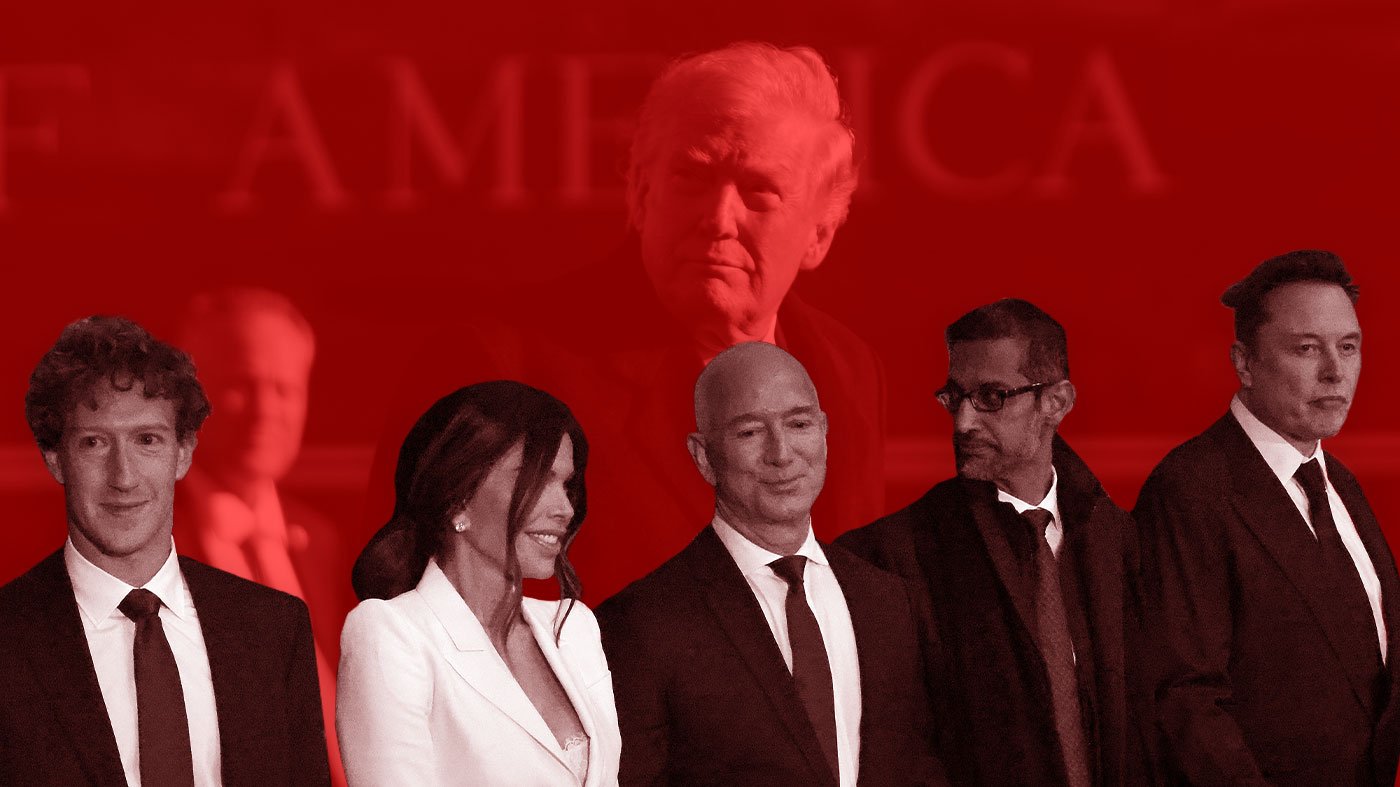
For over a year, the chiefs of America's largest technology firms have been maneuvering to curry favor with President Trump as he reclaimed the White House. From private sit-downs at Mar-a-Lago to massive inauguration contributions, their courtship was unmistakable on Day One, with CEOs like Elon Musk and Mark Zuckerberg occupying prime seats at the swearing-in while some top Republicans watched from overflow rooms.
But the tech industry has weathered a series of ups and downs under the second Trump administration, testing their bonds with a president renowned for his unpredictability. Personal clashes and heated debates over artificial intelligence policy have left some newly forged relationships intact, while others have hit turbulence.
Elon Musk: From Ally to Adversary and Back
The president's rapport with the SpaceX and Tesla founder has been the most erratic of his second term, beginning as a swift alliance and culminating in a very public rupture. Their falling-out last June was dramatic, but tensions have eased since, with Musk accompanying Trump on his state visit to China earlier this month.
Before the 2024 election, Musk largely stayed out of politics, occasionally expressing skepticism about Trump, who had previously criticized the tech billionaire. But as Musk's politics shifted rightward under the Biden administration, he endorsed Trump's reelection, appeared at rallies, and poured hundreds of millions into supporting Trump and other Republicans. Musk led Trump's so-called Department of Government Efficiency, spending extensive time at the White House, even appearing at a Cabinet meeting. He continued that work until his special government employee status expired in late May, seemingly departing on good terms.
However, days later, Musk drew Trump's ire by speaking out against the president's tax and spending bill. He also took credit for Trump's 2024 victory and later accused Trump of being named in the Jeffrey Epstein files, backing calls for impeachment in a lengthy social media tirade. Musk quickly tried to walk back his claims to make peace. Trump wished him well and said they likely wouldn't talk for a while. Musk floated forming a third party, but that talk faded by summer's end.
By August, Trump softened, saying Musk had a “bad moment” but is a “good person.” The two reunited at the September funeral of conservative activist Charlie Kirk, and Trump later told reporters they spoke “on and off.” Musk later attended a White House state dinner and a Mar-a-Lago event. The clearest sign of reconciliation came this month when Musk was one of two executives aboard Air Force One for the China visit.
Dario Amodei: The AI Executive Who Clashed with the Pentagon
Anthropic CEO Dario Amodei has had a complicated relationship with Trump and his administration. Unlike Musk, Amodei's personal politics and his company's safety-first approach to AI made him a likely target. Before the 2024 election, Amodei likened Trump to a “feudal warlord” in a Facebook post and urged followers to vote for Kamala Harris, according to the Wall Street Journal.
Amodei frequently breaks with competitors and the administration over AI safety, backing state and federal measures to add oversight to AI model design and operation. He warned of unmonitored AI dangers in an op-ed opposing a proposed 10-year moratorium on state regulation. Despite his beliefs, Anthropic continued government work, including at the Pentagon, where it was the only AI system permitted on classified networks—until a public dispute over safeguards for domestic mass surveillance and autonomous lethal weapons led Defense Secretary Pete Hegseth to label the company a supply chain risk, banning Claude from the Department of Defense.
Amid the clash, a leaked memo from Amodei to staff argued the Trump administration opposed the company because it didn't donate to the president or show “dictator-style” praise. Amodei apologized for the memo, explaining it was a reaction to Trump's social media post calling the firm “an out of control radical left company.” While the Pentagon doubled down, Trump and senior officials extended an olive branch less than two months later. Trump told CNBC's “Squawk Box” the AI firm “tends to be on the left,” but “we get along with them. They're very smart, and I think they can be of great use.” Amodei was then invited to the White House to meet with senior officials.
These dynamics unfold as Trump also pushes other controversial policies, such as his demand to cancel the July 4th concert in favor of a MAGA rally, and as his administration faces scrutiny over deportation drives that risk economic harm. The tech leaders' relationships with Trump remain a barometer of the administration's broader approach to innovation and governance.