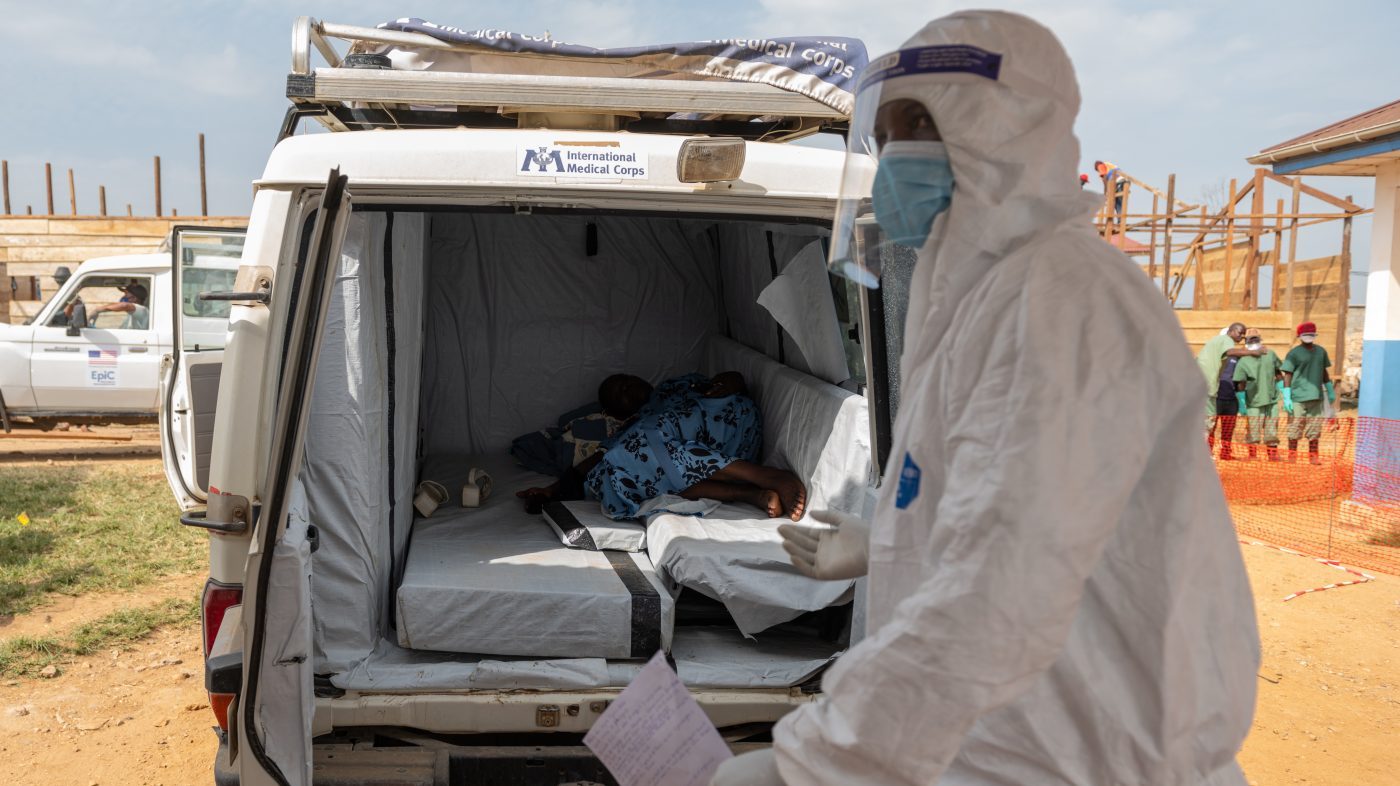
Africa’s Centres for Disease Control and Prevention (Africa CDC) reported Thursday that the Ebola outbreak in the Democratic Republic of Congo has killed more than 200 people in its first month, marking the worst known start to an outbreak of the virus on the continent. Cases have surged 38 percent since last week, spreading across 32 health zones in eastern Congo, with 894 confirmed cases so far—three times worse than Uganda’s 2000 outbreak at the same stage, which had 281 cases.
The epicenter remains in Congo’s Ituri province, which accounts for over 90 percent of confirmed cases. Infections have also been reported in North Kivu and South Kivu provinces, and have crossed into neighboring Uganda, where health officials have recorded 19 confirmed cases and two deaths. The outbreak is driven by the Bundibugyo strain of Ebola, for which there are no approved vaccines or treatments.
Response Hampered by Conflict and Resource Gaps
Dr. Wessam Mankoula, a medical epidemiologist at Africa CDC, said contact tracing efforts have been severely hampered by the remoteness of the outbreak zones, funding and personnel shortages, and large-scale displacement. Years of conflict in Ituri have displaced nearly one million people, complicating efforts to track potential exposures as residents flee.
“For those 800 confirmed cases, we should have between 17,000 to 35,000 contacts that should be in our contact list,” Mankoula said. “We are still far from controlling the situation of this outbreak.” Only 4,000 people have been identified and are being evaluated so far.
Funding Pledges Fall Short
Africa CDC said only 74 patients have recovered from the disease. Experimental treatments, such as monoclonal antibody therapies, are under development. But funding and staffing shortages continue to hinder the response. Africa CDC estimates it needs 540 personnel to combat the outbreak but currently has only 84 deployed. Of the $900 million pledged by international partners, only $90 million has been released.
“We’re keeping our fingers crossed those new pledges will be fast tracked,” Mankoula said, adding that Africa CDC will be pressing governments and partners to turn their commitments into actual funding. The slow disbursement mirrors broader challenges in global health security, as a vacuum in U.S. leadership deepens the global health crisis, with experts warning that coordinated action is critical to prevent further spread.
Containment at Source Seen as Only Effective Strategy
Health officials emphasize that containment at the source is the only effective strategy to curb the outbreak, given the lack of vaccines for the Bundibugyo strain. The surge in cases underscores the urgency of scaling up the response, particularly as the virus spreads across borders. The situation echoes concerns raised in other outbreaks, where containment at source is seen as the only effective Ebola strategy as the outbreak grows.
The Africa CDC’s warning comes amid broader global health challenges, including a screwworm outbreak expanding in Texas, which threatens livestock and beef markets. But the Ebola crisis in Africa remains a top priority for international health agencies, with calls for immediate funding and personnel deployment to prevent a wider catastrophe.