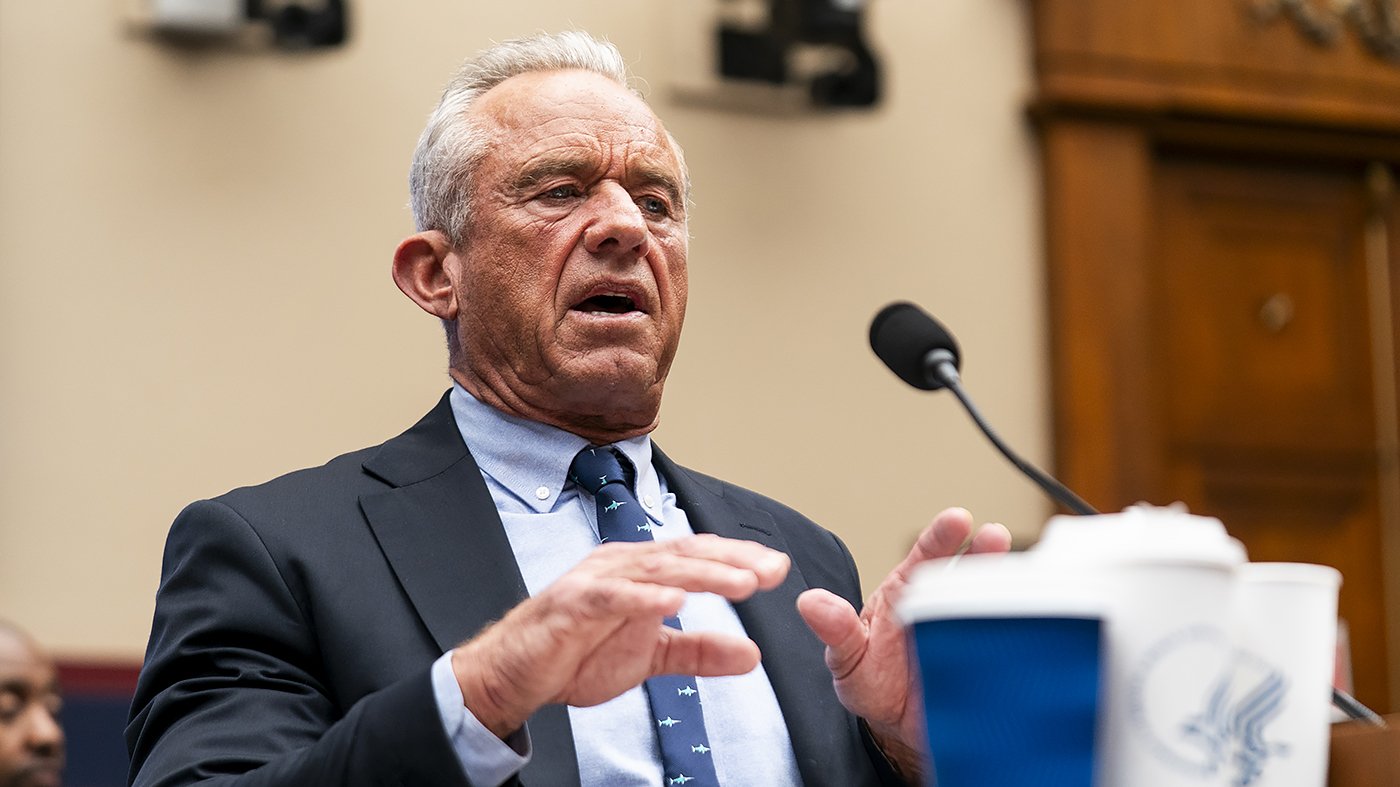
Health and Human Services Secretary Robert F. Kennedy Jr. said Sunday that President Trump backs his push to investigate any potential connection between childhood vaccines and autism, a stance that contradicts decades of scientific research.
During a tense appearance on CNN's State of the Union, Kennedy confirmed a Wall Street Journal report that the president wants him to “probe the link.” When host Dana Bash pressed him on why HHS would revisit a thoroughly debunked theory, Kennedy insisted the administration is committed to the inquiry.
Bash cited the American Academy of Pediatrics, noting that more than 40 studies involving 5.6 million people have found no causal relationship between vaccines and autism. Kennedy countered that “none of the eight vaccines administered during the first six months of life have ever been studied for the relationship to autism,” and he attempted to pivot to Tylenol, which the Trump administration previously linked to autism—a claim also lacking broad scientific support.
The exchange escalated as Kennedy accused Bash of “press malpractice” and said she was “part of the problem” regarding COVID-19 policies. Bash pushed back, asking whether he wanted to attack her or discuss public health. Kennedy also criticized Dr. Anthony Fauci, the former NIAID director, for his pandemic guidance.
Kennedy's remarks come amid mixed messaging from federal health agencies. The CDC recently revised its online materials that previously stated vaccines do not cause autism, a move that has raised concerns among public health experts. Meanwhile, NIH Director Jay Bhattacharya told senators in February that he has seen no evidence supporting a vaccine-autism link, though he acknowledged that some vaccines are “less well studied” than the MMR vaccine.
This is not the first time Kennedy has courted controversy over vaccine safety. His confirmation as HHS secretary was met with alarm from medical groups, and his recent actions—including the dismissal of a vandalism case—have kept him in the spotlight.
The administration's stance on vaccines could have significant policy implications, especially as Medicare drug subsidies are being cut, affecting seniors' access to care. Public health officials worry that undermining vaccine confidence could lead to outbreaks of preventable diseases.
Critics argue that revisiting the autism-vaccine theory wastes resources and erodes trust in vaccinations. Supporters of Kennedy, however, see his scrutiny as a necessary check on pharmaceutical influence. As the debate continues, the administration's next steps will be closely watched by both allies and adversaries.