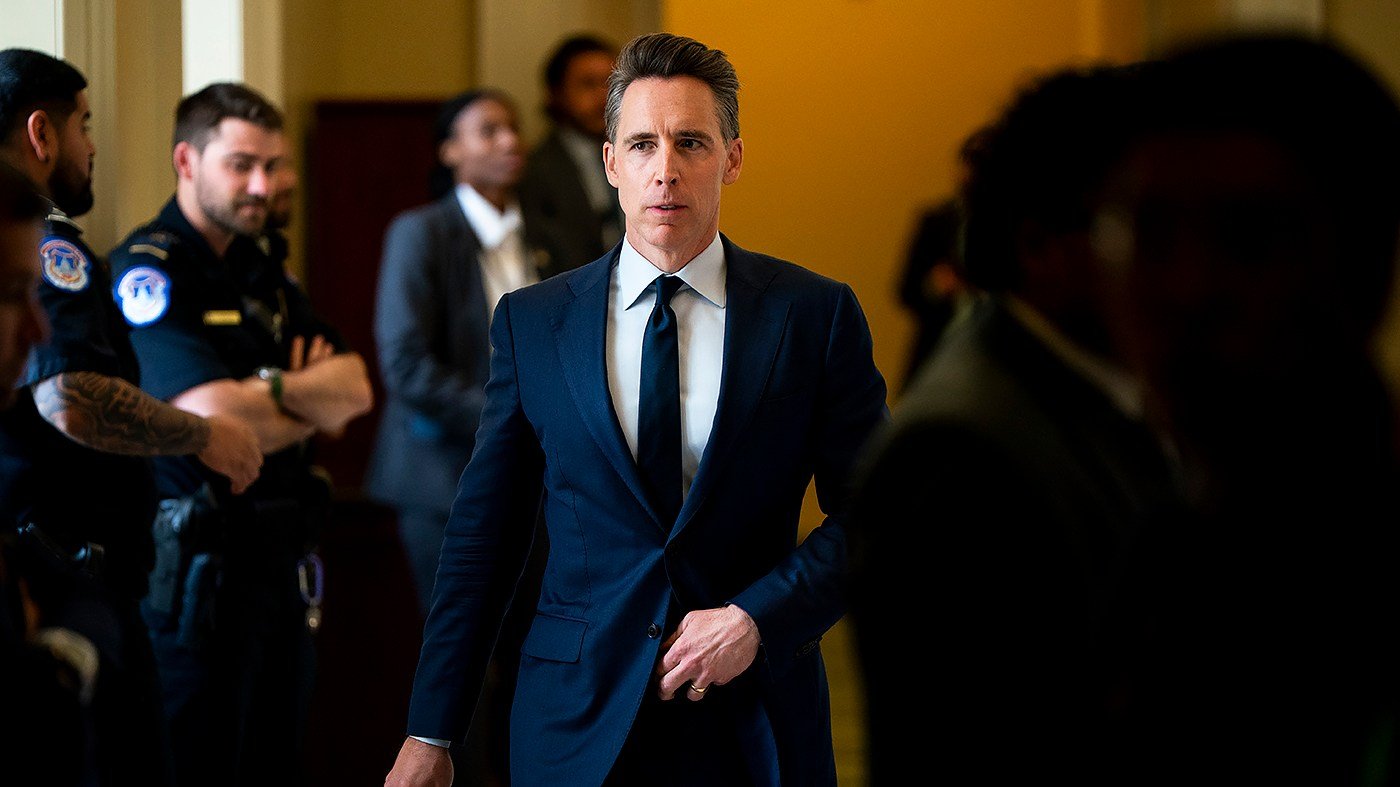
In a sweeping new book, No Prophets: The Fight to Save Democracy From Christian Nationalism, Rep. Jared Huffman (D-Calif.) — the only self-described Humanist in Congress — lays out a detailed account of how a once-fringe religious movement has moved from the margins to the center of American political power. Huffman's work arrives at a moment when the movement's influence is unmistakable: a presidential commission nearly entirely composed of conservative Christians has urged a rethinking of church-state separation, and the Department of Justice has ordered federal agencies to broaden religious expression protections across public employment, the military, healthcare, and federal contracting.
Christian nationalism, as Huffman defines it, is built on the conviction that the United States is a divinely chosen nation, that the New Testament should guide public policy, and that white Christians ought to hold cultural dominance. The movement has deep roots, but its modern resurgence began in the 1990s as traditional denominations shrank and independent charismatic ministries grew. The New Apostolic Reformation, a network of evangelical leaders, framed America as a Christian nation under siege by secular elites, even invoking spiritual warfare against supposed "demons." Alongside this network, radical traditionalist Catholics and the Communion of Reformed Evangelical Churches have added their own theological weight, all three strands sharing the belief that God has designated Christians to run the country.
Huffman's book cites Public Religion Research Institute data showing that roughly 11% of Americans identify as Christian nationalists, with another 21% sympathizing. Among Republicans, the numbers are even more stark: 55% embrace "dominion" theology, and more than 60% want the United States to be officially declared a Christian nation. Many of these believers see Donald Trump as God's anointed leader, and Huffman notes that legions of them participated in the January 6, 2021, attack on the Capitol.
In his second term, Trump has moved decisively to reward that faith. He has pledged to defend Christianity from the "radical left" and "root out anti-Christian bias," establishing a task force to investigate alleged "targeting" of Christians — a narrative that critics say is false given Christianity's majority status. He also created a White House Faith Office, led by a pastor who has called Black Lives Matter "anti-Christ" and questioned Jesus's messianic status had he broken immigration laws. The office is part of a broader push to bring "renewal of faith in our schools, military, workplaces, hospitals, and halls of government."
Perhaps most troubling, Huffman argues, is the placement of Christian nationalists in key federal positions. Russell Vought, a principal architect of Project 2025 and now director of the Office of Management and Budget, has proposed criminalizing pornography, using biblical definitions of gender and marriage, and enforcing a Christian Sabbath. Defense Secretary Pete Hegseth hosts monthly prayer services at the Pentagon, sports a Jerusalem cross tattoo and a Crusader slogan, and has prayed for U.S. troops to inflict "overwhelming violence against those who deserve no mercy" in the name of Jesus Christ — a striking stance during a conflict with Iran, a Muslim-majority nation.
Vice President JD Vance represents the Catholic postliberal wing, insisting that "by the grace of God we will always be a Christian nation" and that "religious liberty is a Christian concept." On Capitol Hill, Huffman describes a "ministry-industrial complex" of faith leaders, advocacy groups, and religious programming pushing to embed right-wing Christianity into governance. House Speaker Mike Johnson (R-La.) dismisses church-state separation as a "misnomer," advocates for "biblically sanctioned government," and supports Bible study in public schools.
Huffman's book is a clarion call for those who see these developments as a threat to democratic pluralism. He argues that the movement's goal is not merely to influence policy but to transform the very structure of American governance. As the 2026 midterms approach, the political fallout from these policies is already evident, with voters increasingly demanding pragmatic solutions over ideological battles. Meanwhile, legal challenges to the administration's religious liberty commission continue, as seen in a recent federal court ruling.
Huffman's warning is clear: without vigilance, Christian nationalism could erode the separation of church and state that has long been a cornerstone of American democracy. His book offers both a diagnosis and a call to action for those who believe that religious freedom means freedom for all, not dominion by some.