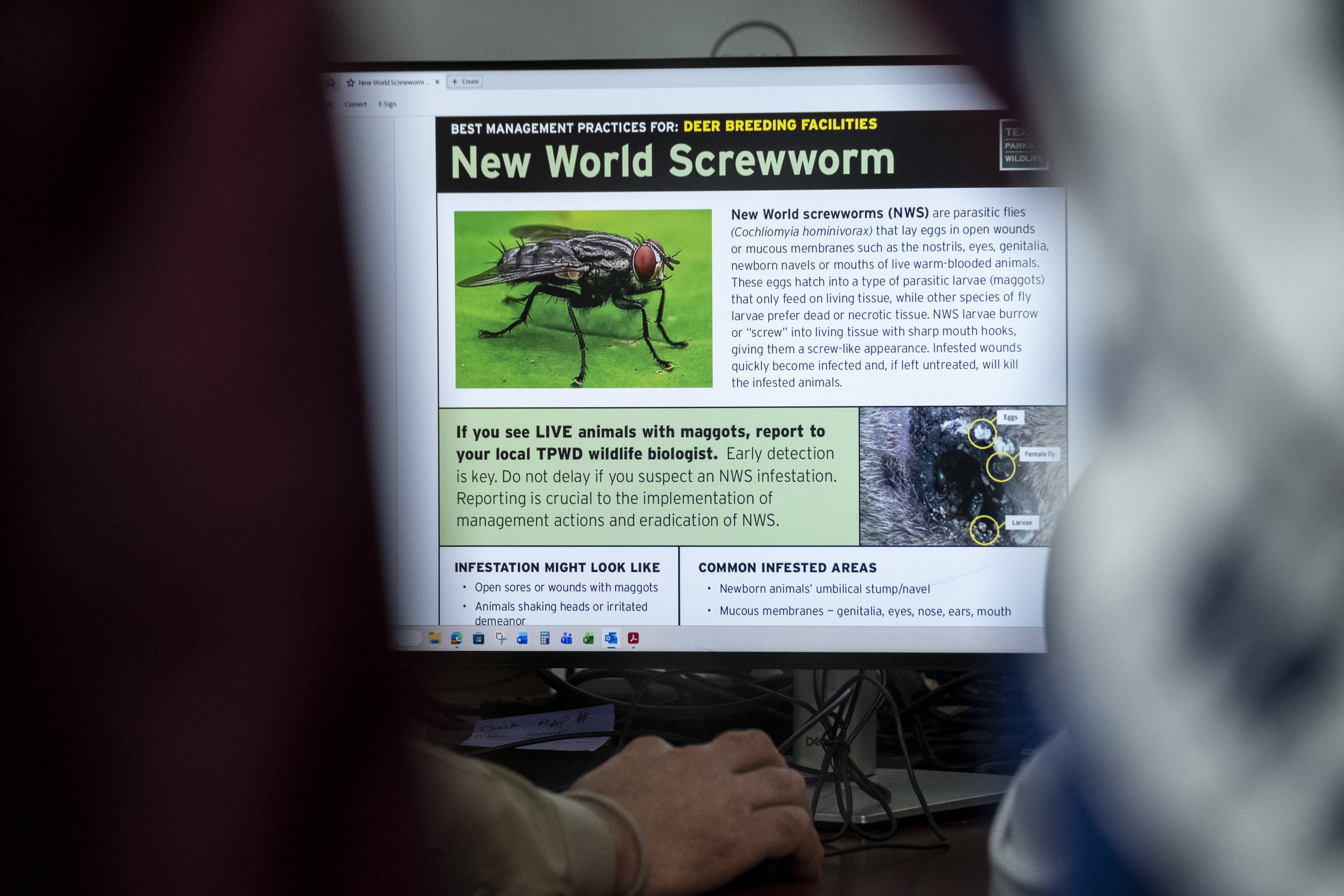
The New World screwworm (NWS) has reemerged in Texas after a nearly six-decade absence, with eight confirmed cases in livestock since the first infection was reported on June 3 in Zavala County. Another case has also been detected in neighboring New Mexico, according to data tracked by KXAN.
The parasitic fly, which deposits eggs in open wounds or natural orifices of warm-blooded animals, can be fatal if untreated. The U.S. Department of Agriculture's Animal and Plant Health Inspection Service (APHIS) warned that the outbreak poses risks to public health, animal health, agriculture, the environment, the food supply, and the economy. The CDC has declared an emergency over the resurgence, underscoring the severity of the situation.

According to the USDA, the majority of Texas cases involve cattle, with two additional infections reported in goats. The first case was the state's first since 1966, marking a significant escalation in the threat to the region's agricultural sector. Peyton Schuman, senior director of government relations for the Texas and Southwestern Cattle Raisers Association, estimated that a full-blown screwworm outbreak could cost Texas approximately $1.8 billion annually, with cattle producers facing losses between $735 million and $745 million each year.
The economic stakes extend beyond livestock. Texas's $9.6 billion hunting industry is also at risk, as 80% of the state's white-tailed deer population was wiped out during a screwworm outbreak in the 1960s. The current outbreak has already prompted political debate, with Trump officials blaming the Biden administration for the resurgence, while the USDA faces scrutiny over its preparedness and response.
Tracking the Spread
As of June 11, the USDA has reported a daily increase in cases since the beginning of the month. The majority of infections remain concentrated in South Texas, though the New Mexico case suggests the parasite may be spreading beyond state lines. The USDA's APHIS has emphasized the importance of planning and preparing for an outbreak, noting that early detection and rapid response are critical to containing the fly.
The outbreak has also drawn attention to broader policy issues, including water and tax regulations affecting Texas's infrastructure. Governor Greg Abbott has pushed back on the data center boom with new rules, but the screwworm crisis may divert resources from other state priorities. Meanwhile, the FDA has authorized the first generic drug for screwworm treatment in pets, a move that could help contain the spread among companion animals.
The USDA's Animal and Plant Health Inspection Service continues to monitor the situation, with USDA Chief Rollins facing Senate grilling on budget and crisis management. The agency has called for vigilance among livestock owners and veterinarians to report any suspicious wounds or infestations. For now, the map of confirmed cases remains a critical tool for tracking the parasite's advance and coordinating containment efforts.