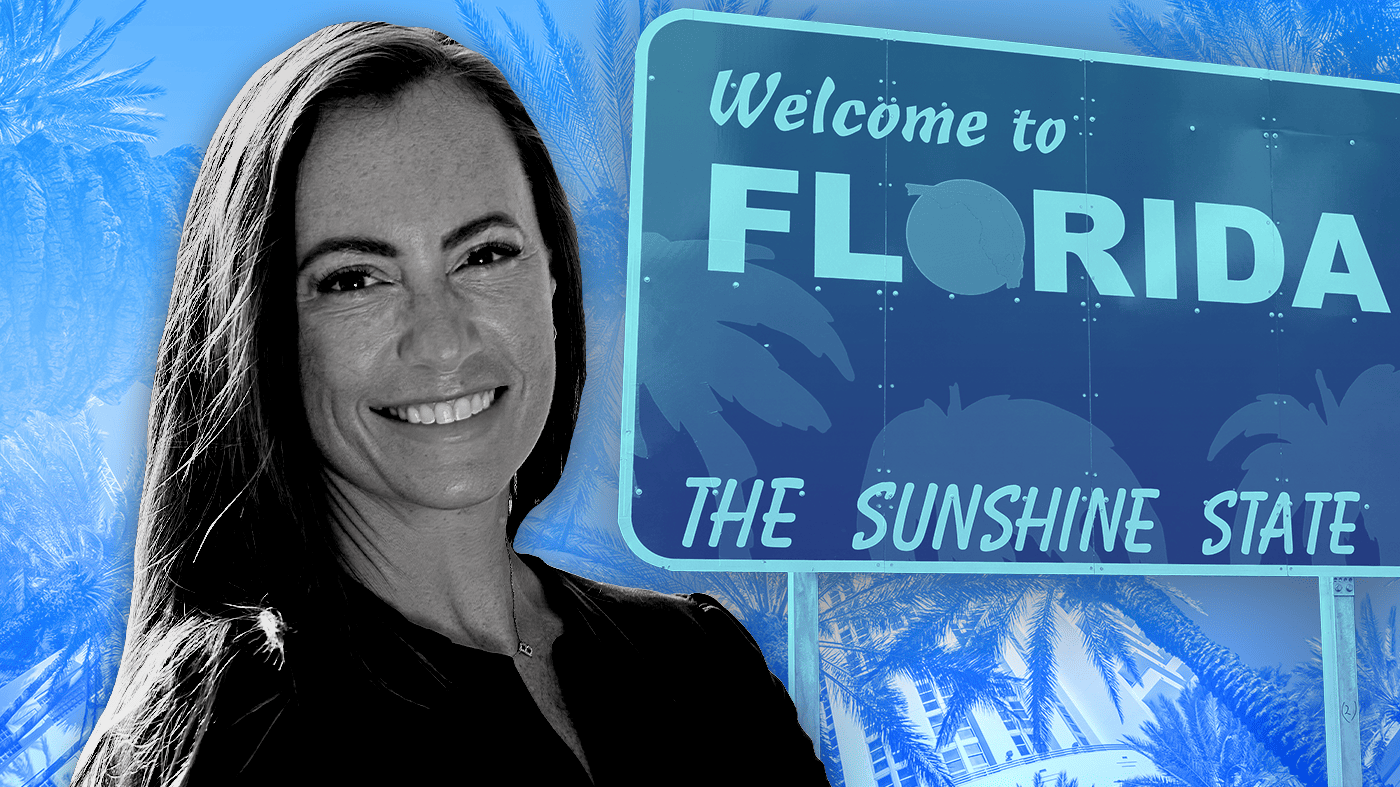
A recent special election victory by a Democrat in a Florida district that includes former President Donald Trump's Mar-a-Lago club has intensified debate over whether demographic shifts are altering the state's political landscape. Emily Gregory's win in State House District 87 marks a significant upset in an area Trump carried by double digits and where the Republican incumbent won by 19 points in 2024.
Migration and Political Anxiety
The result has crystallized long-standing concerns among some Florida conservatives about the political impact of domestic migration. For years, large numbers of people, including Democrats from states like New York, New Jersey, Illinois, and California, have relocated to Florida, drawn by lower taxes, perceived public safety, and a lighter regulatory touch. The fear that these new arrivals could gradually shift the state's political orientation now appears less abstract.

This anxiety is particularly acute in Palm Beach County, a prime destination for affluent transplants and one of only eight Florida counties where registered Democrats outnumber Republicans. In District 87, Democrats hold a registration advantage of roughly 13,000 over Republicans, with a substantial pool of 234,000 independent voters. Analysts suggest that if independents nationally are trending toward Democrats, as some polls indicate, that shift alone could explain Gregory's narrow victory margin of fewer than 800 votes.
Dissecting the Loss
Republican strategists and commentators offer multiple explanations for the loss. Some point to an "enthusiasm gap" and low turnout, which was below 29 percent, speculating that GOP voters may have grown complacent after years of electoral dominance. Others interpret it as a potential sign of Trump's declining coattails, noting his direct endorsement of the Republican candidate, Jon Maples, whom he promoted on social media as a "very successful Businessman and Civic Leader."
Gregory's campaign focused on pocketbook issues resonating with many Floridians: skyrocketing housing and homeowners insurance costs, and the state's high rate of uninsured residents. She advocated for a more active government role, proposing state-backed catastrophic insurance and the expansion of Medicaid—a program Florida has thus far rejected. "Florida remains one of just ten states that refuses to expand Medicaid under the Affordable Care Act, leaving thousands of working families and seniors without affordable coverage," Gregory states on her campaign website.
A National Pattern of Democratic Gains
The Florida result is not an isolated incident. Since the November 2024 elections, Democrats have captured more than two dozen state legislative seats in traditionally Republican or competitive states like Arkansas, New Hampshire, and Texas. This lopsided tally is partly a function of the GOP's strong performance in the 2024 cycle, which left few Democratic seats vulnerable to takeover. The out-of-power party typically makes gains in off-cycle and midterm elections, but the consistency of these Democratic wins is notable. These Democratic victories in Florida are being watched as potential early signals for the 2026 electoral map.
Critics of Gregory's policy platform warn that embracing larger government programs could undermine the fiscal model that attracts newcomers. They point to states like New York, where Medicaid spending has doubled over the past decade, contributing to significant budget challenges. Florida, with a population of 23 million, operates on a state budget roughly half the size of New York's $254 billion plan, a key factor in maintaining its lower tax burden.
Broader Political Context
The special election occurs amid other contentious political developments involving Florida figures. Recently, a Florida Republican hosted sanctioned Russian officials on Capitol Hill, creating divisions within the party. Meanwhile, in Washington, legislative battles continue, such as when Senate Democrats rejected a DHS funding bill, pushing the administration toward potential emergency actions.
Another special election in Florida, where Democrat Brian Nathan leads for a state Senate seat in the Tampa area, suggests the trend may extend beyond Palm Beach. For long-time residents and political observers, the central question remains whether these results are temporary protests or the beginning of a more durable political transformation fueled by migration. The outcome has ensured that Florida's status as a Republican stronghold will be a central topic of political analysis leading into the next election cycle.