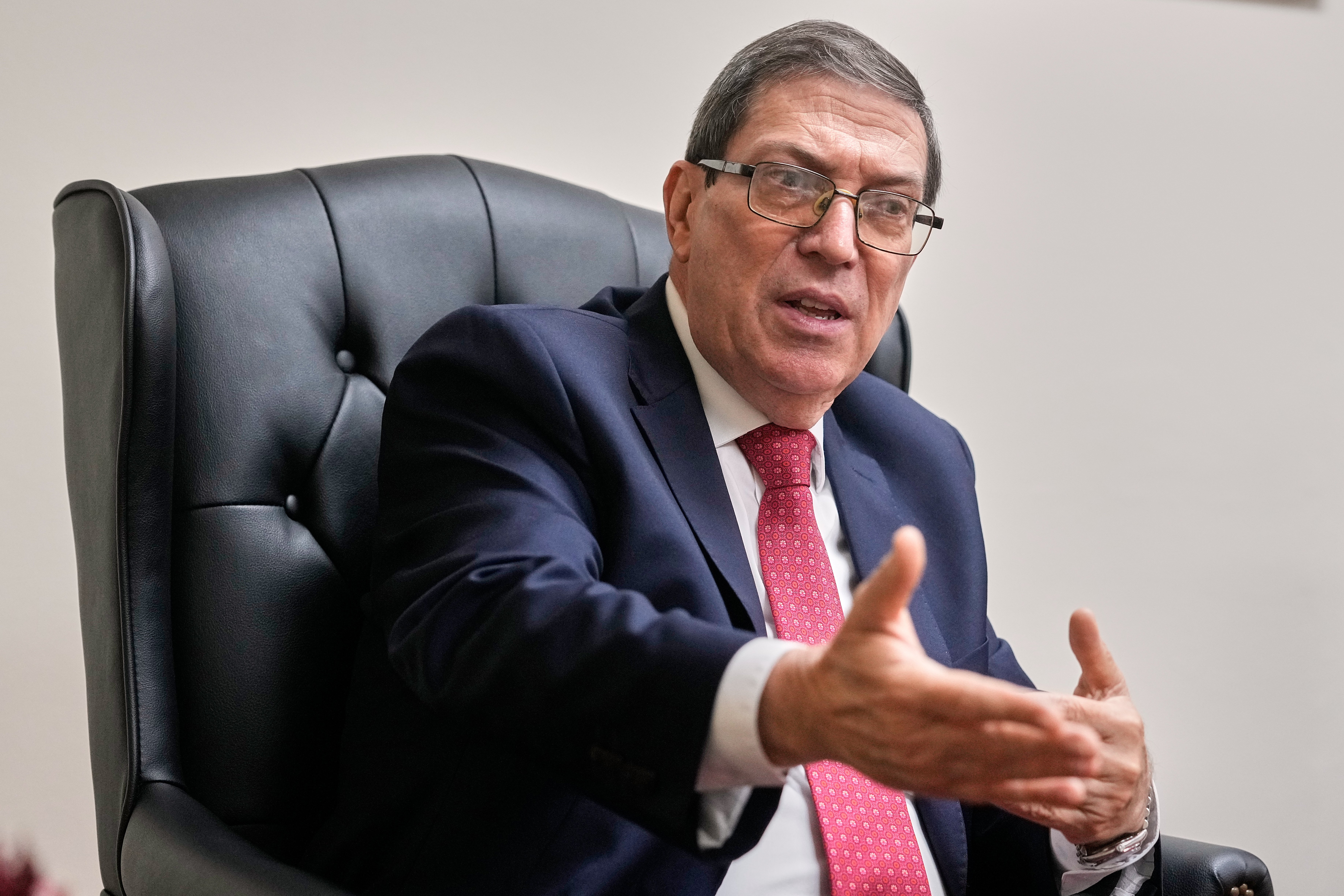
Cuba's top diplomat on Thursday directly accused Secretary of State Marco Rubio of fabricating claims about Havana posing a national security threat to the United States, charging that the Trump administration is manufacturing a pretext for military action.
Foreign Minister Bruno Rodriguez took to social media to denounce Rubio's assertions, writing that the secretary of state “lies once again to instigate a military aggression that would provoke the shedding of Cuban and American blood.” Rodriguez insisted that “Cuba is not, nor has it ever been, a threat to the national security of the United States.” Instead, he argued, it is Washington that “ruthlessly and systematically aggresses the Cuban people” through measures such as blocking fuel imports and tightening the economic embargo.
Rodriguez's broadside came in response to Rubio's remarks earlier Thursday, in which the secretary of state claimed Cuba has long menaced U.S. security. “Here's what I can tell you: Cuba not only has weapons that they've acquired from Russia and China over the years, but they also host Russian and Chinese intelligence presence in their country, not far from where we're standing right now,” Rubio told reporters before departing for Sweden and India. He added that “Cuba has always posed a national security threat to the United States” and called it “one of the leading sponsors of terrorism in the entire region.”
The escalating war of words follows a Justice Department indictment of former Cuban President Raúl Castro on murder charges linked to the 1996 downing of civilian planes searching for would-be defectors. The Trump administration has also tightened an oil blockade that has caused widespread power outages and shortages on the island, and launched a military operation in January targeting Venezuelan leader Nicolás Maduro, a key Castro ally. Some analysts view these moves as part of a broader push for regime change in Cuba.
“We're seeing Republicans manufacture a reason for another regime change war in front of our very eyes—this time in Cuba,” wrote Senator Ruben Gallego (D-Ariz.) on X. Gallego, a military veteran, warned against repeating the mistakes of past conflicts: “I was sent to fight abroad with other working-class kids by the same type of DC war hawks. We must say no to more forever wars.”
President Trump, who remains engaged in a standoff with Iran, has previously signaled that Cuba is “next” in line for targeted U.S. action. However, a recent report indicated that Trump has ruled out direct military intervention in Cuba after the DOJ charges against Castro, suggesting internal administration divisions over how aggressively to confront Havana.
The dispute has also drawn attention to the broader military-civilian trauma gap that threatens readiness for large-scale conflict, as lawmakers debate the risks of another overseas entanglement. Meanwhile, Senator Marco Rubio has faced criticism for his combative style, with some colleagues noting that Vice President Vance delivered a more measured briefing after Rubio's raucous performance.
As the administration tightens its grip on Cuba, experts warn that the combination of economic pressure and military posturing could trigger a new exodus from the island. Former Defense Secretary Robert Gates has cautioned that Trump's tightened embargo may spark a new Cuban exodus, further straining U.S. resources and regional stability.
The diplomatic clash underscores the deepening rift between Washington and Havana, with both sides accusing the other of aggressive intent. Whether Rubio's allegations will translate into concrete military action remains uncertain, but the rhetoric has already heightened tensions in a region already on edge.