A federal permit should signal finality, not become a temporary approval subject to political winds. Yet across administrations, fully authorized infrastructure projects—from pipelines to wind farms—face revocation or indefinite delay when political priorities shift. This instability raises costs, stalls critical development, and undermines America's capacity to build.
Legislative Response to Permitting Paralysis
At the core of this problem is the CERTAIN Act, a bipartisan discussion draft released in December by Representatives Andrew Garbarino (R-N.Y.), Scott Peters (D-Calif.), Gabe Evans (R-Colo.), Gabe Vasquez (D-N.M.), Juan Ciscomani (R-Ariz.), and Adam Gray (D-Calif.). The legislation directly targets two systemic failures: protracted agency review timelines and the vulnerability of approved permits to subsequent political interference.
The bill proposes clearer regulatory deadlines, strengthened notification requirements, and enhanced accountability during the review process. Crucially, it would shield lawfully issued permits that remain in compliance from being reopened for political reasons after approval. As Rep. Garbarino argued, "endless permitting roadblocks hurt communities and drive up energy costs," and this measure aims to "ensure projects that meet their requirements can move forward on time."
Economic and Strategic Imperatives
The urgency for reform is underscored by mounting economic pressures. The U.S. Energy Information Administration forecasts the strongest four-year growth in electricity demand since 2000, driven largely by data-center expansion. Meeting this demand requires accelerated construction of generation capacity, transmission lines, and supporting infrastructure. The fundamental question, as one Wall Street analysis of political dysfunction suggests, is whether the U.S. can still build efficiently amid systemic delays.
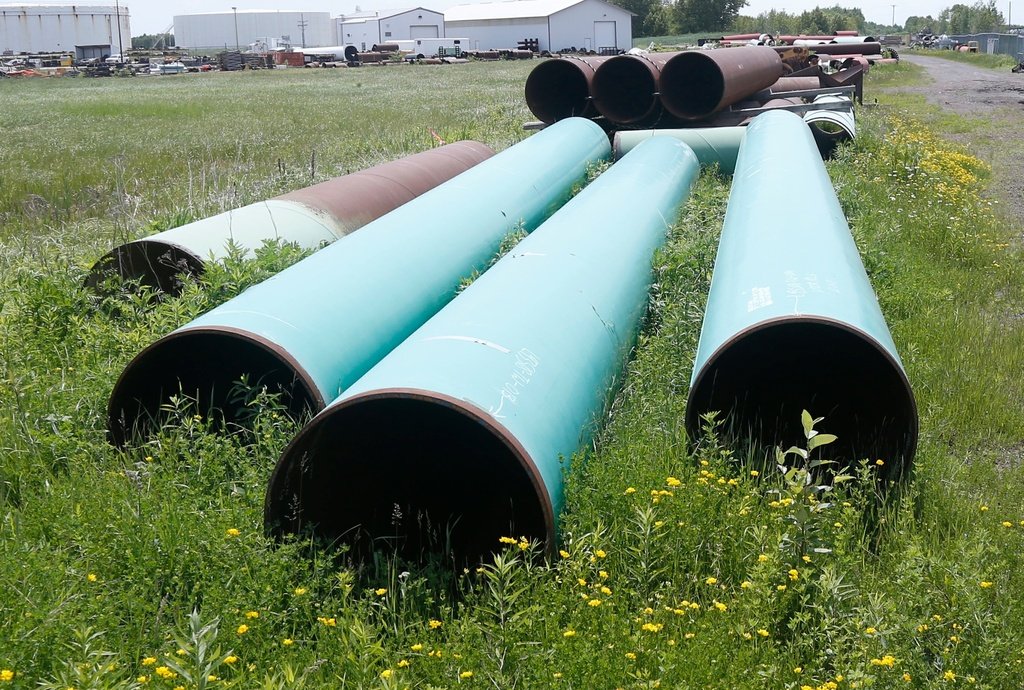
Both parties have experienced the consequences of permit uncertainty. Republicans have seen fully permitted oil and gas pipelines halted by litigation and political pressure. Democrats now confront administrations freezing permits for near-complete offshore wind projects. During a Senate Environment and Public Works hearing in January, senators from both parties agreed that administrations should not cancel fully approved projects merely due to changing political priorities.
Global Competitive Context
The contrast with international competitors, particularly China, sharpens the concern. The International Energy Agency reports China's clean energy investment exceeded $625 billion in 2024, with approximately $88 billion earmarked for transmission and distribution in 2025. While the U.S. should not emulate China's political system, its ability to execute large-scale projects highlights how American procedural strengths—public debate and legal review—can become self-imposed obstacles when processes drag on and settled decisions are reopened.
This legislative effort reflects broader anxiety about strategic competitiveness amid global instability. A country seeking abundant energy, modern infrastructure, and a competitive edge cannot treat lawful approvals as provisional.
Broader Principles and Coalition Support
Permit certainty transcends any single industry, reflecting institutional seriousness that serves the entire economy. The same principle should apply uniformly—whether for an LNG terminal, a transmission line, a geothermal plant, or a critical mineral mine. A credible system must invite scrutiny during review but deliver finality afterward. Otherwise, every permit becomes a wager on the next election cycle.
In February, over 600 organizations signed a letter urging the Senate to pass bipartisan, comprehensive permitting reform. The coalition advocates for a system that operates efficiently, transparently, and predictably, earning public confidence while supporting both conservation and economic growth.
Limitations and the Path Forward
The CERTAIN Act does not address every permitting challenge. Congress must still confront staffing shortages, litigation strategies, interagency coordination, and specific bottlenecks like transmission siting. However, the bill confronts a fundamental governance failure: the erosion of trust in government approvals. As recent controversies over infrastructure costs and political backlash demonstrate, without reliability, public support for major projects erodes.
When the federal government grants a permit under the law, it makes a commitment to communities, investors, and builders. The CERTAIN Act represents an attempt to ensure that commitment means something—that a permit is not merely a gamble, but a guarantee.