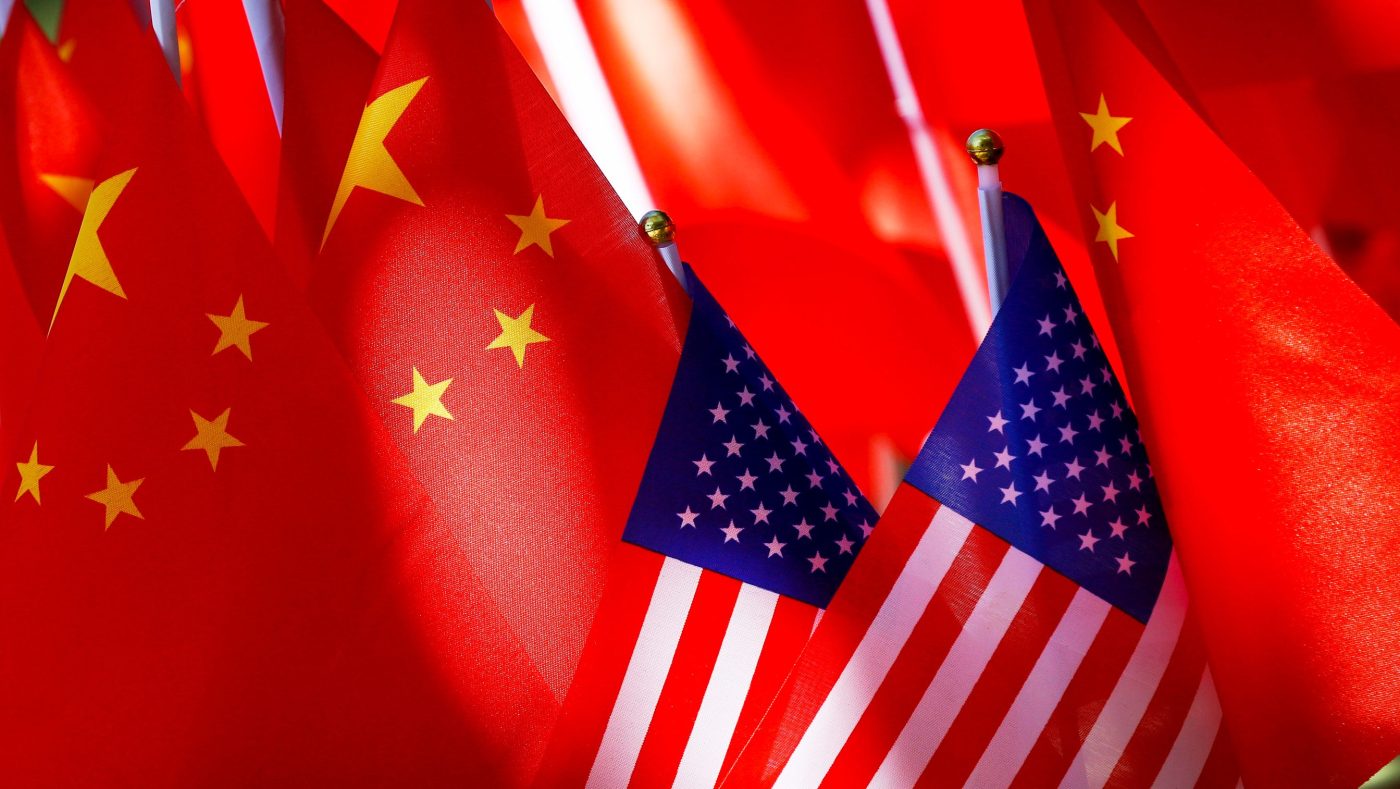
Beijing escalated its trade countermeasures Monday by blacklisting 10 American defense companies and prohibiting the export of dual-use items—goods with both civilian and military applications—in a move that deepens the rift between the world's two largest economies.
The Chinese Ministry of Commerce announced the restrictions, targeting firms including AVEOX of California, Red Cat Holdings and Teal Drones of Utah, IMSAR, Jaia Robotics of Rhode Island, Ball Aerospace & Technologies of Colorado, Oshkosh Defense of Wisconsin, L3Harris Maritime Services in Virginia, MP Materials in Las Vegas, and USA Rare Earth in Oklahoma.
Dual-use items covered by the ban range from drones and robotic hardware to swarm software, technologies primarily used for defense and national security but also with some nonmilitary functions. The ministry's statement declared that “exporters are prohibited from exporting dual-use items to the aforementioned 10 entities,” and that any organization or individual from any country or region is prohibited from transferring or providing such items originating in China to these entities. It also ordered an immediate halt to any ongoing related export activities.
The announcement took effect immediately, though it allows for exceptions in cases where export is “truly necessary,” leaving room for diplomatic maneuvering.
Broader Economic Decoupling
In addition to the export ban, Beijing barred Chinese government entities from purchasing products manufactured by 46 American corporations, further cutting ties with the United States. The list includes defense giants Lockheed Martin, Boeing, Raytheon, and Axient. This move follows a pattern of escalating economic decoupling that has drawn attention from lawmakers and analysts alike.
The Chinese actions come in direct response to the Pentagon's decision earlier this month to add multiple Chinese companies to its 1260H list, which prohibits U.S. firms from contracting with the Department of Defense. Among the Chinese companies added were tech giant Alibaba, electric car maker BYD, and search engine Baidu, all cited for alleged ties with Beijing's military.
House Select Committee on the Chinese Communist Party Chair John Moolenaar (R-Mich.) called the Chinese retaliation “a warning to American businesses, all levels of government, and the American people,” underscoring the bipartisan concern in Washington over Beijing's growing assertiveness.
Last week, Moolenaar and other lawmakers urged U.S. officials to go further by barring American defense contractors from employing lobbyists or firms representing Chinese military companies, a proposal that could further strain bilateral relations.
The Chinese Embassy in Washington accused the U.S. of “making discriminatory lists to go after Chinese companies,” as reported by The Associated Press, framing the dispute as a defensive measure against American economic aggression.
This latest escalation comes amid broader tensions over trade and technology, with Beijing increasingly using export controls as a tool in geopolitical disputes. The move also echoes previous restrictions on rare earth minerals and other critical materials, which are essential for defense and high-tech industries. As the U.S. and China continue to spar over supply chains and national security, the impact on global markets and defense contractors remains a key concern for policymakers.
For U.S. defense firms, the ban could disrupt supply chains for components sourced from China, though many have already begun diversifying suppliers in response to earlier restrictions. The long-term implications for the defense sector are likely to be significant, as companies seek alternatives amid rising geopolitical risks.