A spent SpaceX Falcon 9 upper stage slammed into the Moon late Tuesday night, ending a year-long drift through space and creating what scientists believe is a fresh impact crater. The collision occurred at approximately 2:35 p.m. EDT, with the rocket hitting the lunar surface at a speed of about 5,400 mph—roughly seven times the speed of sound. Though no one witnessed the impact directly, experts say there is little doubt the rocket reached the Moon as predicted.
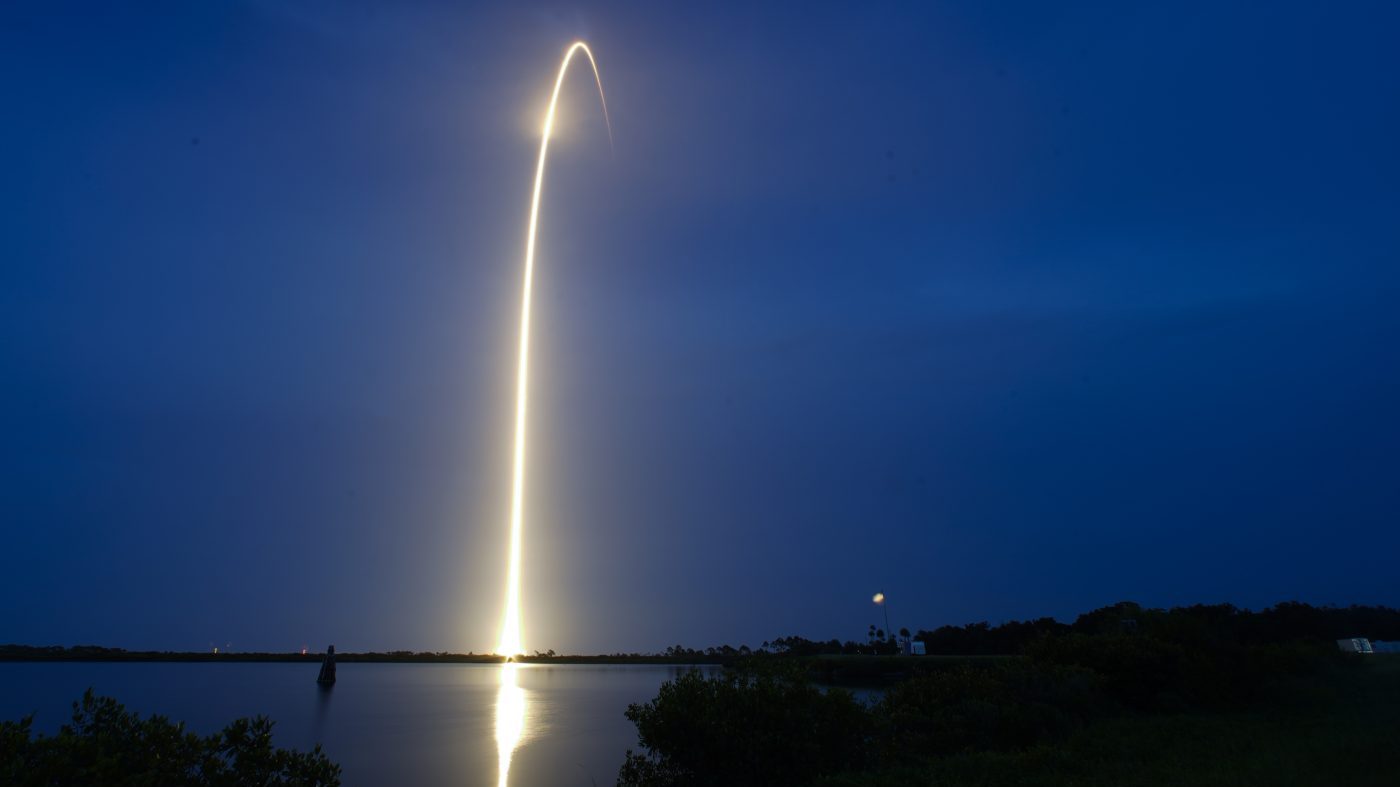
The upper stage was launched from Florida on January 15, 2025, carrying two spacecraft destined for the Moon. After deploying its payloads, the rocket stage remained in orbit. Unlike most Falcon 9 upper stages, which typically burn up in Earth's atmosphere after completing their missions, this one was traveling too fast on a lunar trajectory to safely return. SpaceX performed a maneuver intended to place it in a safe orbit, but a combination of lunar gravity and solar activity gradually altered its path, setting the approximately 9,000-pound rocket on an unavoidable collision course with the lunar surface.

Scientists estimate the impact carved out a crater roughly 60 to 90 feet wide near Einstein Crater, close to the boundary between the Moon's near and far sides. While the impact flash was expected to be too faint to see from Earth, telescopes in Chile and Arizona detected what astronomers believe was a cloud of sodium- and lithium-rich material rising from the impact site.
Boston University scientist Carl Schmidt told the Associated Press that his team is "100 percent certain" the observations captured evidence of the crash. Retired astrophysicist Jonathan McDowell echoed that sentiment, saying there was "no doubt" the rocket was reduced to "teeny, little pieces" scattered across the Moon.
NASA has not yet released images confirming the impact site, but the agency's Lunar Reconnaissance Orbiter and the ShadowCam instrument aboard South Korea's Korea Pathfinder Lunar Orbiter are expected to search for before-and-after images in the coming days, according to Space.com.
Researchers say the collision presents a rare scientific opportunity to study how artificial objects strike the Moon and how debris behaves in the lunar environment. The findings could help scientists better understand potential hazards for future robotic missions and astronauts as lunar exploration accelerates. This incident also highlights growing concerns about space debris beyond Earth's orbit. It marks the second known accidental rocket impact on the Moon after a Chinese rocket stage struck the lunar far side in 2022.
While experts stressed that this impact posed no immediate danger, they say improving space traffic management will become increasingly important as NASA, China, and commercial companies prepare for more frequent missions to the Moon in the years ahead. The event comes amid a series of recent developments in spaceflight, including SpaceX's Starship test flights and broader questions about the company's trajectory. It also underscores the need for better coordination in lunar operations, as highlighted by analyses of NASA's partnership with SpaceX.
As lunar missions become more common, the risk of accidental impacts will likely rise, prompting calls for improved tracking and mitigation strategies. The Moon, long a passive observer of human activity, is now becoming a junkyard of sorts, with each new mission leaving its mark. The scientific community will be watching closely as orbital reconnaissance efforts attempt to document the latest scar.