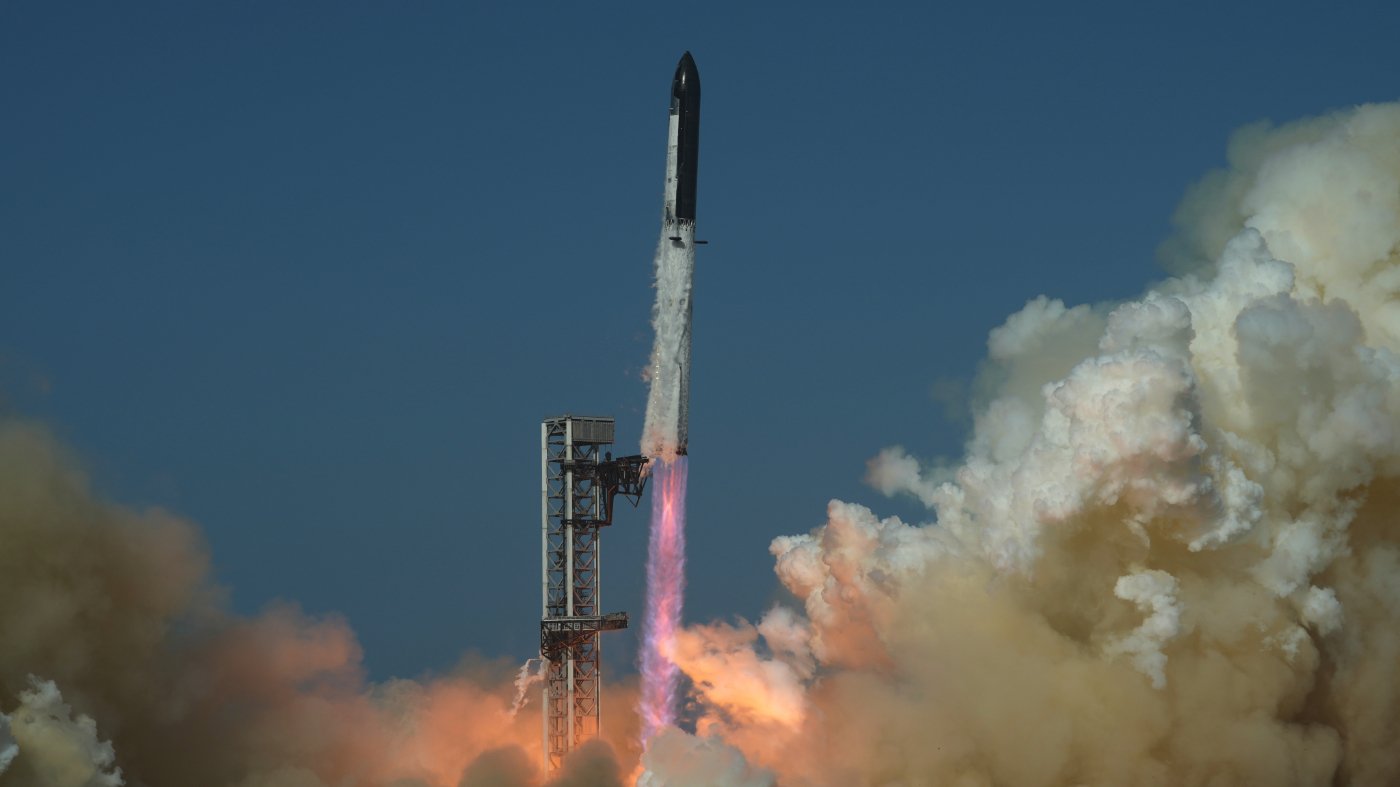
SpaceX's Starship completed its 13th test flight on [Date], achieving a significant milestone: the massive rocket survived reentry and landed upright in the Indian Ocean, remaining intact and transmitting data. This marks a stark contrast to previous attempts, where the vehicle exploded upon touchdown. The successful landing, captured by drone footage, allowed engineers to inspect the heat shield tiles up close for the first time after a real mission.
Key Achievements and Anomalies
During the flight, Starship deployed 20 Starlink satellites into orbit and successfully restarted one of its Raptor engines in space, demonstrating critical capabilities for future missions. However, the Super Heavy booster experienced an anomaly when one of its Raptor engines failed to relight during descent, causing a harder-than-planned splashdown in the Gulf of Mexico.

The post-landing inspection revealed damage to the heat tiles, which could complicate rapid reusability—a cornerstone of SpaceX's cost-reduction strategy. Despite this, the mission provided invaluable data on reentry heating and structural integrity.
Next Steps: Catch Attempt and Operational Goals
According to Ars Technica, Elon Musk plans to attempt catching the Starship with the launch tower's mechanical arms during Flight 14. If successful, this would be a major step toward making the vehicle fully reusable. The company also aims to begin routine Starlink deployments, further integrating Starship into its satellite network.
Long-term, Starship must prove it can be refueled in orbit and support NASA's Artemis missions, including an uncrewed lunar landing and a crewed mission by 2028. NASA Administrator Jared Isaacman congratulated SpaceX on the flight, stating, "When Starship comes online, its capabilities will be game-changing, not least of which will be ensuring we never give up the Moon again!"
Financial and Strategic Outlook
Despite the technical progress, SpaceX's stock has faced headwinds since its IPO. Analysts remain divided: UBS's Gavin Parsons called the flight a validation of key booster capabilities, while Morgan Stanley warns of heavy near-term costs—projecting $84 billion in annual spending through 2034 before positive cash flow. The firm maintains a $300 price target, more than double the current share price, but notes that capital raises could pressure the stock.
To boost investor confidence, SpaceX must continue demonstrating Starship's operational readiness and secure additional revenue streams. Potential avenues include defense contracts, such as involvement in the proposed Golden Dome missile defense system, and expanding Starlink's commercial reach. As the company pursues these goals, it remains a central player in the new space race.