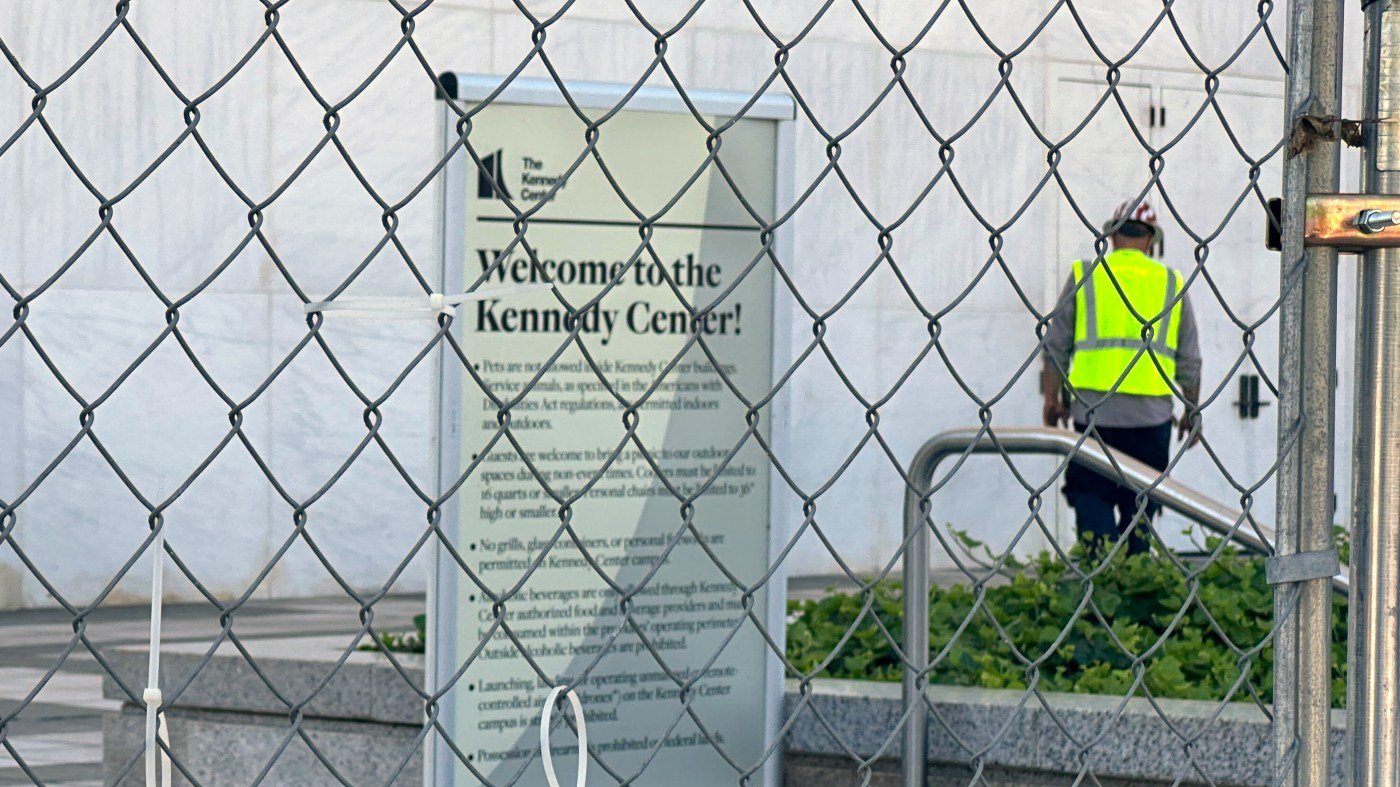
Barricades now ring the main entrance of the John F. Kennedy Center for the Performing Arts, one day after the board installed by President Trump voted to shutter the venue for renovations. The move comes as a legal standoff intensifies over efforts to etch Trump's name into the building's facade.
An Associated Press photographer captured the fencing on Wednesday, and a security guard told an AP reporter the facility was closed. The closure follows a Tuesday vote by the board—whose members Trump appointed last year—to pause operations, ostensibly for necessary upkeep.
The center, named for the assassinated Democratic president, has become a flashpoint in Trump's broader push to stamp his name on national landmarks during his second term. Last month, the board approved two inscriptions reading "renovated and restored by President Donald J. Trump" and "endowed by the Trump Kennedy Center Fund."
But U.S. District Judge Christopher Cooper, an Obama appointee, barred the board from adding those words on Tuesday. He ruled that the National Cultural Center Act of 1958, which authorized the center's creation, requires congressional approval for any name change. Cooper had previously ordered the removal of Trump's name from the main entrance, a task completed in June when workers also draped a covering over the center's own name.
Trump and his allies on the board have defended the closure as a safety measure, with the president citing "Safety reasons" for the shutdown. Yet Trump has also insisted that renovations cannot proceed unless Cooper clears the way for the name change, tying the project to the legal fight.
Board members argue that only Trump possesses the fundraising muscle to sustain the center, which received $250 million from Congress last year. Trump himself claimed on Tuesday that he had raised $17 million for the center's account "to keep it afloat."
The dispute has drawn attention to the eroding norms of institutional independence and the tensions between executive power and rule of law. Critics see the board's actions as a politically motivated takeover of a cultural institution, while supporters frame it as a necessary rescue.
With the center now closed and fencing up, the immediate future of performances and events remains uncertain. The legal battle over the name is likely to continue, with the judge's ruling setting the stage for a possible appeal.
For now, the Kennedy Center stands as a physical symbol of the clash between presidential ambition and statutory limits, its doors barred and its name obscured.