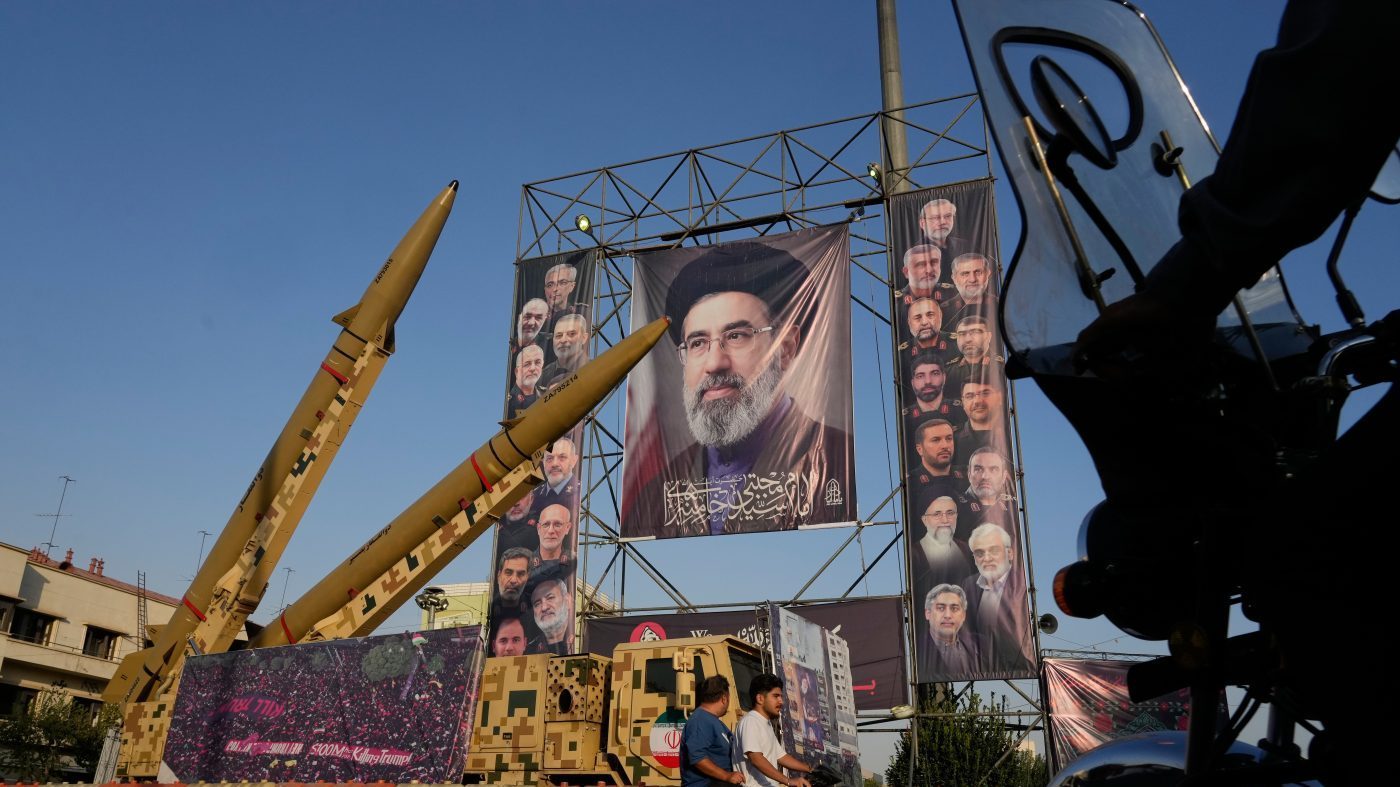
Iran's Supreme Leader, Mojtaba Khamenei, issued a stark warning on Friday, cautioning the United States against its reported intentions to resume military strikes after the upcoming midterm elections. According to Iran's official IRNA news agency, Khamenei directed senior Iranian military officials in a meeting to prepare an "immediate, impactful response without geographical limitations."
The Supreme Leader reportedly instructed military commanders to update their target database "to ensure that all physical and non-physical assets" of the U.S. and Israeli armed forces are within reach of Iran's military capabilities. This marks a significant escalation in rhetoric as tensions between the two nations continue to simmer.
The White House had not yet responded to requests for comment at the time of publication.
Reports emerged on Friday indicating that the U.S. had alerted several Arab nations to brace for a short military campaign following the November 3 elections, with fresh attacks potentially launching as soon as the next day, according to three senior Gulf Arab officials who spoke to MS NOW.
President Trump had earlier this month promised not to strike Iran before the midterms, as he faces mounting pressure to de-escalate the conflict amid soaring energy prices and other economic strains. The war, which began with joint U.S.-Israeli strikes on February 28, has now stretched over eight months, costing the U.S. an estimated $47 billion, according to a U.S. Central Command report from October 16.
During a rally last week, the president hinted at the possibility of another "little Epic Fury" if Iran fails to meet U.S. demands, referencing the military operation against Tehran. "If they're smart, they'll just say, 'Let's get down to business,'" Trump said. "But, you know, I doubt they'll do that because perhaps they're not smart."
The Trump administration has also pursued a parallel economic strategy, dubbed "Operation Economic Outcast," which includes sanctions on Iranian oil and a naval blockade in the Strait of Hormuz, a vital oil shipping route. The Treasury Department reported on Friday that the campaign is "decimating" Iran's economy, with headline inflation reaching 90 percent in September.
The threat of renewed strikes comes as energy prices fuel voter anxiety ahead of the midterms, a factor that could influence the administration's calculus. Additionally, Israel's political instability may complicate coordination between the allies. The president's recent shift to virtual rallies underscores the campaign's focus on domestic issues, even as international crises loom.
Khamenei's latest threats suggest that Iran is preparing for a potential U.S. military action, while also signaling its willingness to respond asymmetrically. The coming weeks will be critical in determining whether the conflict escalates or de-escalates, with global markets and regional stability hanging in the balance.